
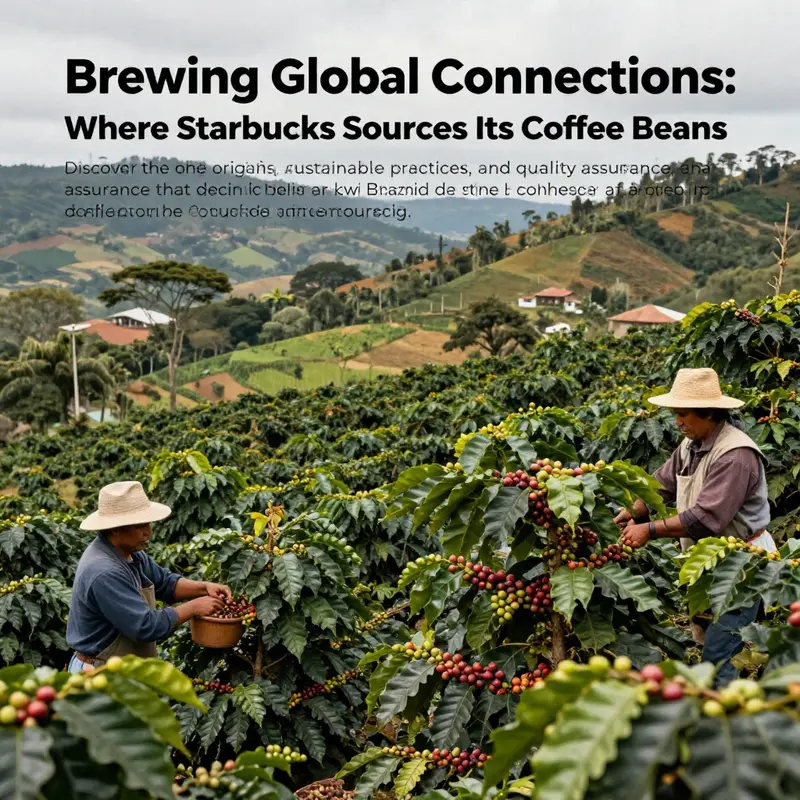
Starbucks, a global leader in the coffee industry, prioritizes quality and sustainability by sourcing coffee beans from carefully selected regions worldwide. Understanding where Starbucks obtains its beans is crucial for business owners looking to engage with ethically sourced coffee products. Each sourcing region contributes unique flavor profiles that appeal to diverse consumer preferences. In the following chapters, we will explore the key regions from which Starbucks sources its beans, delve into their sustainable coffee sourcing practices, understand the farmer partnerships they cultivate, and learn about the rigorous quality assessment processes that ensure excellence across all their offerings.
Global Origins and Regional Strengths: Where the Beans Behind Your Cup Come From
Where the Beans Behind Your Cup Come From
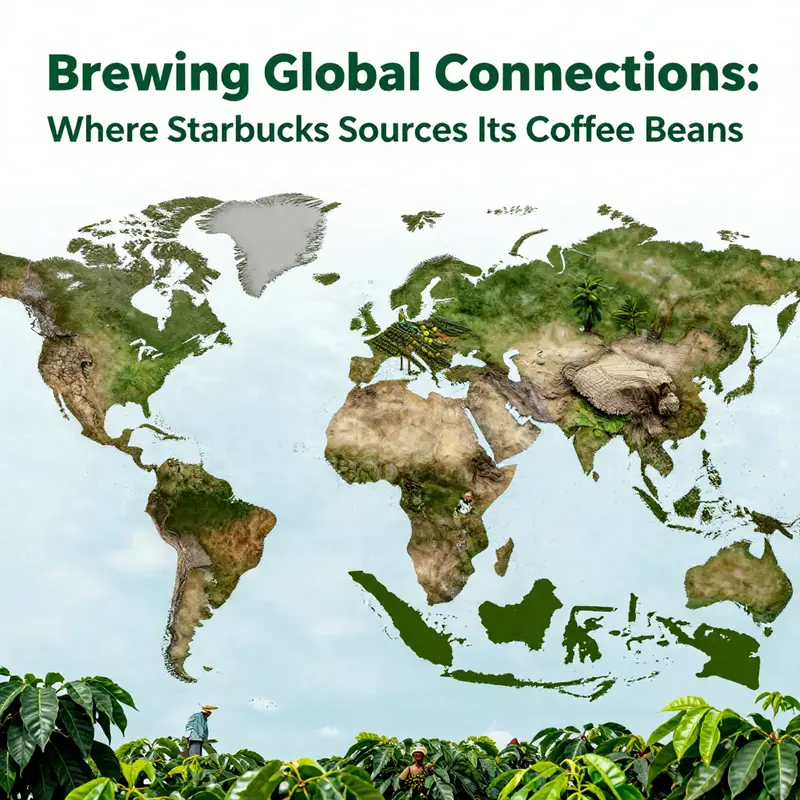
Tracing the path of coffee from farm to cup reveals a map of climates, cultures, and careful choices. The company at the center of this chapter builds its supply from three broad corners of the coffee belt—Latin America, Africa, and Asia-Pacific—selecting beans that together create a consistent menu of flavors while supporting farmers and sustainable practices. Understanding these regional strengths explains why some blends taste bright and citrusy while others feel round, chocolatey, or deeply earthy.
Latin America provides the backbone of the supply. Countries like Colombia and Brazil are central players, and their influence extends beyond volume; they set flavor expectations for many blends. High-altitude farms in Colombia yield beans with balanced acidity and a smooth, rounded body. That brightness and balance make Colombian lots versatile—able to shine in single-origin brews or anchor a blend without overpowering subtler notes. Brazil, by contrast, tends to produce beans with lower acidity and pronounced nutty or chocolatey undertones. Those profiles are prized for creating a reliable base—stable, approachable, and naturally sweet—particularly helpful for espresso blends where body and caramelized flavors are desirable.
Beyond those two giants, smaller Latin American producers add complexity and nuance. Guatemala and Costa Rica often contribute beans with lively, fruity acidity and layered flavors that can range from apple and citrus to more wine-like notes. Mexico and Peru lend softer, milder coffees that can temper sharper acids or provide a gentle, comforting cup. Honduras, increasingly significant in recent years, offers a range of microclimates producing both bright and fuller-bodied beans. Across the region, emphasis on high-altitude cultivation pays dividends: slower cherry maturation at elevation concentrates sugars and flavor compounds, producing beans with greater clarity and complexity.
Africa supplies some of the most distinctive flavor signatures in the global coffee market. Ethiopia, long considered the birthplace of coffee, brings floral aromatics and delicate citrus notes that stand apart from most other origins. Beans from regions such as Yirgacheffe and Sidama are often described as tea-like, with a perfume of jasmine or bergamot and a clean, lingering finish. These coffees can be fragile but intensely flavored, and they are often showcased as single-origin offerings or used sparingly to brighten blends.
Kenya and other East African producers contribute a contrasting intensity. Kenyan highlands yield shots of acidity that are often described as bright, berry-like, or winey, with a distinctive sharpness that cuts through milk and stands up in espresso. Uganda and other nearby producers add earthy, robust characteristics that can ground lighter, more floral lots. The variety across Africa allows roasters to layer flavors—pairing a floral Ethiopian with a bold Kenyan to create dimension, or using Ugandan lots to add depth and balance.
Asia-Pacific introduces a different palette: heavier bodies, earthy tones, and subtle spice. Indonesian islands such as Sumatra and Sulawesi are renowned for their full-bodied, low-acidity beans. The wet-hulled processing common there produces an almost syrupy mouthfeel and deep, savory notes—cedar, cocoa, and sometimes herbal or tobacco-like nuances. These beans are often favored in blends that aim for richness, or as the dark heart of an espresso mix.
India and Vietnam contribute further diversity. Indian highland coffees can carry spicy, herbal notes and medium body, while Vietnamese production is a major source of robusta beans—strong, bitter, and high in caffeine—used to add crema, body, and extra kick to certain blends. When balanced with Arabica, robusta can enhance crema and lend a sustained intensity to espresso without overwhelming subtler flavors.
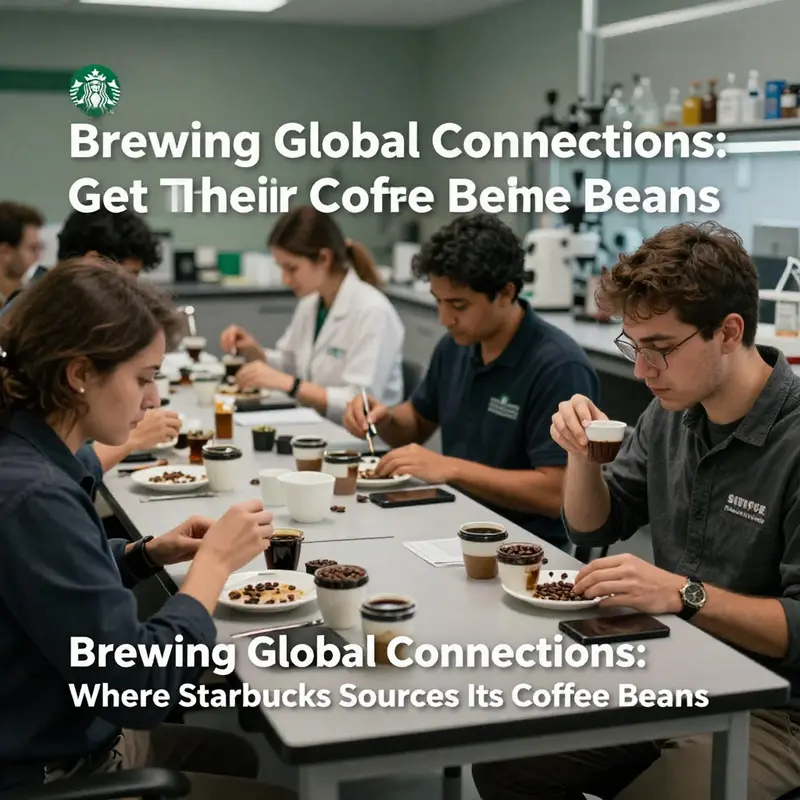
Across all these regions, bean selection is governed by strict quality criteria. Only fully ripe Arabica cherries are chosen for Arabica lots; ripeness matters because unripe or overripe cherries create off-flavors. A rigorous tasting culture screens beans at origin and at roasting facilities. Teams evaluate hundreds of samples to identify consistent lots, and the commitment to tasting is exhaustive—thousands of cups judged regularly to maintain a stable flavor profile across seasons and farms.
Sourcing is not only about flavors. Ethical and sustainable practices shape the long-term strategy. A set of verified practices guides relationships with growers—measures that promote fair pay, safe working conditions, and environmentally responsible farming. These standards encourage shade-grown or diverse cropping systems, responsible water use, and reduced chemical dependency where possible. The objective is clear: preserve soil health and biodiversity, and ensure coffee growing remains a viable livelihood.
To support these aims, the company operates direct outreach initiatives in coffee-producing regions. Farmer Support Centers, positioned on multiple continents, act as practical hubs where agronomy experts help farmers improve yields, assess soil health, and adopt improved post-harvest handling. Training focuses on best practices—proper pruning, shade management, disease control, and optimized fermentation and drying techniques. Those seemingly small changes can dramatically improve cup quality and increase growers’ earnings by elevating their lots into higher-value markets.
Long-term relationships with producers also matter. Instead of one-off purchases, the sourcing strategy emphasizes multi-year partnerships. This stability allows farmers to plan investments—such as renovating old trees, experimenting with varietals, or upgrading drying infrastructure—knowing there is a reliable buyer for their higher-quality output. Contracts or price premiums for verified lots further incentivize investment in quality and sustainability.
Processing methods and micro-lot experimentation keep the supply chain innovative. Washed, natural, and pulped-natural processing all yield different sensory results, and roasters experiment with these methods to highlight origin traits. For instance, Ethiopian naturals can intensify fruit-forward notes, while washed lots might showcase clearer citrus acidity. In Indonesia, wet-hulled lots produce the signature heavy body and earthy character that many blends depend upon. Embracing various processing techniques allows the sourcing team to tailor inventories to flavor goals without losing track of reliability.
Trade and logistics play a practical but critical role. Coffee markets shift with weather, politics, and pests; diversifying origins reduces exposure to local shocks. Procuring beans from over thirty countries across the coffee belt spreads risk and ensures continuity of supply. It also creates a broader palette of flavors, enabling roasters to adjust blends and single-origin offerings as harvests vary year to year.
Quality control continues well past the farm gate. Samples are cupped at multiple stages—at origin, after shipment, after roasting—to ensure that the expected sensory characteristics persist through processing and transport. When a lot meets the rigorous standards, it enters the roasting and blending pipeline; if not, it may be rejected, reprocessed, or redirected. These checkpoints guard the consistency that customers expect from daily beverages.
Sourcing decisions ultimately balance taste, ethics, and practicality. Latin America’s bright, balanced beans and Brazil’s solid base blends combine with Africa’s floral and fruit-forward gems and Asia-Pacific’s deep, earthy foundations. Together they form a mosaic of flavors that sustain a global beverage program. Equally important are the investments in people: agronomy support, education, and fair practices that help farmers produce better coffee while securing their futures.
This approach—pairing region-specific flavor strengths with robust sustainability and farmer support—creates a resilient supply chain. It allows consistent flavor profiles despite seasonal swings, supports innovation through micro-lot experimentation, and invests in communities that grow the beans. For a company dependent on predictable taste and ethical sourcing, such a strategy is not optional; it is essential.
For readers who want to explore the company’s sourcing philosophy and programs in greater detail, more information is available on the public sourcing page: https://www.starbucks.com/responsibility/sourcing
Tracing the Roots: How Starbucks Gathers Sustainable Coffee Beans Across the Globe
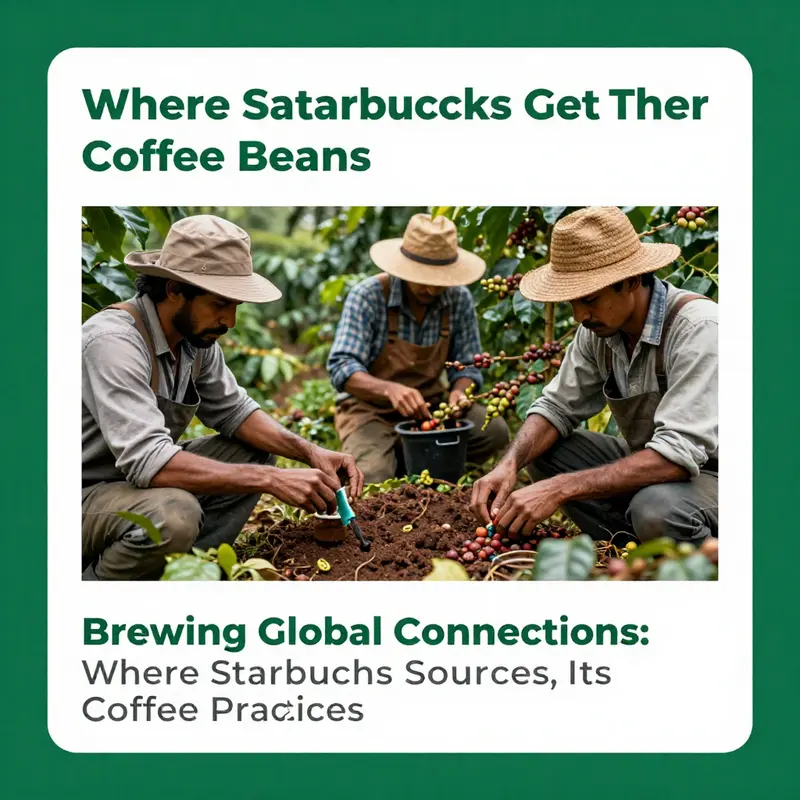
A cup of coffee carries more than just warmth; it carries a journey that begins on distant hills, in sun-dappled shade canopies, and among communities that cultivate the beans with care. To understand where Starbucks gets its coffee beans is to follow a path that winds through continents, climates, and cooperative farm networks. It is a path paved not only with flavor but with a steadfast commitment to sustainability, long-term farmer partnerships, and a relentless focus on quality. The story begins with the beans themselves—Arabica cherries that ripen under specific conditions, and ends with a cup that carries the memory of soil type, altitude, rainfall, and human effort. In this journey, the company gathers beans from more than thirty countries, with four origins standing out as the backbone of its blend and its philosophy: Colombia, Brazil, Ethiopia, and Indonesia. Each region contributes a distinct signature to the coffee supply, yet all share a core ethos: a continuous, transparent, and future-oriented partnership with farmers grounded in rigorous standards and practical support.
The geographic mosaic behind the beans is deliberate. In Latin America, high-altitude zones in Colombia and Brazil are prized for producing beans with balance, clarity, and a dependable sweetness. Elevation slows bean maturation, allowing sugars to develop and complex flavors to form while retaining structure that roasts can unlock cleanly. In Africa, Ethiopia anchors a tradition of bright, floral, and often citrusy notes; the country’s vast regional diversity yields a spectrum of aromas—from jasmine to blueberry—that coffee lovers recognize as emblematic. Yet Ethiopia sits alongside other African producers, such as Kenya and Uganda, where farmers have built networks that emphasize cooperative strength and knowledge sharing. Across the Asia-Pacific region, Indonesia in particular delivers earthy, full-bodied profiles from Sumatra and Sulawesi, where traditional post-harvest processing and microclimates shape distinct cup characters. West Java, one of the country’s oldest coffee-growing regions, hints at a long-standing agricultural culture that informs today’s sustainability efforts. Beyond these core origins, the sourcing map expands to include Guatemala, Honduras, Costa Rica, Peru, and Mexico, ensuring a balanced and resilient supply chain that can weather climate variability and market swings while supporting communities across the globe.
The selection of beans is a careful, almost culinary process. Starbucks emphasizes only fully ripe Arabica cherries, harvested by voices of farmers who know their land and its rhythms. The cherries are hand-picked, sorted, and cupped to reveal subtle flavor notes, acidity, body, and sweetness that define a region’s cup profile. The company’s tasting philosophy is strict and expansive: it conducts regular cupping sessions across its supply network, evaluating each lot with a disciplined palate. It is not unusual for more than a thousand cups to be tasted in a single day as part of a broader calibration of quality. This is not mere ritual; it is a practical guardrail ensuring consistency from origin to roastery, even as climates shift and coffee markets evolve. The cupping process informs how beans are blended and sourced across different harvests, preserving a stable baseline of quality even when weather patterns alter yields. In this sense, the bean is both a product and a story—an object that embodies the growers’ skill, the terroir of their fields, and the ongoing relationship that moves from farm gate to roaster and then to the cup.
Central to that relationship is a framework designed to protect people, land, and long-term viability. In 2008, Starbucks launched the Coffee and Farmer Equity (C.A.F.E.) Practices program, a set of rigorous standards that binds environmental stewardship, economic transparency, and social responsibility into the company’s sourcing operations. The program is an auditable system, a living contract that requires growers and cooperatives to meet specific criteria. Audits are not punitive only; they are instructional, often accompanied by hands-on training that helps farmers evolve their practices while maintaining profitability. The environmental pillar emphasizes resource conservation, water stewardship, and biodiversity preservation. Farmers learn to manage water more efficiently, to reduce waste, and to restore soil health so that land can endure for future harvests. The economic pillar makes transparency a norm, encouraging fair pricing, access to credit, and predictable markets that reduce dependency on volatile spikes. The social pillar ensures safe working conditions, child labor protections, and community well-being, recognizing that farming communities thrive when health, education, and nutrition are valued alongside crop yields.
What makes C.A.F.E. Practices particularly transformative is its insistence on long-term partnerships. Rather than sourcing from distant, transactional suppliers, the program fosters direct connections with farmers and cooperatives who can participate in a shared vision of sustainability and quality. The relationships are mutual and long-horizon, built on trust, shared risk, and joint problem solving. In practice, this means that a farmer or cooperative can expect consistent demand, technical support, and access to resources that improve both yield and quality over time. The approach acknowledges that a single harvest can be affected by weather, pests, or market pressures, but a resilient, cooperative model distributes risk and stabilizes livelihoods. Over time, those relationships yield a more robust supply chain, where quality is not an accident but the product of deliberate cultivation choices and collaborative improvement.
Support for farmers extends beyond audits and contracts. Starbucks invests in Farmer Support Centers that operate on multiple continents, functioning as hubs for technical assistance, training, and community development. These centers offer soil testing, pest management guidance, agronomic advice, and hands-on demonstrations of sustainable cultivation techniques. They help farmers adopt practices that conserve water, improve soil health, and reduce the environmental footprint of coffee production. Yet the centers do more than teach agronomy. They become venues for knowledge exchange, market access, and peer learning—places where farmers can learn from experts, exchange experiences with neighboring cooperatives, and observe innovations that lead to better harvests and higher quality. In effect, the centers are a distributed knowledge network that strengthens the entire supply chain by elevating expertise at the local level and anchoring it in the realities of smallholder farming.
The environmental dimension of sourcing runs through every decision, from shade management to water use and climate resilience. Shade-grown or agroforestry practices help protect biodiversity, stabilize microclimates, and preserve habitats for birds and beneficial insects. Water stewardship programs reduce consumption and protect nearby streams and groundwater, a critical consideration in regions where water access is contested or scarce during dry spells. Reducing greenhouse gas emissions in farming and transportation relies on optimizing harvest times, improving logistics, and supporting farmers in adopting energy-efficient processing methods. Each improvement in environmental stewardship reinforces a broader ambition: to create a supply chain that can endure changing climatic conditions while maintaining flavor integrity. The flavor integrity, in turn, speaks to the careful balance of terroir and technique that the cuppers chase every day. The company’s global sourcing reflects a belief that diverse origins yield a diverse palate—an array of potential cup profiles that can be harnessed with respectful farming practices and careful roasting.
What this means in practical terms for a farmer on a hillside is often a set of supportive measures that transform risk into resilience. Predictable demand, transparent pricing, and access to training reduce the vulnerability that smallholders face when markets swing or weather damages crop potential. Soil testing reveals nutrient deficits and pH imbalances, guiding amendments that improve yield quality over time. Training in post-harvest processing—from cherry selection to drying methods—helps maximize cup quality and reduce losses. The centers and the broader sustainability framework together create a network of mutual obligation: farmers commit to sustainable practices and transparent accounting, while the company commits to ongoing support, fair compensation, and a long-term commitment to purchase beans that meet or exceed high standards.
Region by region, the impact of this approach becomes visible in flavor and reliability. Latin American origins tend to contribute beans with bright sweetness, almond-like notes, and a clean finish, attributes that translate well into balanced blends and approachable single-origin offerings. In Africa, the brighter acidity and floral notes introduce complexity and dimension, often characterized by citrusy brightness and aromatic lift. The Asia-Pacific profiles bring depth and earthiness, with body and spice-like undertones that respond to mid-to-dark roast development. The consistent thread across these regional profiles is a shared commitment to quality that is rooted in communities and cultivated through collaboration. A single coffee experience can thus become a narrative that travels from farm gate to cup: climate and soil meet human skill in the field, then a cupping room calibrates the outcome, and finally a roastery translates this into a consistent, satisfying drink.
The broader philosophy—sourcing with care, paying attention to people and land, and committing to a transparent and verifiable process—expresses itself in daily practice as well as long-term strategy. The goal is not merely to secure beans but to cultivate a network that can endure. When climate patterns shift, when a weather anomaly affects a harvest, or when a region faces social or economic stress, the emphasis on diversified origins and abundant farmer support helps smooth the rough edges. The chain remains visible: from cooperative to exporter, to importer, to the cupping room, and ultimately to the customer who enjoys a cup that embodies a particular time, place, and set of choices. In this sense, the sourcing strategy is a living system, one that evolves through feedback, data, and the shared ambitions of growers and the company alike.
For readers who wish to explore the details of this responsible sourcing framework, the official sourcing overview provides a comprehensive map of origin countries, supplier relationships, and the standards that organize every link in the chain. The narrative of origin and stewardship is not confined to a single report or a single harvest; it is updated with each season, reflecting improvements in farming practices and shifts in market dynamics. The result is a transparent, accountable system that staff, farmers, and customers can trust as they participate in the coffee journey—from seed to cup. The ongoing dialogue between growers and buyers becomes visible through the audits, the education programs, and the collaborative projects that touch soil, water, and community well-being.
In the end, the question of where the coffee beans come from becomes an inquiry into how a global company can wear the responsibility of becoming a steward of land and labor without sacrificing the joy of a well-crafted cup. The answer lies in a network that blends geography with governance: high-altitude farms in the Americas, sunlit terraces in Africa, and the nutrient-rich soils of Southeast Asia all contribute to a palette of flavors that only a well-managed, sustainability-forward supply chain can deliver. It is a reminder that every sip is not just a moment of pause but an invitation to consider the work, the people, and the ecosystems that make that moment possible. As climate pressures intensify and consumer interest in ethical sourcing grows, the model’s emphasis on continuous learning, long-term farmer partnerships, and rigorous environmental stewardship remains essential. The journey from farm to cup is ongoing, and the quality story—built on trust, transparency, and shared purpose—continues to unfold with each harvest and each new collaboration.
External resource for further reading on responsible sourcing: https://www.starbucks.com/responsibility/sourcing
From Farm to Cup: The Global Network Behind a Morning Brew
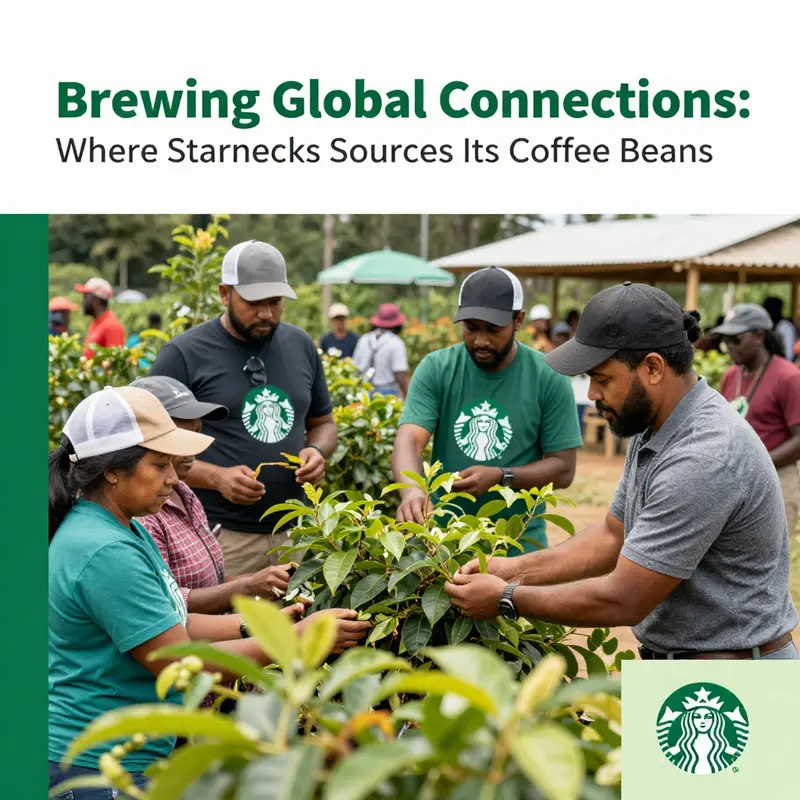
From Farm to Cup, the journey of a Starbucks coffee bean is a story of people, places, and practices that weave together the seasons of cultivation with the rhythms of community life. It is not merely a supply chain; it is a living ecosystem that relies on trust, shared purpose, and long-term reciprocity. The chapters of this story unfold across continents, where farmers tend beans under the sun and shade, and a network of centers and programs translates careful farming into steady quality. The result is a cup that carries traces of altitude, soil, and climate, and a promise that those flavors are earned through hard work, transparency, and ongoing support. The framework that guides this endeavor is not random. It rests on a methodology built to safeguard both people and planet while ensuring a consistent, enjoyable product for coffee lovers who value ethics as much as aroma.
The narrative begins in the world’s long-standing coffee belts, where elevated farms and careful processing shape the character of the beans. The origins span Latin America, Africa, and Asia-Pacific, with flagship sources in Colombia and Brazil that are famous for balanced, approachable profiles born from high-altitude cultivation and careful lot selection. In Africa, Ethiopia—the cradle of coffee—remains a cherished source, celebrated for bright, floral, and nuanced cup qualities. Kenya and Uganda contribute their own lively brightness and structure, reminding beer-like notes of spice and fruit that can sing when they meet the right roasting curve. Across Asia-Pacific, Indonesia—especially Sumatra and Sulawesi—offers earthy, full-bodied depths, while India adds spice and complexity that broaden the sensory map. Beyond these anchors, a broader set of countries, including Guatemala, Honduras, Costa Rica, Peru, and Mexico, helps to balance supply and foster regional resilience. The common thread through all these origins is a shared commitment to high-quality Arabica beans, grown under conditions that reward careful stewardship of soil, water, and ecosystems.**
In practical terms, that commitment translates into a sourcing strategy built on long-term relationships rather than quick, transactional buys. The company emphasizes direct trade relationships and partnerships with farmers and cooperatives, recognizing that true quality emerges from collaboration. The aim is to secure not only top-tier beans but also predictable, fair outcomes for the farmers who cultivate them. This is more than a transaction; it is a form of partnership grounded in mutual accountability, transparency, and shared ambition. The emphasis on ethics and sustainability ensures that farmers receive fair compensation and support for sustainable farming practices. The story of a single bag of coffee, then, becomes a testimony to the people who nurture the crop year after year and to the communities that benefit from steady, dignified work.**
Among the most visible benchmarks of this approach is a program known as C.A.F.E. Practices. Launched in 2008, C.A.F.E. Practices sets standards for quality, social responsibility, and environmental stewardship. It is a framework designed to align the interests of farmers, cooperatives, and buyers around outcomes that matter beyond flavor. In practice, it translates into concrete expectations: fair labor practices, safe working conditions, and sustainable land use. The program does not merely evaluate; it guides improvement. Farmers who participate are assessed against a set of ethical and environmental criteria, and the feedback loop is continuous. The result is coffee that can be traced back to the farm and the farm’s practices, while consumers enjoy a cup whose origin story includes social responsibility and environmental mindfulness. The emphasis on fair labor and safe conditions anchors the program in human dignity, while the focus on sustainable land use champions the long-term health of soil and water resources that future crops will depend on.**
Beyond certification and auditing, the sourcing ecosystem includes dedicated farmer development initiatives that bring in technical expertise, knowledge sharing, and practical tools. The aim is not just to verify quality, but to improve it. Farmer development efforts help farmers increase yields and raise quality through a combination of hands-on training, access to resources, and climate-smart farming practices. The approach recognizes that farming communities are dynamic, facing the twin challenges of market volatility and climate variability. Training and capacity-building empower farmers to adapt: selecting resilient seed varieties, improving soil health, adopting water-saving irrigation, and implementing agroforestry practices that protect biodiversity. The end of the day is not a single harvest but a sustainable arc of improvement that benefits entire villages. By weaving these development efforts into long-term agreements, the relationship remains stable even when market prices fluctuate, providing a foundation for farmers to invest in their land and their families.**
To supplement farmer development, the network operates physically tangible hubs designed to accelerate knowledge transfer and technical skill. The Farmer Support Centers, spread across four continents, act as local laboratories where soil tests, agronomic advice, and hands-on training are delivered in partnership with farmers. These centers provide farmers with resources that might otherwise be out of reach—soil testing that reveals nutrient needs, climate data to inform planting calendars, and practical workshops on sustainable farming methods. The centers are not isolated outposts; they are part of a broader ecosystem that includes field staff, agronomists, and extension workers who work side by side with farmers to translate best practices into daily routines on the plot. In parallel, Coffee Excellence Centers function as showcases for advanced techniques, cupping insights, and quality improvement strategies. They help producers calibrate post-harvest handling, fermentation, drying, and storage processes so that the fruit they deliver to the mills becomes a consistently high-quality export. These centers symbolize a commitment to knowledge transfer as a core component of economic resilience. They remind us that excellence in coffee depends as much on technique and science as it does on sun, rain, and tradition.**
The practical implications of these efforts become visible when one considers the careful selection process that governs which beans enter the global supply. Only fully ripe, high-quality Arabica cherries are chosen. The standard is exacting, but the payoff is consistent flavor and reliable performance in the cup. A robust cupping program—conducted through thousands of tastings each day—serves as the voice of quality. The continuous tasting sessions feed a feedback loop that helps producers refine lots, harmonize profiles, and trim inconsistencies across harvests. This is where art meets science: cupping panels, trained palates, and structured scoring come together to translate field notes into decisions about which lots to advance. The procedure ensures that the voice of the palate guides the rough maps of agronomy and logistics, anchoring the chain in sensory experience as well as agronomic data. The result is a supply that remains coherent across seasons and regions, even as weather patterns shift and pests threaten crops.**
A critical outcome of this integrated approach is the creation of stable, dignified livelihoods for farmers. By prioritizing long-term contracts and transparent pricing, the network reduces the volatility that often accompanies coffee farming. Farmers gain more predictable income, which enables investment in soil health, irrigation, and climate resilience. In many cases, communities see improvements beyond the farm: schools, health services, and local infrastructure benefit when farming remains a reliable economic engine. The collaboration extends to environmental stewardship as well, with supported farmers adopting water-conserving practices, reforestation efforts, and soil-improving cover crops. These actions preserve ecosystems and help stabilize yields, a goal that becomes increasingly important as climate variability becomes more pronounced. In short, the farmer is not a distant supplier but a partner whose success is tied to the overall health of the supply system.**
The geographic diversity of sourcing, combined with the structure of direct relationships, yields a supply chain that is both resilient and responsive. The approach acknowledges that flavors carry terroir—distinct notes shaped by altitude, climate, and culture. It also acknowledges that the integrity of the process matters as much as the taste of the cup. In practice, this means ongoing governance that balances demand with farmer well-being, precision with flexibility, and quality with responsibility. The system tracks origin, farm, cooperative, and lot, building a map of provenance that informs risk management, transparency, and traceability. It also invites continual improvement: new partnerships with ambitious growers, the expansion of training programs into new regions, and the refinement of measurement methodologies to capture environmental and social outcomes with greater precision. In this way, the work of sourcing becomes a perpetual experiment in aligning high standards with real-world constraints, ensuring that the enterprise remains both faithful to its values and capable of adapting to change.**
Ultimately, the chapter of sourcing is a living narrative about people who cultivate the land and people who steward the supply chain. It is a story of careful listening to farmers’ needs, of investing in communities, and of building a shared language of quality, ethics, and sustainability. It challenges the stereotype of coffee as a mere commodity, reframing it as a product whose character is inseparable from the relationships that bring it to life. The chords of this narrative are struck not only in the cupping room but in the fields, the training rooms, and the cupping labs where ideas become practice. It is a reminder that every cup is the result of countless conversations—about soil, shade, water, labor rights, climate resilience, and price fairness. When those conversations are sustained, the flavor of the coffee carries a deeper resonance: a sense of responsibility, a commitment to people, and a belief that great coffee is possible only when communities thrive.**
External resource: https://www.starbucks.com/about-us/sustainability
null
null
Final thoughts
Starbucks’ commitment to sourcing coffee beans from diverse regions reflects a deep respect for the agricultural origins and the quality of its products. By focusing on sustainable practices and supporting farmers globally, Starbucks not only enhances the quality of its coffee but also builds lasting relationships that uplift communities. For business owners in the coffee industry, understanding Starbucks’ sourcing strategies offers valuable insights into creating a responsible and quality-driven supply chain. As the demand for ethically sourced products continues to grow, aligning with these practices can set a business apart in a competitive marketplace.