

Understanding the distinction between coffee beans and espresso beans is crucial for business owners looking to enhance their coffee offerings. While both types come from the same coffee plant species, they differ significantly in processing, roasting, and brewing methods. This article will guide you through these differences, highlighting how they can impact your coffee selection and ultimately the customer experience. Each chapter will delve deeper into these aspects, equipping you with the knowledge to make informed decisions for your business.
Not Two Beans, But Two Destinies: Unpacking the Truth About Coffee Beans and Espresso Beans
The question aren’t entirely about the seed itself so much as the path the seed travels from farm to cup. Coffee beans and espresso beans share the same botanical DNA; they come from the same plant species, and in many cases the same batch of green beans could end up as either a drip coffee or an espresso shot, depending on how they are roasted, ground, and brewed. The misconception—one that tends to echo in online forums and cluttered kitchen counters alike—is that there exists a separate, magical “espresso bean” distinct from ordinary coffee beans. In truth, there is no special species or class of beans called espresso beans. The difference is more about roasting intent and extraction physics than about some intrinsic quality that suddenly appears at the moment you flip the switch on a machine. This is a story of choices—roast level, grind size, water temperature, pressure, and timing—that together shape a drink that is, in its essence, the same family but with a deliberately different personality when put through an espresso machine.
To begin, think of the plant’s fruit as a simple seed that carries within it a spectrum of flavors shaped by origin, altitude, soil, climate, and processing. Arabica and Robusta are the two most common species seen in commercial coffee, and within each species there are hundreds of varieties with their own quirks. When we speak of beans versus espresso beans, we are not invoking a different species; we are describing a roasting and brewing philosophy. Espresso, as a method, compresses time and pressure into a concentrated form. The grind is finer, the water is hotter, and the extraction happens quickly under high pressure. The goal is a shot that carries sweetness, a fuller body, and a crema that crowns the surface—a delicate but robust articulation of flavor that can cut through milk or stand alone as a bold, compact beverage. The beans that enter this process can be beans used for any brew, but the roast most often chosen for espresso is guided by how well the bean stands up to a quick, intense extraction.
The non-accidental truth about the difference begins with roasting. Roasting is the moment when flavor compounds, sugars, and oils become available to the palate. In espresso practice, roasters frequently push beans toward a darker end of the spectrum. A darker roast brings a depth of body and a sweetness that can emerge when oils surface and caramelize, and it also intensifies certain bitter and toasty notes that can survive the high-pressure, short-contact conditions of espresso extraction. The darker profile isn’t a universal rule, but it is common. It serves a practical purpose: those deeper, more resinous oils and bold aromatics tend to bloom under forceful extraction, contributing to a crema that is thick and persistent and to a mouthfeel that can feel almost syrupy in concentration. If you restrict yourself to a lighter roast, the same bean can yield an espresso with more vibrant acidity, brighter fruit notes, and a lighter body. The flavor range is real, but the traditional espresso palate often gravitates toward the fuller, more forgiving notes that emerge from a darker roast.
Crucially, the roast’s degree does not magically transform every bean into an “espresso bean,” any more than it transforms every bean into a single “drip roast.” The roast acts as a translator, revealing particular aspects of a bean’s character under pressure. The resultant crema, that pale, tan layer that sits atop a correctly pulled shot, owes its existence not to a magical property of a bean but to how finely the grounds are ground, how evenly they are extracted, and how the oils interact with the pressurized water. Crema forms because the high-pressure extraction emulsifies oils and colloids in the coffee, creating a thin foam that carries aroma and flavor compounds to the surface. Some blends, and some Robusta inclusions, are chosen precisely because they help generate thicker crema and a higher perception of caffeine in the shot. Yet this is a function of roasting, blending, and method, not of a different species of bean.
The grinding step is equally decisive. Espresso demands a fine grind, almost powdery in texture, so that the water’s contact with the surface area of the grounds is maximized in a brief window. Drip methods use coarser grounds and rely on gravity to pull the water through at a slower pace. The movement of water through a compact puck of espresso extract is a drama of pressure and timing. If the grind is too coarse, the shot runs fast and under-extracts, yielding a weak, sour cup with a pale crema. If the grind is too fine, channeling can occur, leading to over-extraction that tastes bitter and heavy. The roaster’s choice of bean, combined with the grind’s fineness, creates a baseline from which the espresso machine does the rest. In this sense, a so-called espresso roast might be tailored to perform optimally under pressure, but the same beans can also be brewed by a different method for a very different experience. The tasting note here is not that one bean is “for espresso” and another is “for drip,” but that a given bean can be enjoyed in many ways when treated with the appropriate roast profile and technique.
Certainly, the roast is not the only variable. Water quality, temperature, and time all play supportive roles, as do pressure and tamping. Espresso extraction typically uses water near 90 to 96 degrees Celsius and a pressure around nine bars or so, with a brew time of roughly 25 to 30 seconds. When any of these variables drift, the resulting cup shifts. The same bean can yield a bright, honeyed espresso with a delicate acidity if the grind isn’t too fine and the extraction is properly dialed in. It can yield a darker, more chocolatey shot when the grind is right for a robust, longer contact time. What this means in practice is that the decision to call a bean an “espresso bean” is less about the bean’s essence and more about the ritual of extraction: the way it is ground, measured, and pressed into a small vessel of intense flavor.
Another layer of nuance is the idea of blends. Espresso blends are often built with a deliberate balance of characteristics across different beans to achieve a consistent flavor profile from shot to shot. A typical blend might combine a smoother, sweeter origin with a robust, caffeine-forward component to contribute to crema and body. Robusta is a common inclusion in such blends for its texture, its ability to contribute crema, and its unique caffeine profile. Robusta’s presence is not something to be feared or celebrated as a magical advantage, but rather evaluated as a design choice that can help achieve the desired signature in a cup. Some single-origin beans also make sensational espresso, delivering distinctive aromatic compounds and a sense of place that is rare in blends. The key is not whether a bean is inherently “espresso-appropriate” but whether its roast, grind, and extraction harmonize to reveal the intended character.
From the consumer’s perspective, the practical implication is simple and liberating. If you own an espresso machine and you want to explore the world of intense coffee without buying a different category of seed, you can experiment with any bean you enjoy, guided by a roast that suits high-pressure extraction. If your palate prefers a lighter touch, a lighter roast can still yield an espresso that’s lively and vibrant when dialed in properly. If you’re shopping with an espresso machine in mind, you will likely encounter terms such as “espresso roast” or “espresso blend,” but those labels should be interpreted as roasting intent rather than a passport to an entirely separate bean family. The bottom line remains the same: the taste of your espresso is shaped more by roast level, grind size, and technique than by an intrinsic property that segregates one bean as “espresso” and another as “coffee.”
This is where many home enthusiasts run into a fork in the road: the temptation to treat the label as a map and assume a certain bean will unequivocally deliver a perfect shot. Real-world experience, however, rewards a more holistic approach. Start by identifying a few beans you like for regular drip or pour-over, note their origin profiles, and then experiment with a slightly darker roast or finer grind to see how they respond to pressure extraction. You may discover that your favorite single-origin coffee, when roasted a touch darker and prepared as an espresso, delivers a complex, caramelly sweetness and a mouthfeel that you did not expect. Conversely, you may find that a familiar blend loses some of its charm when pulled as a high-pressure shot unless you adjust the grind and water temperature. The art here is not in chasing a mystical “espresso bean” but in practicing adjustment with intention, recognizing that the same seed can yield multiple personalities when treated with appropriate care.
A well-made espresso is, in essence, a compact ambassador for the wider world of coffee. It distills the long arc of origin, processing, and roast into a small, intense moment of flavor, just as a well-prepared pour-over can reveal the delicacy of a coffee’s origin story. The difference is not so much a matter of bean taxonomy as it is of the storytelling you choose to tell with your brewing methods. If you want a taste that emphasizes brightness and clarity, you can pursue beans roasted lighter and pulled as an espresso with precision. If you crave richness and chocolatey depth, you may opt for a dark roast designed to deliver body and sweetness under pressure. Importantly, neither direction requires abandoning the same beans you enjoy in other preparations. The journey from green seed to brewed cup is too often treated as a sequence of separate chapters; in reality, it is one continuous arc, with the end point determined more by how you decide to use the bean than by any immutable feature of the bean itself.
The educational takeaway is refreshingly straightforward. There are no secret espresso beans. There are only beans that have been roasted and prepared for extraction under high pressure in a way that emphasizes certain attributes. The practitioner’s palate will reward experimentation because the same bean can yield very different experiences depending on the method. The idea that espresso beans must be a different class of coffee is more a marketing echo than a biological fact. A thoughtful approach—considering roast, grind, water temperature, and extraction time—can unlock the full potential of nearly any bean for espresso and for other brewing methods. And when you start from that place of flexibility, you gain not just a better cup but a clearer sense of why you enjoy coffee in the first place: a drink defined by technique, not by an immutable label.
In closing, the language around “espresso beans” can be a barrier to appreciating the larger truth: that great coffee, whether in a delicate filter cup or a bold espresso shot, arises from a chain of choices. The bean’s origin matters, but its destiny is shaped by the roast’s intent and by how the brewer commands time, temperature, and pressure. When you understand this, you can approach your morning ritual with curiosity rather than dogma. You can keep exploring new beans with the confidence that you are not chasing a mythical bean but cultivating a deeper relationship with flavor through practiced technique. The journey is ongoing, and the same seed may delight you in many forms, each one a different facet of the same conversation about how heat, pressure, and time reveal character in a humble coffee bean.
For a deeper dive into the distinctions between coffee and espresso, including the science behind extraction and crema, see this external resource: The Difference Between Coffee and Espresso, Explained.
Roast, Blend, and Brew: Demystifying Coffee Beans Versus Espresso Beans
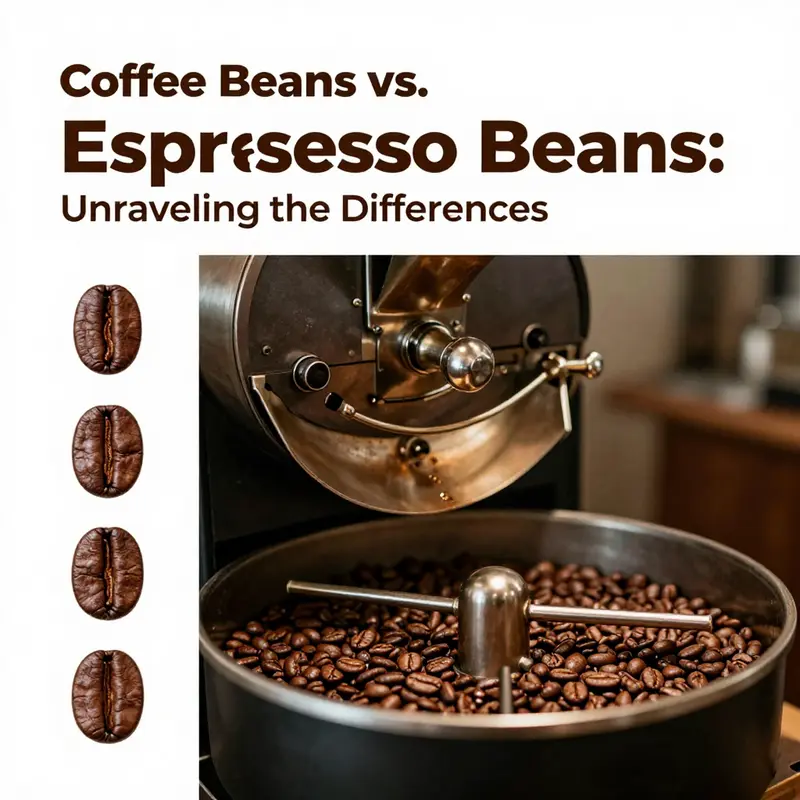
Many readers approach the topic with a fixed idea: there is a special kind of bean called an “espresso bean” that is somehow different from ordinary coffee beans. In practice, the two terms refer to the same seeds from the Coffea plant, most often Arabica or Robusta, which are roasted and prepared for different brewing methods. The label you see on a bag—whether it is marketed for espresso or for drip coffee—indicates how the beans will be roasted, blended, and used, not a separate species or a fundamentally different seed. This distinction matters because it frames every decision a roaster makes about flavor, body, and crema, and it frames every home barista’s expectations when pouring a shot or a cup. Understanding this helps explain why the espresso shot can taste rich or sweet and why a drip coffee can be bright and delicate, all from beans that started life as the same plant. The core truth is simple: all espresso beans are coffee beans, but not all coffee beans are ideal for espresso. The why behind this truth sits at the crossroads of roast, blend, and preparation, where the coffee’s character is reshaped to fit a high-intensity extraction under pressure.
To begin with, roasting is the most visible difference between what counts as an espresso bean and what counts as a general coffee bean. Espresso roasts are often darker, sometimes much darker, than the roasts typically favored for drip methods. The darkness serves a practical purpose: it creates a fuller body and a smoother mouthfeel that can stand up to the intensity of a trained barista’s extraction. Darker roasts emphasize chocolate, caramel, and nutty notes, while soft acidity tends to recede in the face of the roast’s bold sweetness. When an espresso machine forces hot water through finely ground coffee at high pressure, that roasted matrix expands into a concentrated beverage with a creamy texture and a layer of crema on top. The darker roast changes the interaction between the coffee’s soluble compounds and the water, helping to balance brightness with depth and to deliver a shot that is perceptibly more viscous and lasting on the palate. These outcomes aren’t accidental; they are the direct result of roasting chemistry—the way heat alters sugars, acids, oils, and aromatics, transforming them into flavors that behave well when extracted through a pressurized system.
Yet the story does not end with roast level alone. The concept of an espresso bean also encompasses how blends are composed. Roasters often craft espresso blends that intentionally mix beans from different origins or varieties to achieve stability across multiple shots and to create recognizable crema. Robusta, despite its stronger bite and higher caffeine content, is sometimes included in small percentages to increase crema and to contribute a certain richness to the finish. By contrast, single-origin beans can produce exceptional shots, but they may exhibit more variability from harvest to harvest. The choice between a consistent, house-style blend and a single-origin espresso is a decision about reliability versus transparency—about a cup that tastes the same shot after shot versus a cup that reveals seasonal nuances. In both cases, the beans are the same species; the espresso-specific outcome comes from careful blending and targeted roasting designed to perform under a particular set of brewing conditions.
The processing method used on the coffee before it reaches the roaster also leaves a fingerprint on the final espresso. Washed coffees, which have had their mucilage removed before drying, often deliver a cleaner, brighter cup that can translate into a more pronounced acidity when lightly roasted. For espresso, an even, clean flavor can be desirable, but roasters may still push toward a deeper sweetness through longer or stronger roasting after washing. Natural or honey-processed coffees, dried with the fruit still attached to the bean, tend to carry more fruit-forward and wine-like notes. When these beans are blended or roasted dark for espresso, the result can be a cup that emphasizes body and sweetness rather than sharp acidity. Processing methods influence the flavors that are available to roast and brew, but they do not create a separate category of beans. They simply shape how the bean’s inherent characteristics are revealed when subjected to high-pressure extraction and a dark roast’s transformative effect.
Another factor that shapes the espresso bean’s profile—though it often sits behind the scenes—is grind size, dosing, water temperature, and extraction time. Espresso demands a finer grind and a small dose relative to the long brews used in drip methods. The water is hotter and the contact time shorter, yet the pressure is high. In this environment, the oils and colloids released by the roasted coffee wrap around themselves, accumulating into a dense liquid with a creamy layer on top. The roast level interacts with this physics: a darker roast tends to emulsify oils more readily, creating viscous texture and a satisfying mouthfeel. A lighter roast, in contrast, may produce a more effervescent shot with brighter flavors but thinner body if not adjusted for grind, dose, and extraction. This is why baristas often select an espresso blend rather than a single-origin bean for a consistent crema and a predictable shot. The choice of beans and roast profile becomes a practical tool for achieving stability, especially across a sequence of pulls that a busy café or a home setup demands.
The proposition that espresso beans are a special kind of bean sometimes invites a common misconception: that the coffee industry sells a separate species labeled for espresso. In truth, there is no distinct bean type named for espresso. The market label exists to guide roasting and blending toward what espresso demands—concentration, balance, crema, and a certain sweetness that carries through a shot’s high-pressure passage. A bag may advertise itself as an espresso blend or a coffee intended for espresso, but that label signals intended use, not botanical difference. The beans themselves remain the same seeds you would grind for a pour-over, a French press, or a cold brew. The key, then, is not in the origin or the species but in how the beans are treated. The roaster’s craft and the blender’s decisions convert ordinary seeds into something that behaves differently when introduced to an espresso machine’s pressures and temperatures.
This does not mean that any bean will magically become the perfect espresso bean without attention. The flavor you experience depends on how the beans are roasted to a level that complements the typical espresso shot’s needs. It depends on whether the roaster aims for a fuller body with a forgiving sweetness or whether the objective is a brighter, more nuanced cup that still holds up under crema formation. It depends on whether the blend includes components that contribute crema, stability, and a reliable baseline flavor across shots. The roasting philosophy matters as much as the bean’s origin. A washed origin that is roasted darker can deliver a clean, chocolatey espresso, while a naturally processed bean roasted to a similar darkness might present bolder fruit notes that can still balance into a structured shot with the right grind and extraction profile. In other words, espresso beans are not a different seed; they are the same seeds treated to produce a guaranteed performance under espresso conditions.
What, then, should a coffee lover seek when selecting beans for espresso at home or in a café? Start with a clear sense of what you want from the shot. If you prize a reliable crema and a consistent mouthfeel across multiple pulls, a thoughtfully designed espresso blend is a sensible choice. If you value distinctive origin flavors and a more transparent flavor profile, a single-origin option, roasted with care for espresso, can deliver a compelling performance as well. In either case, look for roast notes that match your taste preferences—notes of chocolate and caramel with a slight sweetness often pair well with the dense texture of an espresso shot. For many, this translates into a preference for darker roasts that do not exaggerate bitterness and that maintain a pleasing balance between sweetness and acidity. If you enjoy a certain level of brightness, guide your selection toward beans and roasts that offer a manageable acidity and a cohesive body when extracted under pressure. The balance you seek—between sweetness, body, acidity, and crema—emanates from the interplay of roast level, blend composition, and processing-derived flavors.
Beyond personal taste, the feasibility of achieving great espresso relies on a few practical benchmarks. First, the roast profile should be aligned with the machine and grind. A dark roast that demands a finer grind will perform best when the grinder produces uniform particles and when the extraction time is calibrated for the machine’s pressure and temperature; otherwise, you risk under-extracting or over-extracting, which shadows the roast’s intended sweetness. Second, the blend’s stability across shots matters for consistency, especially in a café setting where dozens of espressos might be pulled in a single service window. Third, the presence of Robusta in small percentages can be a deliberate choice to enhance crema and caffeine content, but this ingredient must be balanced with the flavor targets and the espresso’s overall aroma. These practical considerations are not about changing the bean’s identity; they are about optimizing how the bean behaves under the espresso method’s specific demands.
All of this culminates in a simple, useful truth: coffee beans and espresso beans share the same core material, but the roasting and blending decisions transform them for a particular brewing experience. The term “espresso beans” is best understood as a performance label rather than a botanical classification. When you skim a bag’s roast profile or see a blend’s composition, you are reading a plan for how to coax the most desirable espresso shot from those seeds. The right roast level and blend contribute to a shot that carries sweetness and body with a crema that holds its shape. A different approach may yield a cup that sings with bright fruit notes or a beam of clean, tea-like clarity. Either way, the origin and the seed are the same; the espresso experience is crafted through choice, timing, and technique.
For readers who want a deeper dive into the science behind how roasting alters flavor and crema, a recent study explores how roast depth interacts with extraction dynamics in espresso. This resource offers a rigorous look at why darker roasts often deliver the body and sweetness that espresso observers expect, and it explains how high-pressure extraction shapes flavor and texture in ways that align with the sensory characteristics roasters seek. While the bean’s botanical identity remains constant, the science behind roast and extraction explains why the same seed can yield very different expressions when brewed as espresso versus as drip coffee. The distinction remains important for setting expectations and for guiding both home enthusiasts and professional roasters toward accurate descriptions of what they taste and why. For a deeper, more technical exploration, see the linked study on espresso roasting science.
In sum, the espresso bean narrative is a story of optimization rather than origin. The beans you grind for espresso are the same as the beans you grind for other methods; the espresso label marks a roasting and blending program designed to deliver a concentrated, balanced, and crema-rich shot under pressure. The next layer of understanding comes from recognizing how processing, roast level, and blend interact with the machine, the grind, and the barista’s technique. When these elements align, the café experience and the home routine share a common vocabulary: a well-roasted seed transformed by heat, blended for consistency, and extracted with precision to reveal a cup that is more than the sum of its origins. This is the essence of the espresso bean—the craft of turning ordinary seeds into extraordinary moments of flavor through roast and brew. For further science on this transformation, see the detailed espresso roasting study linked above.
From Roast to Crema: Demystifying Coffee Beans and Espresso Beans

When people first start thinking about coffee in more than just a morning ritual, a common question emerges with almost ceremonial seriousness: are coffee beans and espresso beans the same? The surface answer is straightforward, yet the truth sits a little deeper in the details. The beans themselves—the seeds inside the green cherries—are not fundamentally different by category. They come from the same plant species, and you can roast and grind them into a spectrum of flavors that range from bright and citrusy to dark and chocolatey. The real divergence, the part that creates the distinct experience of an espresso shot, lies in how those beans are processed after harvest and how they are prepared for extraction. In other words, espresso beans are not a distinct species or a magical bean variety; they are coffee beans treated and treated again—roasted and ground, tuned for a high-pressure, short-contact brew that pulls out a different kind of intensity from the same seeds.
To unfold this clearly is to reframe the question away from a fixed label and toward a relationship among three variables: roast level, grind size, and brewing method. Each variable nudges the final cup in a different direction, and when they come together, they produce the signature characteristics associated with espresso—crema on top, a fuller body, and a perception of sweetness that tightens its grip with a clean, persistent aftertaste. Yet none of these espresso-like traits require a different bean by origin. A single-origin Arabica bean, treated and prepared with a method designed for espresso, can yield a cup that stands beside a pour-over or a French press with its own celebratory set of flavors. The label on the bag may advertise “espresso” as a line item, but that label is less a declaration about the bean’s essence and more a promise about how that bean will be roasted, ground, and extracted.
The most essential hinge point is roast level. Espresso is almost universally associated with a darker roast. The rationale is practical as much as gustatory. Darker roasts carry more oils to the surface of the bean, and those oils help facilitate the crema that crowns a well-pulled shot. The dark roast also tends to mellow some of the sharp edges that can emerge when hot water meets finely ground coffee under pressure. This isn’t a moral judgment about lighter roasts or about drip coffee; it’s an engineering choice. In espresso, the combination of high pressure, a short contact time, and a fine grind can amplify sweetness that would be harder to detect in a longer, slower extraction. The darker roast helps balance the intensity of the extraction, giving a cup that tastes round, even when the pressure is pushing flavors to their limits.
But to fixate on roast alone would miss a critical companion variable: grind size. Espresso demands a grind so fine that the water’s journey through the bed of coffee becomes a carefully choreographed crawl rather than a leisurely stroll. In practice, the grind is fine enough that nearly all the water’s effort is devoted to dissolving a concentrated portion of flavors in a very short period. That quick, pressure-driven extraction is what pulls forward those rich, syrupy textures and the toasty, caramel notes that often define an espresso profile. When a bean is ground coarser, or when the extraction time stretches beyond the intended 25 to 30 seconds, the resulting cup can shift from bold and sweet to thin and sharp, losing some of the crema and the smooth mouthfeel associated with a proper shot.
This is where the misconception that “espresso beans” are a separate class begins to fade. If you took the same batch of beans and roasted them a shade darker, then ground them finely enough and forced water through them with a machine built for espresso, you would almost certainly produce a shot with crema, a robust body, and a set of flavors that might include cocoa, toasted nuts, or a whisper of dark fruit. If you brewed the same beans using a medium roast and a coarser grind through a drip method, you would likely encounter a brighter cup with more pronounced acidity and a lighter mouthfeel. The origin of the beans matters in subtle ways—the fruitiness of a Colombian, the cocoa notes of a Brazilian, or the citrus brightness of a washed Ethiopian—but those distinctions become more or less audible depending on how you roast, grind, and brew.
The human palate, too, plays a central role. Our taste buds are sensitive to the way flavors are perceived in different textures and concentrations. A shot of espresso is, by design, a compact dose of flavor. It travels from the machine into the cup and then to the tongue with a certain immediacy, delivering intensity that can feel almost syrupy. The crema acts as a tiny emulsified veil that carries aroma and highlights the oils released by the roast. In contrast, a drip or filter brew presents flavors in a more elongated arc. The hot water interacts with the grounds over a longer time, allowing delicate nuances to emerge and recede gradually. A single origin that might taste bright and floral in pour-over could yield a more chocolatey, heavier profile when transformed into an espresso using a darker roast and finer grind. Yet the seeds themselves did not change; the cup’s personality shifted because the brewing equation changed.
The practical takeaway here is not only about what you should buy but about how you can experiment at home or in a café setting. If your curiosity is grounded in a desire to understand—and perhaps to enjoy—the range of flavors possible from a single batch, you can adopt a simple mindset: treat the bean as a canvas and the roast, grind, and method as a set of brushes and strokes. A light- to medium-roast bean can be transformed into a crisp, high-acid espresso with a bright citrus note by using a precise grind size and a 25-second extraction, helped along by a heat range that preserves delicate aromatics. The same bean can provide a velvety, caramel-laden espresso experience when roasted a bit darker and ground finer, with a shorter, more controlled extraction that emphasizes body and sweetness. And if you wish to explore the classic espresso profile in a more traditional sense, you may encounter blends that include a touch of Robusta or a higher-octane mix designed to bolster crema and caffeine perception. This approach—knowing that the bean is the same seed stock but the preparation curves—offers a flexible framework for approaching any coffee you encounter.
For many consumers, the allure of espresso is both sensory and practical. The sensory appeal rests in the dense mouthfeel and the way a shot handles sweetness, bitterness, and acidity in a compact volume. The practical appeal lies in the ritual: a shot that comes through a machine under pressure, a crema that sits like a sunlit cap, and a cup that invites you to take a second, perhaps a third, taste before adding milk or sugar. Each person’s preference will tilt toward a certain roast level, a particular grind, or a preferred brewing technique. The fundamental truth remains stable: the bean is not a separate species or a different kind of fruit; the espresso experience is the result of deliberate choices about how that bean is treated after harvest and how it is subjected to brewing dynamics that emphasize speed, pressure, and intensity over a longer, gentler extraction.
As we move through this broader exploration of coffee culture, it’s useful to consider how these ideas translate into practice in a café or a kitchen. In many cafés, the staff will select a blend or a single-origin that seems to promise the kind of crema and body they want to showcase for a given espresso drink. They might choose a blend because it balances sweetness with a hint of bitterness and because it performs predictably under high-pressure extraction. They may choose a single-origin bean for a more distinctive aroma and a brighter overall profile when pulled as an espresso, accepting that the crema may be less robust or more fragile depending on the roast and the grind. But in all cases, the bean is the same source material. The engine that drives the espresso experience is the careful calibration of roast level, grind size, distribution of particles, tamp pressure, water temperature, and extraction time. Remove any one of those variables and the character of the shot shifts accordingly.
If we zoom out a little, the broader takeaway is that the line between “coffee beans” and “espresso beans” is more a line in the sand than a line in the seed. The line is drawn by the intended use and the resulting extraction dynamics. A bean roaster or a barista will talk about how dark a roast should be for espresso, how fine a grind must be for optimal extraction, and how long the shot should run to balance the intensity with the sweetness. These are practical guidelines that shape the final cup, and they illuminate why a bean you love as a drip coffee might disappoint in an espresso setup, and conversely why a bean that seems too harsh in a pour-over can transform into a compelling espresso with a few controlled adjustments. The beauty of this is that it invites ongoing experimentation rather than giving a final verdict. It invites tasting, comparing, and learning—an ongoing conversation between bean, roast, grind, and method.
For readers who enjoy plucking flavors from the air and tracing them back to their sources, the process can become almost a taste-memory exercise. You might recall a bright, lemony note that sang in a filter coffee and wonder how much of that brightness survives a switch to espresso. The answer will vary with the roast and grind, but the possibility remains that you can coax similar aromatics into an espresso profile by selecting a lighter roast or by adjusting the grind and extraction time in careful increments. The reverse is also true: a roast that tastes rich and balanced in a drip setup may lose some of its sparkle when concentrated into a shot, becoming more of a cocoa-tinged, syrupy experience. The bean did not change; the cup did, because you changed the pathway by which water met the grounds. This is the essence of the espresso conversation: not a new kind of bean, but a new way of using the same bean to reveal different facets of its character.
In closing, the distinction between coffee beans and espresso beans is best understood as a distinction of intention and technique. The seed is the same, the origin is a matter of preference, and the outcome is a function of how you roast, grind, and extract. If you approach coffee with curiosity rather than certainty, you’ll begin to notice how small adjustments—roast shade, grind fineness, tamp pressure, and extraction duration—reframe your perception of flavor. You’ll learn to ask not only where the bean came from, but how you intend to draw out its best traits. The result is a more flexible, more satisfying relationship with your daily cup and a deeper appreciation for the craft behind every shot. For a comprehensive guide on how roasting and brewing affect flavor, see Coffee Research Institute: https://www.coffeeresearch.org/
Final thoughts
In summary, understanding the differences between coffee beans and espresso beans is vital for your business, as these distinctions can greatly affect the flavor and overall coffee experience you provide to customers. By choosing the right beans and understanding their processing and roasting origins, you can tailor your coffee offerings to meet customer preferences and elevate their enjoyment. The right knowledge can lead to better decision-making and ultimately, a stronger connection with your clientele.