
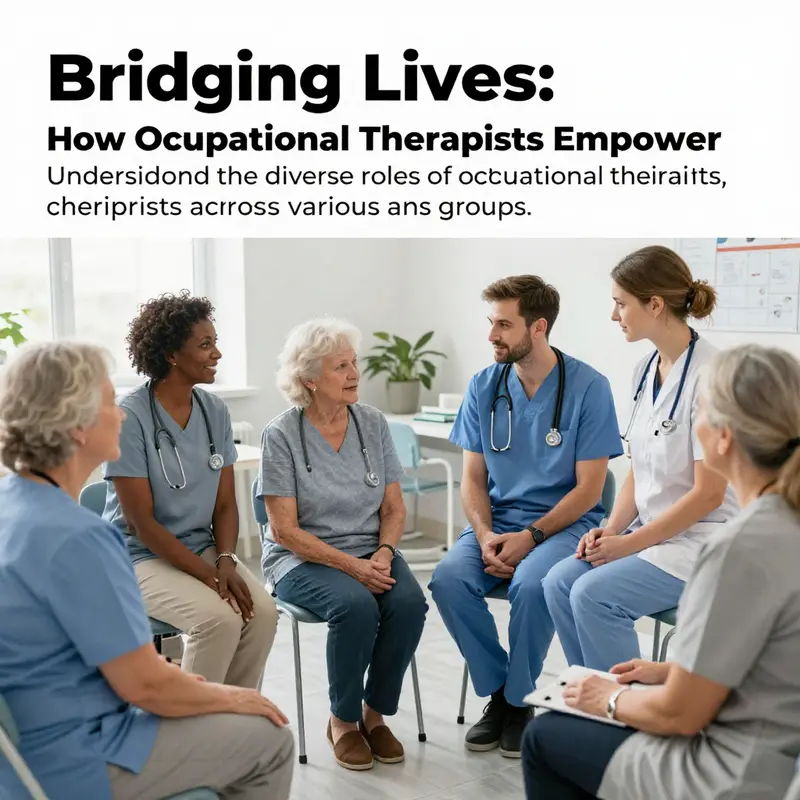
In today’s dynamic healthcare environment, occupational therapists (OTs) play a crucial role in enhancing the quality of life for individuals facing a spectrum of challenges. Whether it’s a child with developmental delays, an adult in rehabilitation, or an older adult navigating age-related conditions, OTs provide tailored interventions that enable each person to successfully engage in meaningful daily activities. This article explores who occupational therapists work with, delving into three distinct chapters: supporting children with developmental delays, aiding adults in recovery, and assisting older adults in maintaining their independence. Together, these perspectives illuminate the invaluable contributions OTs make in their clients’ journeys toward well-being and autonomy.
Who An Occupational Therapist Works With: Nurturing Development and Independence in Children with Developmental Delays

Children enter the world with a rich archive of potential, yet developmental delays or conditions can shape how they move, think, feel, and engage with the world around them. An occupational therapist works with these children to unlock independence in daily life, from the simplest self-care tasks to the more complex skills required for school, play, and social participation. The aim is not merely to teach a child a handful of isolated skills, but to weave those skills into meaningful, everyday activities that matter to the child and the family. In pediatric practice, the child’s daily routines are the stage on which growth unfolds. Every dressing task, every snack, every moment of play is treated as an opportunity to practice, adapt, and learn in a way that respects the child’s pace, interests, and environment. This approach reflects a core belief in occupational therapy: people achieve well-being through engaging in occupations they value, and those occupations can be learned, modified, and safely supported through thoughtful guidance and collaboration with caregivers and teachers.
Developmental delays can manifest across several domains—motor planning and coordination, sensory processing, fine and gross motor skills, attention and cognitive development, and social communication. When a child struggles to ride a bike, to hold a pencil, to attend in a classroom, or to initiate a social conversation, the OT steps in by observing the child in multiple contexts, identifying what is helping and what is hindering participation, and then tailoring interventions that build functional capability. The work is often highly individualized, anchored in the child’s strengths and interests, and designed to generalize beyond the therapy room into the family home, the classroom, and the community. The goal is not only to improve a child’s performance on a single task but to expand the child’s repertoire of meaningful activities so that participation becomes the natural outcome of the therapy process.
In many pediatric cases, development delays are not isolated issues but threads that interweave with a family’s daily life. OTs recognize that a child’s ability to participate in brushing teeth, buckling a car seat, or completing a worksheet is inseparable from routines, caregiver support, and environmental structure. Therefore, the therapeutic process begins with listening—listening to parents describe what a typical day looks like, what tasks feel overwhelming, and which moments elicit joy. It continues with a careful assessment that explores how the child experiences sensation, how they navigate space and movement, how they organize information, and how they regulate emotion in moments of challenge. The assessment phase is both diagnostic and collaborative, aimed at identifying practical targets that align with the family’s priorities and the child’s evolving interests.
A central concept in pediatric occupational therapy is the emphasis on participation. Children do not learn best by rote repetition of isolated exercises; they grow by doing the activities that give their days meaning. For a child with sensory-seeking tendencies, the OT might introduce rhythmic jumping, deep pressure activities, or proprioceptive input integrated into a preferred play sequence. For a child who becomes overwhelmed in a crowded classroom, the therapist may collaborate with educators to adjust the seating, provide sensory breaks, or implement a simple visual schedule that reduces anxiety and supports focus. In all cases, the interventions are purposeful, connecting the child’s actions with outcomes that matter—completing a self-care routine, finishing a school task, or joining in a game with peers. The notion of “occupation” in OT is not an abstract label; it is the lived experience of participation, learned through active engagement with caregivers, peers, and the surrounding environment.
When we consider the evidence that guides pediatric practice, several themes emerge. One is the importance of early, naturalistic interventions that embed skill-building within everyday activities. Rather than isolating a child in a clinic exercise routine, OTs aim to embed therapy moments into family routines, classroom activities, and community involvement. This approach supports the child’s ability to generalize skills to different settings and to sustain gains over time. Another theme is the value of play as a vehicle for development. Play is not frivolous in this context; it is the child’s primary occupation. The therapist uses play-based strategies to improve motor planning, problem solving, social communication, and adaptive behaviors. Play allows the child to experiment with movement, to test boundaries, and to develop resilience in the face of challenge, all within a safe, structured framework.
The practical work of pediatric occupational therapy frequently centers on improving both fine and gross motor skills, but it also embraces sensory processing and regulation. Some children experience hypersensitivity to textures, sounds, or lights, while others may seek intense sensory input. The OT designs sensory strategies that help the child modulate arousal levels, stay focused during tasks, and participate more fully in daily routines. For example, a child who struggles with handwriting might benefit from a sequence that integrates finger isolation exercises with playful, multisensory activities. A child who avoids dressing because of tactile discomfort may gain from graded exposure and adaptive techniques that make self-care manageable and even enjoyable. The therapist’s toolkit includes structured activities, but it also extends to positioning supports, adaptive equipment, and simple environmental modifications that remove barriers to participation. In every case, the child’s comfort, safety, and sense of mastery are guiding priorities.
Families are partners in the therapeutic journey. Pediatric OT does not occur in a vacuum; it unfolds within the rhythms of home life. Therapists work closely with parents, siblings, and caregivers to translate therapy goals into concrete, workable routines. This collaboration often involves coaching caregivers in carryover strategies—how to cue a child through a task, how to celebrate small successes, and how to preserve a sense of continuity across days and weeks. For younger children, the family might implement a bedtime routine that gradually models independent self-care tasks. For school-aged children, caregivers and OTs collaborate on homework routines, classroom accommodations, and communication with teachers so that gains achieved in therapy are supported across environments. The emphasis on family involvement aligns with research findings that outcomes improve when caregivers are actively engaged, informed, and confident in applying strategies beyond the therapy setting.
Interprofessional collaboration is another cornerstone of pediatric OT, reflecting the reality that children with developmental delays often require a network of supports. OTs work alongside physicians, nurses, physical therapists, speech-language pathologists, psychologists, social workers, and educators to create a coherent plan that addresses medical needs, educational goals, and psychosocial well-being. The child’s school, in particular, is a central setting where coordinated care yields tangible benefits. In schools, occupational therapists help adapt tasks to fit the child’s capabilities, propose classroom accommodations, and support the teacher in implementing inclusive practices that enable participation for children with diverse needs. The role of the OT in educational settings is not to replace teachers but to partner with them, providing strategies that help every student access the curriculum and feel successful in the classroom.
A practical illustration emerges when considering a child with developmental delays who experiences difficulty with fine motor tasks such as writing, cutting, and manipulating small objects. The OT begins with an in-depth observation of the child in different contexts—the home kitchen, the classroom, the playground. They look for patterns: does the child fatigue quickly during tasks requiring precision? Is there a mismatch between the child’s sensory responses and the demands of the environment? Do transitions between activities trigger frustration? From this analysis, the therapist designs a sequence of goals tailored to the child’s interests, such as building a sequence of steps to complete a school task, or choosing a preferred game that gradually builds hand strength and coordination. Interventions might include activities like bead threading, origami, or weaving, selected not merely for their therapeutic value but for their resonance with the child’s preferences. In many cases, a child who initially avoids a task can become engaged when the activity aligns with personal interests, a shift that fosters persistence and positive self-perception.
The environment is a powerful ally or barrier, and the OT routinely assesses and adjusts it to maximize participation. At home, modifications might involve reorganizing the kitchen to provide a clear, stable workspace, using visual supports to structure routines, and creating predictable transitions between activities. In the classroom, adjustments could include seating options that accommodate sensory needs, the use of assistive devices to support handwriting, and collaborative planning with teachers to pace tasks in a way that allows sustained attention. Even small environmental changes—like reducing clutter, placing frequently used items within easy reach, or implementing a predictable order for self-care activities—can dramatically improve a child’s sense of control and capability. The overarching aim is to enable the child to perform tasks with as much independence as possible, while also ensuring safety and promoting a positive self-image as a capable learner and participant in daily life.
Pediatric OT also emphasizes social participation and emotional well-being. Children with developmental delays often face challenges in social communication, peer interactions, and emotional regulation. Occupational therapists support these areas by designing social routines, coaching pragmatic communication skills, and modeling adaptive coping strategies. They may guide a child’s participation in group play, help them interpret peer cues, and teach strategies for joining games or conversations without feeling overwhelmed. The caregiver’s role in reinforcing these social skills at home and in community settings is equally important. As children navigate friendships and classroom dynamics, the OT works to cultivate confidence, resilience, and a sense of belonging. The ability to form meaningful connections is itself an essential occupation—a foundational element that underpins future academic achievement, vocational possibilities, and overall quality of life.
The breadth of pediatric occupational therapy means that every child’s path looks different, yet the throughline remains consistent: therapy that honors the child’s humanity, respects family priorities, and connects skills to real-world participation. The therapist’s guidance is often subtle and unobtrusive, aiming to empower the child rather than to compel a fixed sequence of tasks. Progress may be gradual, even incremental, but it continually expands the child’s access to the world around them. The child who once resisted dressing may begin to select clothes, express preferences, and complete the task with less anxiety. A child who avoided writing might begin with drawing and eventually progress to handwriting with improved control, comfort, and endurance. Each victory—no matter how small—contributes to a growing sense of capability and autonomy, which in turn can influence mood, motivation, and future engagement with learning and social life.
Central to the story of any child’s growth with an occupational therapist is the notion of meaningful activity. OTs carefully select activities that hold personal relevance for the child, whether it is a favorite game, a repeated family ritual, or a routine linked to a cherished hobby. Meaningful activity anchors practice in emotion and purpose, which enhances motivation and the likelihood that gains will endure outside the therapy sessions. In practice, this means that goals are not abstract benchmarks but concrete, daily life milestones that families can observe, enjoy, and celebrate together. When goals align with what the child values, the child’s engagement becomes more vibrant, and progress is more robust across settings—from the living room to the lunch table to the school desk.
Looking ahead, pediatric occupational therapy continues to evolve with the broader health care landscape. Advances in evidence-based practice, technology, and family-centered care reinforce the OT’s role as a facilitator of growth rather than a prescriber of rigid routines. Therapists stay current by reviewing research, attending professional development opportunities, and collaborating within disability-centering, family-first care models. They also remain attentive to the mosaic of cultural beliefs, languages, and family structures that shape how daily life is organized. This sensitivity ensures that interventions honor each family’s values and resources, making strategies sustainable and respectful. A child’s progress in therapy, after all, is inseparable from the context in which that progress occurs—the home’s warmth, the classroom’s structure, and the community’s opportunities for social participation and exploration.
The overarching narrative of pediatric occupational therapy, with its focus on children and development delayed by various conditions, is one of hopeful pragmatism. It recognizes both the limits and the possibilities inherent in every child’s journey. It refuses to see disability as a deficit that disqualifies a child from belonging; instead, it views disability as a set of conditions that require adaptive solutions, collaborative support, and a reservoir of creativity. In doing so, occupational therapists help children not only to perform tasks but to inhabit their world with greater ease, confidence, and joy. The child who learns to dress independently is not just practicing a skill; they are claiming a small, steady space of autonomy. The student who can write a few sentences with legibility and comfort is not merely meeting a classroom demand; they are expanding their capacity to communicate, share ideas, and participate with peers. The family, the school, and the therapist share in the child’s growth, recognizing that each small step is a bridge to broader participation in life’s many meaningful occupations.
For practitioners and families alike, the road is paved with collaborative strategies, patient patience, and a shared belief that development is a dynamic process. The child’s universe expands as opportunities arise to attempt, adjust, and succeed in new tasks. As this chapter explored, occupational therapy for children with developmental delays is not about fixing a problem alone; it is about nurturing a child’s form of participation and celebrating the daily acts that constitute a life well-lived. The professional’s craft lies in translating the science of development into practical, engaging, and respectful care that meets the child where they are and gently guides them toward where they want to be. In this light, the question of who an occupational therapist works with becomes an answer about partnership and possibility: with children at the center, supported by families, schools, and communities, all united in the shared aim of enabling joyful, capable participation in everyday life. For more on how occupational therapy is integrated into school settings, see The Role of an Occupational Therapist in Schools.
External resource: For a broader professional overview and standards, refer to the American Occupational Therapy Association at https://www.aota.org/.
Reclaiming Everyday Life: How Occupational Therapists Guide Adults Through Rehabilitation and Recovery
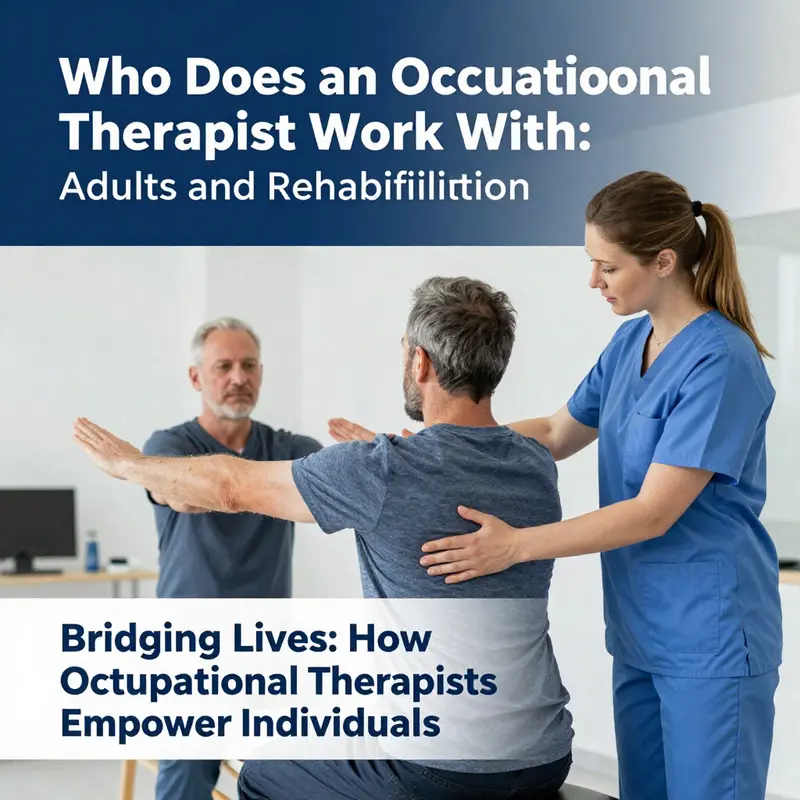
Rehabilitation for adults is not only a medical process; it is a collaborative journey that centers on what a person does every day—getting dressed, cooking a meal, returning to work, managing finances, or enjoying time with friends. In this space, occupational therapists illuminate a path from impairment to independence by blending careful observation with creative problem solving. They approach adults who have experienced injuries, illnesses, or progressive and chronic conditions with a conviction that everyday activities can be adapted, restructured, or relearned in meaningful ways. The work begins with understanding the whole person: their history, their values, their daily rhythms, and the social roles they wish to maintain. It moves toward practical strategies that respect both the limits and the strengths a person brings to recovery. In this sense, occupational therapy for adults is less about fixing a deficit and more about restoring the capacity to engage in life as the person envisions it, within the constraints of the present moment and the environment in which that person lives.
Assessment in adult rehabilitation is a nuanced, patient-centered process. A clinician begins by observing how the person currently performs essential tasks—bathing, dressing, meal preparation, mobility around the home, and community participation. The assessment gathers information from the client and often from family or caregivers, who provide important context about routines, safety concerns, and priorities. The professional then identifies functional limitations, but the focus goes beyond what is not possible. The OT translates those observations into practical goals that are both ambitious and attainable. These goals are expressed in terms of meaningful occupations—occupations that are not merely tasks but gateways to dignity, autonomy, and social connection. In this framework, success is not measured solely by improvements in range of motion or strength, but by the extent to which a person can engage with work responsibilities, maintain household roles, or participate in community life with greater ease and confidence.
A central strategy in adult rehabilitation is environmental modification. The home, workplace, and community spaces are canvases for adaptation. An OT may suggest adjusting counter heights for easier kitchen access, rearranging furniture to reduce fall risk, or installing lighting that supports visual processing. The aim is to remove or reduce barriers that make ordinary activities disproportionately strenuous or dangerous. These environmental changes are often low-tech and cost-effective, yet they can yield transformative effects. At the same time, the therapist considers task design. Tasks are broken down into smaller steps, sequenced to align with the person’s current abilities, and then rebuilt into routines that feel natural again. This process often entails teaching adaptive techniques: energy conservation strategies to pace activity, memory aids to support cognitive changes, and problem-solving approaches to handle unexpected demands. The goal is not to overwhelm but to enable a sustainable sense of control over daily life.
Adaptive strategies are tailored to the individual’s interests and responsibilities. For someone returning to a physically demanding job after a back injury, the OT might map consumer-friendly work tasks, reorganize job duties, and introduce ergonomic principles that protect the spine and reduce fatigue. For another client dealing with a hand injury, hand function training is paired with grip-enhancing techniques and the use of assistive devices that enable independent self-care. The emphasis on meaningful activities means the therapist listens for cues about what the client values most—whether that means preparing meals for grandchildren, managing the household budget, or engaging in a hobby that nourishes a sense of identity. When tasks are aligned with these values, practice becomes purpose-driven and more likely to translate into durable changes.
Assistive devices and technology often play a supportive role in adult rehabilitation, but their use is guided by patient goals rather than by novelty or expense. The OT weighs the benefits of assistive devices—such as built-up utensils that ease gripping, reachers that extend reach, or dressing aids that simplify wardrobe changes—against the client’s environment, preferences, and lifestyle. The selection process emphasizes user-friendliness, durability, and adaptability, ensuring tools can evolve with the person’s needs. In some cases, low-tech solutions are the most empowering because they require learning and practice that enhance a client’s confidence. In other situations, more sophisticated supports, like adaptive computer interfaces or memory aids, can unlock a higher level of independence in work and social life. Regardless of the level of technology involved, the underlying principle remains constant: devices should enable participation in occupations that matter to the person without becoming a new constraint.
Returning to work is a recurrent and often central focus in adult rehabilitation. The OT serves as a bridge between clinical recovery and real-world performance. They may conduct workplace evaluations to assess job demands, workspace layout, and safety considerations. A careful job task analysis helps identify which elements of a role can be modified and which accommodations are needed to prevent re-injury. Ergonomic adjustments, task restructuring, and the pacing of work responsibilities are common components of the plan. Through graded exposure and activity management, the client rebuilds stamina and precision in a controlled, supportive sequence. The process also addresses the psychosocial aspects of work: self-efficacy, identity, and the person’s sense of belonging within a team. Occupational therapists recognize that returning to work is not merely about productivity; it is about re-establishing a sense of purpose and continuity in one’s professional life. The outcome is not solely a medical restoration but a reconstitution of one’s place within the workplace community.
Collaboration is the engine that sustains these complex, interconnected efforts. OTs rarely work in isolation; they operate within a network that includes physicians, nurses, physical therapists, speech-language pathologists, social workers, and, where appropriate, vocational rehabilitation counselors. This interprofessional collaboration ensures that care is comprehensive and responsive to evolving needs. For example, a clinician may align a rehabilitation plan with a PT’s exercise program to improve mobility while avoiding competing demands on joints and muscles. SLPs contribute strategies for cognitive-communication challenges that can interfere with memory and task sequencing in daily life or work. Social workers help navigate community resources, transportation issues, and family dynamics that influence participation. Intraprofessional teamwork—where OTs coordinate with other therapists and allied professionals—also matters. Regular case reviews, shared documentation, and joint goal-setting help keep the client at the center of care, rather than letting a single specialty define the trajectory. The overarching aim is to weave a fabric of supports that can be adapted as the person moves through stages of recovery and adapts to new realities.
Beyond the mechanics of assessment and intervention, the adult rehabilitation process is anchored in a holistic appreciation of the person’s emotional and psychological landscape. Recovery can be accompanied by fear, frustration, and a sense of loss related to changing abilities. OTs respond with constructive routines that foster resilience: consistent daily schedules, predictable routines that reduce anxiety, and coping strategies that support emotional regulation during challenging moments. The work also recognizes the social dimension of health. Opportunities for meaningful social participation—shared meals, community activities, or volunteer work—provide vital motivation. Therapists routinely incorporate strategies to strengthen social connectedness, such as structured routines for communicating with family or peers, or coaching on effective collaboration within a team. In this way, rehabilitation becomes less about compensating for deficits and more about reclaiming a place in a community where the person can contribute and belong.
Cultural sensitivity and respect for diversity are essential in adult OT practice. People come to rehabilitation with varied cultural backgrounds, languages, and belief systems that shape their goals and definitions of independence. An OT’s approach honors these differences by asking open questions, listening without judgment, and reframing tasks in ways that resonate with a client’s cultural context. This may influence choices about who should participate in therapy sessions, how outcomes are framed, and what constitutes a meaningful occupation. The result is care that feels personal and authentic, rather than standardized. When care reflects a person’s values, engagement increases, and the likelihood of sustained change improves.
The trajectory of an adult rehabilitation journey is rarely linear. Progress can be incremental, with small victories that gradually accumulate into broader gains. Setbacks may occur, too, but they become opportunities to reassess priorities and refine strategies. The therapist’s role is to maintain a steady, hopeful presence and to recalibrate goals in collaboration with the client. This dynamic process mirrors the larger philosophy of occupational therapy: occupation—the things people do and choose to do—has intrinsic value, and enabling those occupations is the most potent form of therapy. When adults regain the ability to perform daily tasks, manage the home, participate in family life, and contribute to the workforce, they often experience a ripple effect. Confidence rises, mood improves, routines stabilize, and a sense of agency re-emerges. The chapter and the field alike celebrate this transformation, not as a return to a pre-illness state but as the emergence of a new, capable self better aligned with the present moment.
For readers who want to explore practical connections between theory and practice, a common starting point is the collaboration thread that threads through most adult rehabilitation cases. OTs routinely discuss approaches with colleagues to ensure that every plan respects safety, feasibility, and personal meaning. In this regard, the profession models a method of care that is practical, compassionate, and relentlessly hopeful. To learn more about how occupational therapists collaborate with other professionals and integrate their contributions into a cohesive care plan, you can read about the collaborative practices described in professional resources that accompany the field. collaborate with other healthcare professionals. This kind of cross-disciplinary dialogue is not merely a procedural step; it is a commitment to providing holistic care that honors the complexity of adult lives in rehabilitation.
In sum, occupational therapy for adults in rehabilitation is a patient-centered, environment-aware, and teamwork-driven endeavor. It recognizes that independence is not a single achievement but a continuum of capabilities that can be rebuilt, retuned, or redefined. The therapist’s craft lies in translating clinical insights into real-world strategies that are affordable, acceptable, and aligned with what matters most to the person. It is through this synthesis of assessment, adaptation, collaboration, and compassion that adults reclaim everyday life, reclaim their roles, and move forward with a renewed sense of possibility. For those seeking a broader, authoritative overview of the field, external resources from the American Occupational Therapy Association provide foundational context and illustrate how the profession conceptualizes its scope and impact across diverse adult populations. External reference: https://www.aota.org/About-OT/What-Is-OT
A Lifespan-Focused Partner: How Occupational Therapy Supports Older Adults and Aging
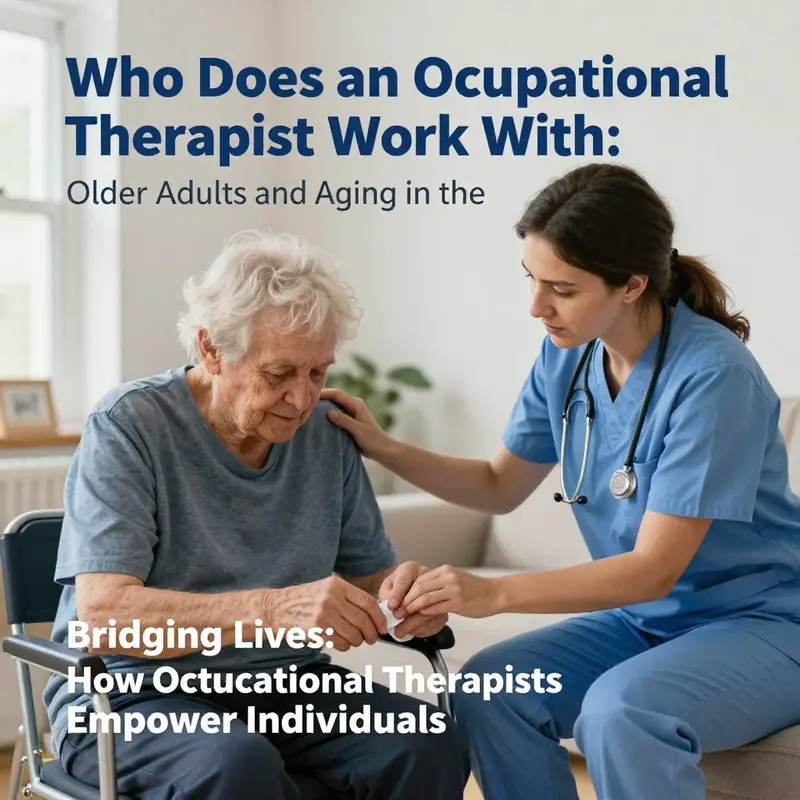
As populations around the world age, the question of independence becomes central for many people and their families. Occupational therapy offers a principled path to preserve autonomy by focusing on the everyday activities that give life meaning. The work of an occupational therapist with older adults centers not on disability alone, but on aligning practical capabilities with personal values, routines, and social roles. In this view, aging is not simply a decline to be managed; it is a dynamic phase in which skills can be refined, adapted, and sustained so that meaningful participation in daily life endures. This holistic approach recognizes that the home, the circle of friends, the ability to prepare a meal, and the capacity to organize medications are not trivial tasks but cornerstones of dignity, safety, and emotional well-being. OT care, therefore, unfolds as a collaborative journey. It invites older adults and their families to articulate what matters most, then translates those priorities into concrete, attainable actions that fit within the realities of aging bodies and evolving medical needs. The practitioner acts as a guide, analyst, and advocate—pulling together resources, adaptive strategies, and supportive environments to help people live with confidence and purpose.
At the heart of this work is a commitment to meaningful daily activities. Occupation, in the OT sense, encompasses more than work or chores; it includes self-care, mobility, communication, leisure, social participation, and the sense of identity those activities convey. For older adults facing chronic conditions, cognitive changes, or the aftershocks of acute events such as a stroke, the daily routine can become uncertain. An experienced occupational therapist begins with listening—listening to how individuals describe their goals, what activities they value most, and where they feel the greatest risk of losing independence. Then comes a careful analysis of tasks: what steps are necessary to button a shirt, prepare a simple meal, or manage a complex medication schedule? The aim is not to restore every former capacity but to enable practical, reliable participation in the activities that matter, often through adaptive strategies that respect the person’s pace, preferences, and environment.
The collaborative nature of OT practice is essential. OTs work closely with older adults and often with caregivers, family members, and other professionals to co-create intervention plans. The process is iterative and highly personalized. It begins with a thorough evaluation of strengths, needs, living situation, and safety concerns. From there, goals are identified that reflect the person’s values and lifestyle, and plans are designed to be feasible within the home and community setting. This partnership emphasizes shared decision-making: the older adult remains in control of what changes are pursued, while the OT provides expertise in activity analysis, equipment selection, and environmental modification. The idea is to turn clinical knowledge into practical, everyday changes that feel natural rather than medicalized. It is not enough to teach a compensatory technique; the intervention must fit seamlessly into the person’s routine, so it becomes a sustainable part of daily life.
A central strand of aging-focused OT is the tailoring of interventions to individual goals. This tailoring has been shown to improve engagement, mood, and functional outcomes for older adults. For example, instead of applying a generic set of exercises, an OT might design a plan that integrates balance and strength work into the act of preparing breakfast or setting up a laundry routine. This approach recognizes that activity participation is the vehicle for well-being. It also respects the person’s pace and safety needs, which can vary widely across aging individuals. In practice, tailoring often involves selecting adaptive equipment, simplifying tasks, and modifying environments so that the same activity becomes accessible to people with different levels of ability. For someone with arthritis, it might mean ergonomic tools and energy-conserving techniques that reduce pain and fatigue; for someone with early cognitive changes, it could involve structured routines and simplified, consistent cues that support memory and independence. The principle is simple yet powerful: make daily life doable and meaningful, then support the person to sustain it over time.
Accessibility and the home are frequent focal points in aging OT. Many older adults prefer to stay in their own homes, a choice tied to comfort, identity, and autonomy. Yet homes often present barriers that can limit safety and independence. OT assessment typically moves beyond the person to the environment. The clinician asks how lighting, layout, and surface textures influence activity performance. They examine the bedroom for dressing strategies, the kitchen for safe cooking and medication management, and the bathroom for fall prevention. They may suggest grab bars in the shower, raised toilet seats, or reorganized kitchen cupboards so frequently used items are within easy reach. Environmental modifications, sometimes paired with assistive devices, are not merely conveniences; they are essential supports that reduce risk, lower the energy cost of tasks, and extend independence. In this way, aging OT is as much about creating enabling spaces as it is about teaching new ways to perform familiar tasks.
Safety remains a core concern, especially in the context of chronic illness or post-acute care. Chronic conditions such as diabetes, heart disease, or sensory changes can gradually erode confidence. After a health event like a stroke, the need for immediate and practical adaptations can be even more pronounced. An OT’s safety-focused work often includes training in emergency preparation, medication management, and safe mobility strategies within the home. It also involves planning for subtle, daily risks—like slips on wet floors or the fatigue that accompanies long cooking sessions—that accumulate over time and threaten independence. The clinician’s goal is to support safe engagement in meaningful activities rather than to constrain, stigmatize, or overly medicalize aging. In many cases, this means combining task-specific training with environmental changes, adaptive tools, and supportive routines that keep a person oriented and capable.
Cognition and mood are integral to successful aging, and occupational therapy recognizes their dynamic relationship with performance in daily life. Cognitive changes—whether gradual, such as mild i nterm-5mpairment, or more pronounced after a vascular event—affect decision-making, sequencing, and orientation. OT strategies may include structured routines, external memory cues, and simplified task steps to reduce confusion and error. Beyond cognition, mental health—often intertwined with physical decline—shapes motivation, social participation, and adherence to adaptive plans. An OT can help cultivate daily rituals that foster a sense of control, predictability, and purpose. For many older adults, routine itself becomes a therapeutic tool; consistent activities create a scaffold that supports psychological balance and social connectedness. The emphasis then extends to meaningful participation, not merely symptom management, because engagement in valued activities contributes to mood, self-worth, and overall quality of life.
The issue of access to occupational therapy services for older adults is a critical, real-world consideration. Research using large national datasets has highlighted that, while comprehensive stroke teams and multidisciplinary care frequently include OT, disparities in access persist. Geographic location, socioeconomic status, and health system structure can determine whether an older adult receives timely, appropriate OT. This gap matters because the benefits of OT—improved independence in daily tasks, reduced caregiver burden, and better safety outcomes—depend on access to skilled evaluation and ongoing, personalized intervention. The reality is that aging is not uniform across communities. Some individuals have robust pathways to therapy and home-based services, while others face barriers such as transportation challenges, limited insurance coverage, or shortages of qualified therapists in rural areas. The consequences of these gaps can be measurable: delayed return to independence after a health event, unnecessary long-term dependence on care, or preventable safety risks at home. Addressing these disparities requires a multi-faceted approach that includes policy-level changes, creative care models, and community resources that extend therapy into home and community settings. It also requires sensitivity to cultural and linguistic needs, because aging experiences and expectations around independence can vary across populations.
Within this evolving landscape, the role of the occupational therapist is often anchored in collaboration with a broader health and social support network. OTs frequently work alongside physicians, nurses, physical therapists, speech-language pathologists, and social workers to deliver comprehensive care. Each professional contributes a facet of expertise: physicians interpret medical diagnoses, nurses coordinate care plans, PTs address mobility and strength, SLPs support communication and swallowing, and social workers connect individuals with services and finances. The OT, in turn, translates medical and functional information into practical strategies that enable participation. This teamwork is not a mere add-on; it is a core mechanism through which aging individuals can sustain independence amidst complex health needs. The resulting intervention plans address a spectrum of goals—from improving dexterity to manage buttons or zippers, to enabling safe cooking of a simple meal, to organizing medications with confidence, to maintaining social ties through community activities. Each goal is a thread in a larger tapestry of living well in later years, and the OT helps weave those threads into a coherent, achievable routine.
As the evidence base for aging-oriented OT expands, so too does the scope of what it means to support an older adult. Tailored interventions can incorporate creative solutions that honor personal preferences while introducing practical adaptations. For example, a therapist may integrate cooking into a daily routine in a way that preserves autonomy during recovery from illness, using task simplification, timer cues, and adaptive utensils. They may suggest a home exercise program that aligns with a person’s favorite activities or social roles, such as gardening or volunteering, rather than prescribing generic movements. This approach respects the person’s identity and fosters ongoing engagement with life roles. The emphasis on meaningful activity also supports mental health, because participation in valued tasks is closely linked to mood and a sense of purpose. The occupational therapist becomes not just a clinician but a partner in maintaining the person’s sense of self through the ordinary, yet profoundly consequential, acts of daily life.
For readers seeking a focused lens on what aging OT looks like in practice, the field offers rich examples and guidance. If you want to explore geriatric OT more deeply, you can learn about the specific considerations and approaches within the broader scope of aging care through dedicated resources such as occupational therapy geriatrics. This emphasis on geriatrics is not a niche; it is a central pillar of occupational therapy that informs how therapists conceptualize tasks, design environments, and partner with families to sustain independence over years of aging.
The broader arc of aging and occupational therapy points toward a hopeful, practical vision. Aging can bring slower pace and fewer physical resources, yet it also offers opportunities for adaptation, redefinition of daily roles, and renewed participation in activities that matter. By centering on meaningful occupations, OTs help older adults navigate weighty transitions—retirement, changes in living arrangements, shifts in health status—without losing the sense of purpose that makes life satisfying. This work extends beyond the individual to families and communities, inviting them to see everyday tasks as sites of capability rather than barriers. The outcome is not merely the absence of illness, but a sustained engagement with life—area by area, task by task, moment by moment.
Ultimately, the story of occupational therapy with older adults is a story about empowerment through practical wisdom. It is about turning clinical insight into concrete steps that fit the texture of daily life. It is about recognizing that independence for an aging person is a living, working process that evolves with health, environment, and social connections. It is about honoring the person’s goals above all, while offering the tools and supports necessary to pursue those goals with confidence. As aging continues to shape families and health systems, occupational therapy remains a steadfast partner—helping older adults live not merely longer, but more fully, with safety, meaning, and a dignified sense of control over the day-to-day activities that define who they are.
External resource for further reading: https://www.aota.org/About-OT/Who-We-Serve/Older-Adults
Final thoughts
Occupational therapists are vital allies in the quest for improved quality of life across all stages of development. By working hand-in-hand with clients—whether they are children facing developmental hurdles, adults on the road to recovery, or older adults seeking to maintain their independence—OTs foster capabilities that enhance daily living. This collaborative approach not only supports the physical aspects of therapy but also nurtures emotional and social well-being, truly embodying the essence of holistic care. Understanding the breadth and scope of who occupational therapists work with enables business owners in the healthcare sector to appreciate the multifaceted nature of OTs and the significant impact they have on individuals and communities alike.