
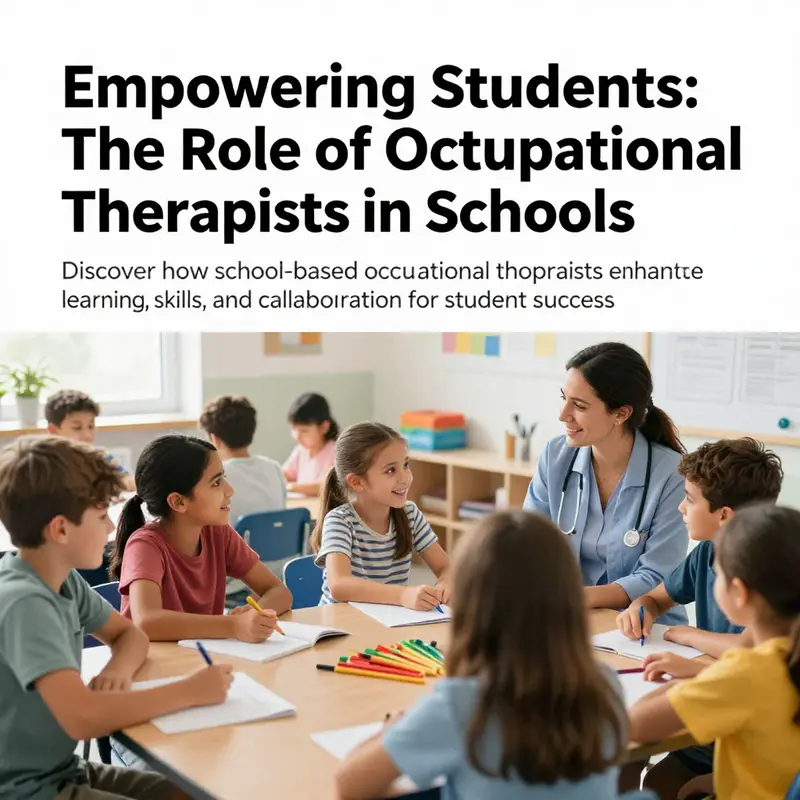
Occupational therapists (OTs) play an essential role in educational settings, primarily focusing on supporting students with disabilities and developmental challenges. By providing targeted interventions, OTs enhance not only academic performance but also social interactions and daily living skills. Their collaboration with educators and families optimizes the learning environment, ensuring that all students can thrive. This article delves into how occupational therapists contribute to academic learning, develop fine motor skills, enhance social skills, and strengthen partnerships with educators and families.
From Fine Motor to Focus: The Role of School-Based Occupational Therapy

School-based occupational therapists work at the intersection of health, development, and education. They are partners inside classrooms and school life, helping students participate in daily tasks that support learning. Their work is grounded in the belief that participation—holding a pencil, managing a busy room, initiating tasks—builds the foundation for academic progress and social growth. OT in schools is about enabling students to engage with learning in a way that fits their bodies, minds, and communities, and it unfolds through collaboration with teachers, families, and other professionals.
Foundational skills form the core of everyday school life. Fine motor control, sensory processing, visual perception, and executive functioning influence a student’s ability to participate in writing, cutting, sequencing activities. When a child struggles with handwriting, the issue is rarely only about grip; it can involve arm stability, eye–hand coordination, sensory sensitivity, or fatigue that makes writing feel overwhelming. An OT identifies the contributing factors in the moment and designs strategies that address them in real time while building transferable, long-term skills.
In practice, OTs blend therapy with classroom tasks so gains transfer to notebooks, reading aloud, and use of technology. Interventions are often aligned with the student’s IEP or 504 plan, specifying goals and accommodations. A child may work on a handwriting plan that progresses from grips to multi-sensory writing approaches, with the aim of legibility and efficiency that preserve cognitive resources. Sensory differences may lead to a calm, predictable space or adaptive tools that reduce distraction, enabling better focus during instruction. The work is not about a single technique; it is about a family of options that can be adapted as needs change.
The day-to-day is a mix of direct skill-building and consultative support. Some sessions are one-on-one or in small groups focused on hand strength, fine motor control, or self-regulation. At other times the OT acts as a consultant, helping teachers adjust tasks and environments for accessibility. A teacher might arrange seating, chunk instructions, or use visual schedules, while the OT suggests practical changes like organizing materials within reach, providing adaptive equipment, or embedding movement breaks that support attention without sacrificing instruction time. The overall goal is a learning ecology in which the student participates more fully with fewer friction points.
Hands-on work often centers on handwriting as a gateway to participation, but the underlying skills matter across subjects. Strength, stability, and dexterity affect note-taking, math tasks, and technology use. Adaptive tools—shaped pencils, grips, or alternative media—can lessen fatigue and support efficient work. When handwriting is not the primary barrier, the same foundational abilities still influence performance across literacy, numeracy, and digital tasks.
Beyond the pencil and paper, sensory processing is a daily classroom reality. Busy environments can be overwhelming for some students and soothing for others in different moments. An OT may design sensory-friendly adjustments such as discreet fidget tools, flexible seating choices, or predictable routines that create safety and control. The aim is not to erase challenges but to equip students with strategies to navigate them, resulting in improved attention, task initiation, and engagement.
Visual–perceptual skills and executive functioning also shape classroom success. Spatial relations, figure-ground discrimination, and eye–hand coordination influence reading fluency, problem-solving, and the use of digital tools. OTs work on activities to strengthen perception and organization, and teachers learn how to reduce visual clutter and provide strategies for multi-step tasks. Executive functioning coaching often includes breaking assignments into steps, using checklists, and establishing routines for materials and workspace. When these supports travel across environments, students experience a more predictable path through complex activities.
The collaborative core of school-based OT is essential. Inter-professional teamwork ensures therapeutic strategies accompany students across classrooms and after-school settings. Regular communication with teachers aligns expectations with interventions, while collaboration with families supports continuity at home. This teamwork is grounded in evidence and responsive practices, fostering progress that is meaningful in the school day and beyond.
In a typical day, an OT observes transitions, plans a few targeted strategies, and collaborates with staff to implement them within a period. The goal is to see increased independence, less frustration, and greater participation in group activities. Ultimately, school-based OT strives to connect therapy to the lived experience of learning, supporting students to become active, confident learners who can navigate school life with autonomy and resilience.
For readers seeking a practical view, the literature highlights the value of integrating therapy with instruction, tailoring plans to individual students, and upholding student autonomy. The practice is evidence-informed and adaptive, with outcomes measured through meaningful participation and academic engagement. In this light, school-based occupational therapy is not a separate service but a set of supports embedded in the daily life of the classroom, designed to remove barriers and enable every student to participate fully.
Hands in the Classroom: How School-Based Occupational Therapists Forge Independence, Skill, and Learning
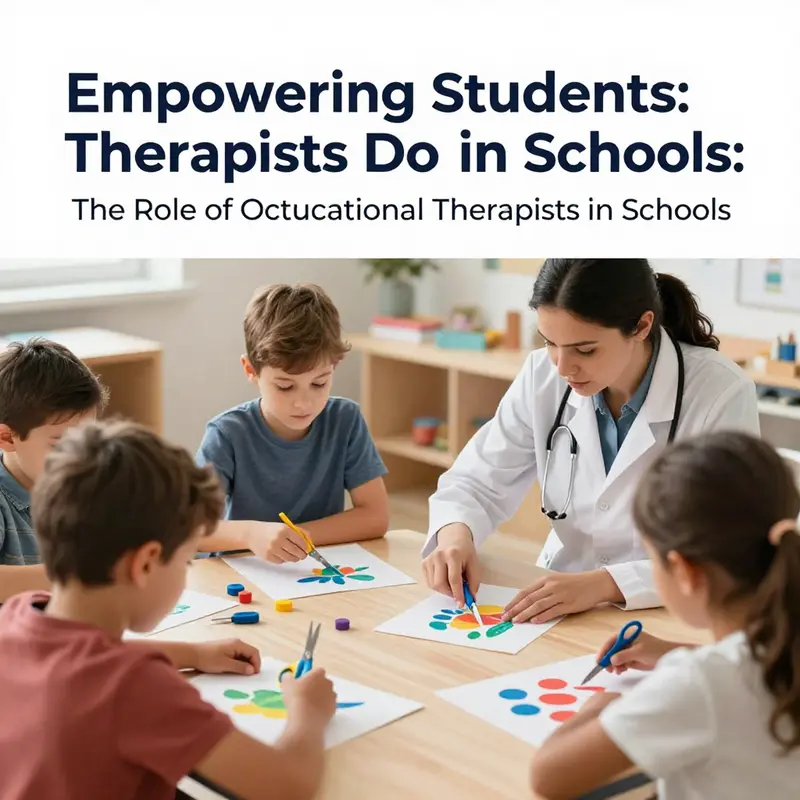
When people imagine a school day, they often picture teachers at the front of the room, chalk dusting the board, and students following a schedule of reading, math, and lunch. But the everyday rhythm of a successful classroom is sustained by a quieter, less visible presence: the occupational therapist who moves between desks, therapy rooms, and the hallway to weave movement, attention, and independence into the fabric of learning. In schools, occupational therapists do more than address awkward handwriting or clumsy scissors. They help students participate in meaningful, everyday activities that underpin academic engagement and social growth. Their work is not confined to a single skill or task; it is a holistic effort to shape the conditions under which a child learns, moves, and relates to others. The result is not a set of isolated exercises, but a program of supports that travels with the student throughout the school day, from the moment they arrive to the last bell of the day.
At the heart of school-based occupational therapy is the development of fine motor skills, sensory processing, and self-regulation, all of which support classroom participation. Fine motor skills enable students to hold a pencil, manipulate small manipulatives, cut with scissors, and tie or button clothing when needed. Sensory processing helps a student filter, interpret, and respond to the many sensory inputs in a busy school environment—sounds in the hallway, lighting in the classroom, the texture of a desk, the pressure of a pencil grip. Self-regulation anchors a student’s ability to sustain attention during instruction, resist distractions, and recover quickly from overstimulation. These domains are not separate silos; they interact in dynamic ways. A child who struggles with sensory overload may become fidgety, which in turn disrupts handwriting practice or listening during circle time. An OT’s work is to identify how these systems converge in the classroom and to tailor interventions that support the whole learning experience.
In many cases, the path to improved function begins with careful observation and assessment. OTs in schools watch how a child approaches a task in the actual learning environment, not just in a clinic. They note how long a student can attend to a writing task, how a child grips a pencil, how they organize materials for a given assignment, and how they transition between activities. They also assess environments—desk height, seating options, the availability of writing surfaces, the location of materials, and the presence of reminders or cues that help a student stay on task. These observations feed into a plan that is tailored to the individual, grounded in evidence-based practice, and aligned with the student’s IEP or 504 plan. And because schools are teams, the OT’s findings are communicated in a way that teachers and families can act on, ensuring that recommendations reach students where they live their daily school day.
One of the most powerful aspects of school-based OT is the careful balance between direct intervention and consultative support. Some students benefit from short, targeted sessions in which the OT directly teaches strategies for handwriting, improved grip, or postural control. Other students gain more from the OT’s guidance to teachers, who learn to embed strategies into daily routines. For example, an OT might demonstrate a grip technique and then coach a classroom teacher on how to reinforce that technique during writing tasks across the day. The therapist may also suggest environmental modifications that reduce friction and help a student stay organized. A simple change—adjusting seating to enable better postural support, providing a small pencil grip, or arranging materials in a predictable order—can dramatically increase a student’s ability to participate in class without drawing undue attention to themselves. The collaboration is iterative: short-term changes are evaluated, data are collected, and plans are revised as the student progresses.
Consider a student who experiences difficulty with handwriting due to a combination of weak hand strength, shallow finger opposition, and slow processing speed. The OT might begin with a targeted program to build hand strength and dexterity—activities like squeezing theraputty, finger-thumb opposition drills, and controlled release exercises. Alongside this, the OT introduces a grip strategy, perhaps a tailored pencil grip or a weighted writing utensil, while the child practices with short, frequent writing tasks rather than long, uninterrupted sessions. The aim is not to force the student to conform to a standard pace but to gradually expand capacity and fluency within the real constraints of the classroom schedule. The student learns to hold tools with confidence, to transition between writing and rest periods without losing focus, and to recognize when a short break is needed to refocus. In this process, progress is not measured solely by the number of letters formed but by the quality of participation—the child’s ability to contribute to class work, to sustain attention, and to manage small, everyday tasks with increasing independence.
In practice, a cornerstone of school OT is the integration of skill-building into the classroom routine rather than treating it as a separate, pull-out service. An OT might work with a small group of students at a flexible workstation near the classroom door, or they might provide in-situ coaching during a writing block. The goal is to weave therapeutic strategies into the fabric of daily activities. This might involve teaching a student how to plan a project by breaking tasks into steps, how to organize materials in labeled bins to reduce clutter, or how to use a timer to manage transitions between tasks. The act of planning, organizing, and self-monitoring can become a classroom-ready habit, reducing the need for accommodation overrides and enabling students to participate more fully in instruction and discussion.
Another essential dimension is the teacher-OT partnership. Effective collaboration hinges on shared language, clear goals, and careful scheduling. OTs translate clinical findings into classroom-ready strategies, while teachers provide real-time feedback about what works under the pressures of a busy instructional day. For families, this collaboration extends into home routines and community activities, ensuring consistency that supports generalization of skills beyond school walls. The IEP or 504 plan acts as a road map, but the journey is co-owned by the student, family, teachers, therapists, and administrators. When goals are well defined, progress is measurable, and the interventions are practical, a student is more likely to experience meaningful improvement across settings.
Part of the OT’s contribution is facilitating self-advocacy and independence. As students grow more confident in managing their own tools, workspace, and routines, they are also learning to communicate their needs. A child might ask for a preferred seating option, request extra time for a task, or suggest a strategy that helps them stay organized. These are not merely skills for school; they are life competencies. Occupational therapists help students articulate when they need help and how best to receive it. They teach self-monitoring strategies so that students can recognize when they are becoming overwhelmed and know how to employ a reset plan—perhaps a physical movement break, a sensory modulation technique, or a brief quiet moment with a chair in a calm corner. The ultimate objective is not to erase challenges but to empower students to navigate them with confidence and dignity.
The role of the OT in schools extends beyond the classroom to support participation in broader school life. Social interactions, collaborative projects, and extracurricular activities often hinge on the same underlying skills that support academic tasks. A student who can regulate emotions, attend to instructions, and manage small motor tasks is better positioned to participate in art clubs, sports, music, and peer group activities. In many cases, OTs collaborate with coaches and activity sponsors to adapt routines, equipment, and practices so that a student can join a team practice, handle a sports drink bottle, or use adaptive art tools during a class project. This inclusive approach reinforces the message that school life is interconnected, and that participation in one area reinforces growth in others. When a student experiences success across multiple domains, the entire school experience becomes more meaningful and motivating.
Progress monitoring in school OT is ongoing and data-driven. Therapists track changes in speed, accuracy, endurance, and functional independence across tasks that matter to the student’s daily life. They observe a spectrum of behaviors: attention to task, organization, self-regulation, and problem-solving. They use standardized tools alongside classroom-based measures to determine whether a skill transfer has occurred—from therapy tasks to pencil-and-paper work, from a structured activity to a spontaneous classroom assignment, from the therapy room to the cafeteria line. This data informs decisions about the intensity and duration of therapy, the selection of tools, and the timing of transitions between direct intervention and coaching of teachers. It also provides families with tangible evidence of progress, which is crucial for maintaining momentum and aligning expectations across home and school environments. The emphasis is on practical outcomes that translate into real-world independence, rather than on abstract metrics alone.
The practitioner’s toolbox is diverse, reflecting the varied needs of students and the realities of school life. It includes not only traditional therapy materials but also everyday classroom tools—glue sticks, scissors, paper, pockets of sensory-friendly fabric, and simple scheduling aids. It can involve adaptive devices such as pencil grips, weighted utensils for meals, specialized chair cushions, or slant boards to stabilize the wrist during writing. It often means rethinking a routine: the timing of transitions, the length of a writing block, the arrangement of desks to reduce visual or auditory overload, or the use of visual schedules to cue expected activities. The aim is to diminish barriers to participation without altering the core structure of the school day. When accommodations feel like part of the environment rather than a separate intervention, they become sustainable and less stigmatizing for students.
For readers curious about the broader context of this work, the article on the role of an occupational therapist in schools offers a comprehensive lens on how these roles unfold in practice. It traces how OTs balance direct service with classroom collaboration, and it situates school-based practice within the larger landscape of educational support. The discussion highlights the same core themes described here—assessment in real settings, goal-focused intervention, environmental modification, and a commitment to inclusive, student-centered outcomes. Reading about this broader role can deepen understanding of how a single therapist contributes to a whole-school approach to learning and development. https://coffee-beans.coffee/blog/the-role-of-an-occupational-therapist-in-schools/.
Ultimately, the work of school-based occupational therapists embodies a philosophy of practical empowerment. They meet students where they are, interpret the everyday friction of classroom life, and translate it into opportunities for growth. They recognize that a successful IEP is not a collection of isolated goals but a coherent program that supports a student’s ability to participate, learn, and connect with peers. They honor each child’s pace and preferences, offering structured supports that can be adjusted as the student’s abilities evolve. In doing so, they help to create classrooms that are not only inclusive in policy but accessible in practice—where every child has a real chance to engage with the curriculum, to build competence in motor and cognitive tasks, and to experience the pride that comes with growing independence. The school day becomes a platform for lifelong skills, and the student’s journey through education is enriched by the quiet, persistent work of occupational therapy.
External resource: https://www.aota.org/
Beyond Fine Motor: How School-Based Occupational Therapists Foster Learning, Social Skills, and Everyday Independence
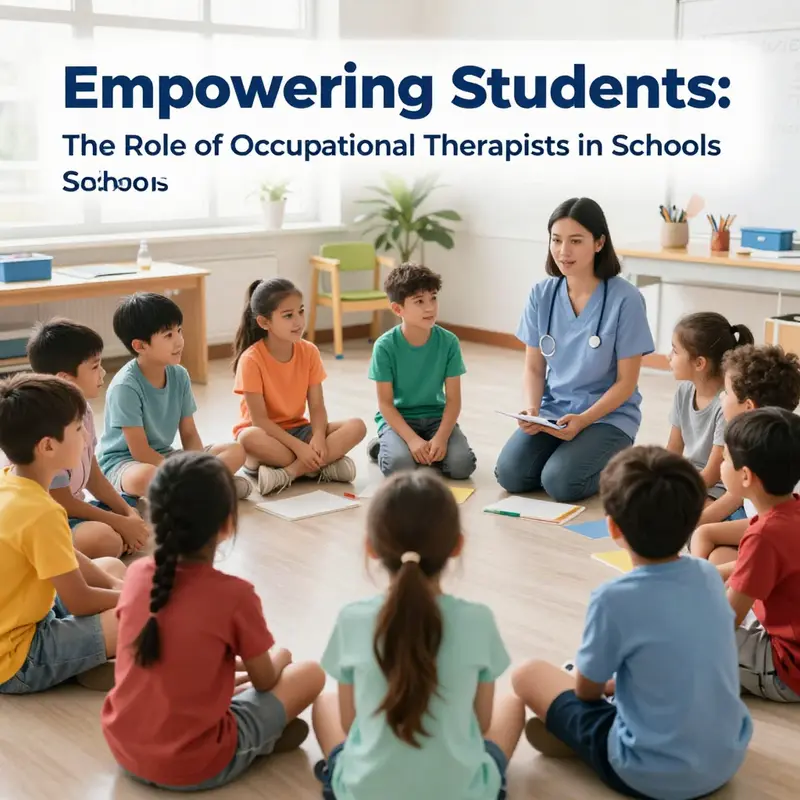
In the halls of a school, the work of an occupational therapist often happens quietly, behind the bustle of bells, worksheets, and group projects. Yet the impact of their hands-on, evidence-informed practice stretches far beyond handwriting or pencil grip. School-based OTs cultivate a web of skills that lets students participate meaningfully in classroom life, navigate social encounters with confidence, and manage the daily routines that make learning possible. Their purpose is not to replace teachers or to turn every child into a high achiever on a single metric, but to level the field so each student can access, engage with, and contribute to the learning community. The everyday classroom is a dense ecosystem of cognitive tasks, sensory inputs, emotional regulations, and social cues. When a student struggles in any of these areas, progress may stall. An OT’s work begins with listening—to the child, to families, and to teachers—so that interventions feel supported, relevant, and sustainable across home, school, and community settings. This orientation toward holistic participation is what sets school-based occupational therapy apart from more singular goals like legibility or speed alone. It is the bridge between capability and opportunity, a bridge that is built through thoughtful assessment, collaborative planning, and carefully designed opportunities for practice in real-world contexts.
The assessment process in schools is not a single moment of testing. It is an ongoing dialogue that weaves together observations of how a student moves, handles materials, and responds to social situations, with a careful charting of how these factors interact with learning tasks. In many cases, the outcomes are encoded in an Individualized Education Program (IEP) or a 504 Plan, documents that translate a child’s unique profile into specific, measurable goals. The OT contributes data about functional performance that complements cognitive and academic evaluations. The result is a plan that does not isolate the student’s needs but threads them through daily routines, classroom design, and instructional methods. Importantly, the OT’s role encompasses both direct intervention and consultative support. They may work one-on-one or with small groups, teaching strategies for focus, self-regulation, and purposeful movement. Equally, they offer guidance to teachers and paraprofessionals on how to adapt tasks, spaces, and schedules so learning can proceed with fewer barriers. In this sense, the OT is both a learner and a facilitator, modeling adaptable, evidence-based approaches that teachers can carry into every lesson.
When the chapter turns specifically to social skills, the OT’s contributions become especially visible and transformative. Social participation—initiating and sustaining conversation, reading social cues, negotiating turn-taking, and managing conflicts—often underpins a student’s willingness to participate in group work or extracurricular activities. An OT designs targeted interventions that are uniquely tuned to each child’s profile. These interventions may address communication styles, emotional regulation, or the development of cooperative strategies that support peer relationships. A central method is structured play, a deliberate, scaffolded approach that moves from guided interactions to more autonomous social exchanges. In practice, a group activity might begin with clear roles, predictable rules, and a facilitator who models appropriate body language and listening behaviors. As students gain comfort, the OT gradually releases control, inviting students to initiate conversations, interpret nonverbal cues, and resolve minor disagreements. This progression—guided practice, feedback, then independent use—helps children transfer skills from a therapy session to the cafeteria, the playground, or a crowded hallway. It is a painstaking, patient process, but one whose rewards accumulate as confidence, empathy, and cooperation extend into academic tasks and friendships alike. For readers who want a concise formulation of how this role unfolds in schools, the detailed exploration found in the role of an occupational therapist in schools offers a compact map of these practices and their rationale.
A core strength of school-based OT lies in its collaborative stance. OTs do not work in isolation; they operate within a network that includes teachers, school psychologists, speech-language pathologists, families, and sometimes outside specialists. This collaboration is not a perfunctory handshake at an annual IEP meeting but an ongoing exchange that shapes daily classroom life. For instance, an OT might partner with a teacher to create a seating arrangement that reduces sensory overload during a discussion circle, or to adapt a group project so that a student who struggles with regulation can contribute meaningfully without becoming overwhelmed. The goal is consistency across settings: the same strategies, reminders, and supports appear in the classroom, during bus rides, and at home so that students feel competent in multiple environments. This alignment is particularly important for students whose families are balancing medical appointments, therapies, and schooling. When families see the same strategies echoed in school and at home, the child’s sense of predictability increases, and anxiety often decreases. It is in these moments of synchronized care that the OT’s influence becomes both practical and deeply personal.
Underlying social skill development is often a cluster of sensory, motor, and behavioral factors that can complicate participation. A student who experiences sensory overload in a loud classroom may find it difficult to contribute in a group discussion, not from a lack of interest but from an overwhelmed nervous system. An OT responds with a toolkit of accommodations and strategies that support self-regulation and engagement. Noise-reduction options, quiet breaks, movement strategies, or sensory-friendly transitions can reduce the friction that disrupts social exchanges. The therapist’s role then extends to helping teachers recognize signs of overload, anticipate times of high demand, and weave flexible routines into the school day. This attentional geometry—knowing when to prompt, when to pause, and when to offer a break—helps students stay present in conversations and learning activities rather than retreating from them. The emphasis on sensory-based supports does not stigmatize the child; it normalizes the child’s need to participate in a way that respects the body’s signals. When these adjustments are embedded in a classroom’s fabric, social interactions become less fraught and more rewarding, enabling peer relationships to form more naturally over time.
The social dimension cannot be separated from the broader avenue of daily independence. OTs help students master routines that locals might take for granted but which can be overwhelming for a child with coordination, executive-function, or organizational challenges. Consider the simple acts that support classroom participation: gathering materials, transitioning between activities, and recording notes or reminders. These tasks can demand fine motor precision, memory, planning, and self-monitoring. An OT may introduce tools or techniques—such as consistent checklists, chunked tasks, or adaptive equipment—that reduce cognitive load and free bandwidth for social interaction. The intent is not to shed complexity from learning but to distribute it in ways that align with a student’s strengths. When a child can organize a binder, carry supplies, and plan a brief oral presentation with less anxiety, the student is more willing to join a group discussion, ask questions, or contribute ideas. In turn, peers perceive the student as a capable contributor, reinforcing reciprocal social engagement and, over time, strengthening classroom cohesion.
This integrative work rests on a foundation of purposeful practice and evidence-informed decision making. OTs in schools continuously refine goals with families and educators, tracking progress across multiple domains: social participation, academic engagement, emotional regulation, and functional independence in school routines. The results can be visible in small but meaningful shifts: a student who volunteers to read aloud with a peer partner, a child who smiles and maintains eye contact during a group task, or a learner who asks for a brief break before a stressful transition and then returns with renewed focus. These changes accumulate, altering a student’s sense of belonging within the classroom and their willingness to engage in activities they once avoided. Importantly, these gains rarely occur in isolation. They ripple outward, supporting better attendance, more consistent participation, and greater willingness to seek help when needed. The OT’s work thus becomes a catalyst for broader inclusion, an essential ingredient in classrooms that strive to honor diverse ways of thinking, moving, and learning.
The practical realities of collaboration and intervention are buoyed by a shared language of goals and outcomes. An OT’s plan often translates into concrete classroom adaptations and measurable steps. For example, a goal might specify that a student will demonstrate appropriate turn-taking during a small-group task, with observable progress logged across several weeks. In another instance, a student who experiences difficulty with emotional regulation during transitions might be taught a brief self-calming routine and cues to signal readiness to re engage. Progress toward these goals is tracked through ongoing data collection, feedback from teachers, and periodic re-evaluations. The outcome is a living document—a plan that evolves as a child grows, as classroom demands shift, and as family circumstances change. This dynamic process embodies the core philosophy of school-based OT: practice in the real world, informed by careful observation, and shared across the learning community.
The social dimension and the daily life of school are more than the sum of isolated interventions. They are the daily orchestration of skills that enable participation, communication, and growth. OTs in schools help ensure that every student has a fair chance to contribute to class discussions, collaborate on projects, participate in clubs, and enjoy the same opportunities for social connection as their peers. Beyond the classroom, their work extends to sports teams, art programs, and extracurricular activities that help solidify friendships and reinforce a sense of belonging. In this broader sense, occupational therapy in schools is not about fixing deficits alone; it is about designing an environment and a set of supports that align with a student’s interests, strengths, and needs. When schools invest in these supports, they send a powerful message: differences are expected, accommodated, and valued as part of the diverse tapestry of learning. The reward is visible in students who move through the day with more confidence, more capability, and more opportunities to grow as collaborators, problem-solvers, and compassionate peers.
For readers who want a concise reference to the professional framework guiding these practices, the American Occupational Therapy Association provides a comprehensive overview of standards, evidence-based approaches, and advocacy related to school-based practice. This external resource offers a broader lens on how OT supports inclusive education and the ongoing professional development that keeps practice responsive to changing classrooms and communities. External resource: https://www.aota.org/
Inside the School OT Studio: How Occupational Therapists Enable Learning, Independence, and Inclusion
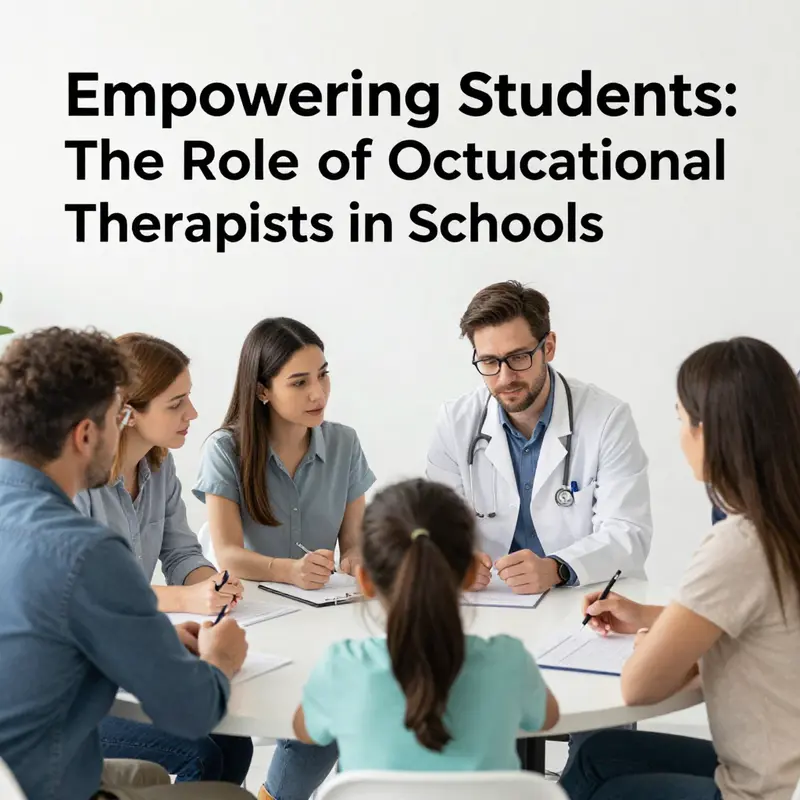
In a school building, the presence of an occupational therapist often feels quiet but transformative. OTs in schools are not merely clinicians who visit for a few sessions; they are partners who help students turn potential into participation. They work at the intersection where learning, daily living, and social engagement converge, making it possible for students to approach the classroom with confidence, curiosity, and competence. The work unfolds across the day in ways that might not always be visible from a hallway, yet it is foundational to access, equity, and meaningful inclusion. When a student can hold a pencil, regulate a rising tide of sensory input, organize materials, or shift a mindset from frustration to focus, the classroom becomes a place where ideas can be explored rather than a setting where barriers dictate pace and participation.
At the heart of school-based occupational therapy is skill development that supports learning. This begins with the broad categories of motor skills, sensory processing, visual-perceptual abilities, and executive functioning, all of which contribute to a student’s ability to engage with tasks, follow directions, and sustain attention. Fine motor coordination and handwriting have long been central concerns in classrooms where penmanship and written output are integral to assessment and demonstration of knowledge. Yet the OT’s contribution extends well beyond the grip on a pencil. It includes the precision and control needed to cut, manipulate small objects, and work with tools in science labs or art studios. It also encompasses the eyes and brain, helping students interpret visual information, organize space, and anticipate the sequence of steps required to complete a project. When a student struggles with visual-motor integration or hand-eye coordination, the OT’s role is to scaffold efficiency and reduce cognitive load, so that the student can devote bandwidth to thinking and learning rather than wrestling with mechanics.
Sensory processing sits at the core of classroom participation. Schools are bustling ecosystems where noise, visual stimuli, and physical activity collide. For some students, this environment can feel overwhelming, pushing attention away from the teacher’s instruction and toward internal chatter or bodily cues. An OT in this context helps identify sensory drivers—whether a student overreacts to sound, seeks movement, or requires deep pressure to feel grounded. Interventions are not about masking a child’s sensory profile but about aligning the environment with the child’s needs and teaching strategies that promote adaptive responses. This may involve simple modifications like seating arrangements that reduce distractions, fidget supports that allow for regulated movement, or sensory breaks that help a student reset before re-engaging with learning. The aim is not to medicate away struggle but to offer tools that allow the nervous system to participate more effectively in the classroom.
Executive functioning, organization, and self-regulation are skills that directly affect classroom performance. An OT’s work often targets routines, materials management, and the sequencing of activities. For a child who feels overwhelmed by a crowded desk or a multi-step assignment, the OT can introduce structured schedules, visual checklists, and predictable rubrics that translate complex tasks into achievable steps. These strategies promote independence and reduce anxiety, enabling students to initiate tasks, monitor their progress, and reflect on outcomes with growing autonomy. In practice, this means the student learns to prepare for handwriting tasks with the right grip, posture, and attention cues; to chunk a long reading assignment into manageable portions; and to use a short, repeatable warm-up routine that primes focus at the start of a lesson.
A defining characteristic of school-based OT is collaboration. The therapist works shoulder to shoulder with teachers, special education staff, school psychologists, speech-language pathologists, administrators, and families. The process begins with listening—really listening—to a student’s strengths, challenges, and goals as they relate to school performance. OTs then translate those insights into practical strategies that can be embedded into daily routines. This collaborative model ensures consistency across home and school, a continuity that maximizes a child’s progress. The OT does not operate in a silo; rather, the therapist becomes a resource for teachers who want to adapt tasks and environments to be more inclusive. This can include designing flexible seating options, positioning tools to support posture, or providing adaptive implements that help a student participate in writing, cutting, or other classroom tasks without drawing undue attention to their differences.
The role of collaboration also extends to families. Parents are often the most reliable co-educators in a child’s development. OTs equip families with practical techniques that reinforce school-based strategies at home, creating a consistent, predictable rhythm that reduces the cognitive dissonance a child might feel when moving between school routines and home life. This continuity is critical for building confidence. When a family understands how a student’s challenges manifest in different settings, they can support the same behavioral cues, the same stepwise approaches, and the same expectations, which in turn solidifies new skills as part of a child’s identity at home and at school. The shared goal remains simple and powerful: the child can participate in meaningful activities with peers and classmates, feel capable of contributing to group tasks, and develop a sense of mastery across contexts.
The tangible interventions OTs employ in schools are as varied as the students they serve. Some focus on direct intervention with a particular student—guided practice in handwriting, fine motor games that promote dexterity, or sensory strategies that support self-regulation during transitions. Others operate in a consultative capacity, supporting teachers who want to modify classroom layouts, adjust instructions, or structure routines in ways that reduce barriers to learning. This could mean recommending a lightweight pencil grip, a slant board for writing, or a simple visual schedule that clarifies the day’s sequence. It might also involve suggesting environmental modifications, such as establishing a quiet corner in the classroom, creating calm-down spaces, or setting up predictable routines that give students a sense of control over their day. Importantly, these interventions are not one-size-fits-all. They are tailored to a student’s IEP or 504 plan and are revisited regularly as the student grows and as classroom demands shift.
To see the breadth of this collaborative approach in practice, consider how an OT might support a student who is part of a busy inclusion classroom. The therapist may begin by observing how the student engages with tasks during a typical math lesson, noting how posture, grip, and visual attention interact with the demands of solving problems. If the student struggles with maintaining a steady pencil grip or keeping materials organized, the OT can model strategies that the teacher then reinforces. Over weeks, the student learns to cue themselves: pause, breathe, adjust posture, and proceed with the task. The teacher adopts seating tweaks and uses a consistent set of steps to introduce new activities. The parent, seeing the same approach at home, reinforces the structure during homework time. The result is a cohesive system in which the student experiences less friction between intention and action, fewer moments of withdrawal, and more opportunities to participate fully in the class’s shared learning experiences.
Within this integrated framework, the OT’s role is also influenced by how school communities perceive the profession. When OTs feel confident in their skills and articulate their value clearly, they are more likely to engage in interdisciplinary teams and advocate for necessary accommodations. This self-efficacy is not just about clinical prowess; it encompasses communication, collaboration, and the ability to translate clinical concepts into classroom language that teachers and families can implement. The profession emphasizes ongoing professional development, not only to stay current with evidence-based practices but to strengthen the soft skills that support successful teamwork. For example, effective communication about progress, realistic goal-setting, and a willingness to adjust plans in response to feedback from teachers and families all contribute to a more robust support network for students.
The educational impact of school-based OT extends beyond academics. Social participation, emotional regulation, and the child’s sense of belonging are areas where OTs contribute meaningfully. Extracurricular activities—recess, art clubs, sports, and school-based enrichment programs—provide additional arenas in which skills are practiced and confidence is built. An OT might help a student navigate the social nuances of group play, learn to interpret social cues, or participate more fully in a team activity by designing adaptive supports that enable safe, independent participation. In doing so, therapy shifts from a set of isolated tasks to an integrated, school-wide approach to well-being and belonging. This inclusive orientation aligns with contemporary educational aims, which seek to normalize difference as part of the fabric of classroom life rather than isolating it as a separate domain of intervention.
A crucial thread in this narrative is the emphasis on practical outcomes. Goals are framed in concrete tasks that matter to the student’s daily school experience. For handwriting, the objective might be legible, efficient writing during a specified period, rather than simply “improving penmanship.” For organizational skills, the target might be maintaining a tidy workspace and a predictable routine for materials management. For attention, the aim could be the ability to sustain focus through a complete class period or to use self-regulation strategies to reset during transitions. These outcomes are not abstract; they translate into real participation: the student can complete assignments, contribute during group work, and manage the sensory load of a bustling classroom without losing the thread of instruction.
The interplay between school culture and OT practice matters as well. In schools that uphold universal design for learning and inclusive pedagogy, OTs find fertile ground for proactive, preventative approaches. They help design environments that reduce barriers for many students, not just those with identified disabilities. Flexible seating, predictable routines, and thoughtfully spaced activities benefit a wide range of learners. In such settings, the OT’s expertise informs teacher planning and classroom design so that the same space can accommodate diverse needs without stigmatizing differences. This shift from reactive, “fix-the-child” paradigms to proactive, system-level accommodation marks a movement toward classrooms where every student can access the curriculum with dignity and capability.
For those seeking further context on how school-based OT practice is framed within the profession, the American Occupational Therapy Association offers authoritative guidance and resources that illuminate practice standards, evidence, and advocacy. See the schools section of the AOTA resource for wider context on how school-based OTs operate within educational systems. the role of an occupational therapist in schools.
In considering the overall arc of an OT’s contribution in schools, it is essential to appreciate that outcomes are rarely the result of a single intervention. They emerge from a web of intentional actions carried out by the OT, teachers, families, school leaders, and the student. A well-coordinated plan can begin with a simple observation in a classroom corner and evolve into a comprehensive, shared strategy that spans home and school. The student learns to anticipate tasks, to request supports when needed, and to participate in ways that reflect both capability and agency. The classroom becomes not a place where limitation dictates pace, but a space where a learner discovers strategies, develops autonomy, and experiences success as a matter of course.
As schools continue to navigate the demands of diverse learners, the OT’s role becomes increasingly central to conversations about access, equity, and meaningful participation. When schools invest in strong collaborative practices, robust assessment processes, and ongoing professional growth for therapists, all students benefit. The result is a learning environment where daily routines become scaffolds for achievement, where sensory and motor hurdles are met with practical, compassionate accommodations, and where the discipline of occupational therapy is woven into the culture of schooling rather than isolated as an add-on service. In this vision, school-based OTs do more than address disabilities or delays; they enable a form of participation that helps every student to show up, contribute, and grow.
External resource: For broader context and standards about school-based practice, see the American Occupational Therapy Association’s schools resource page at https://www.aota.org/Students-Researchers/Research-Resources/Practice-Settings/Schools.
Final thoughts
Occupational therapists are integral to fostering an inclusive educational environment where every student can achieve their full potential. By providing support in various areas such as academic skills, fine motor development, social competencies, and active collaboration with families and educators, OTs ensure students with disabilities or developmental challenges thrive in school. Their holistic approach cultivates not only academic success but also overall well-being and independence, reinforcing the critical role they play in the educational landscape.