
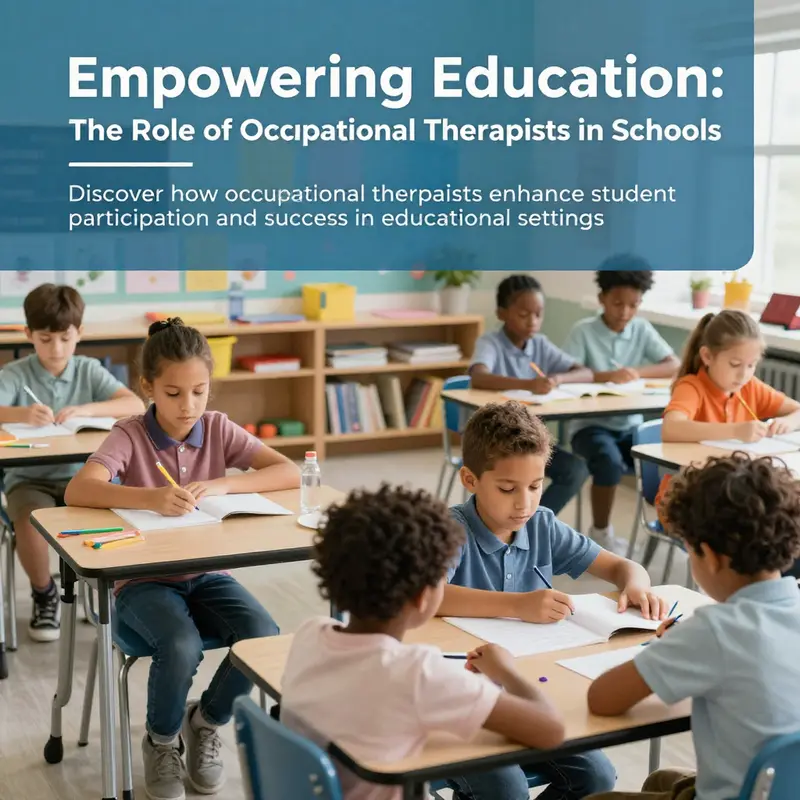
Occupational therapists in schools significantly contribute to both student engagement and academic achievement, catering to the unique needs of children who face learning and developmental challenges. By equipping students with necessary skills to navigate their educational environment, these professionals bridge the gap between ability and opportunity. This article explores the critical function of occupational therapists in enhancing student participation, the tailored interventions they implement, their impact on academic success and behavioral management, and the collaborative efforts with educators to create a supportive learning environment. Understand how these therapists play a pivotal role in shaping educational experiences that foster independence, confidence, and success for all students.
Quiet Architects of Classroom Participation: School-Based Occupational Therapy and the Path to Inclusive Learning

In the bustling ecosystem of a school, where attention is a precious resource and every student carries a unique mix of strengths and challenges, occupational therapists quietly shape participation. They are the quiet architects of classroom engagement, translating the complex language of development into practical, everyday supports that enable students to access learning, social life, and school routines with confidence. Their work begins where many others notice barriers—an awkward pencil grip, a sensory avalanche before a big transition, or a moment when a peer interaction derails a lesson. Instead of reorganizing the entire classroom, school-based occupational therapy tends to tune the environment, the tasks, and the student’s own repertoire of skills so that participation becomes both possible and meaningful. This approach honors the whole child and recognizes that learning is not only a cognitive act but an orchestration of motor control, perception, emotion, and social context. When you look closely, you see that the OT role in schools is not merely about therapy in a corner; it is about weaving supports into routines so that writing, listening, collaboration, and independent task management happen with less friction and more flow.
The core aim is participation. Participation is not a single skill but a tapestry of abilities, rhythms, and supports that allow a student to join in with peers, engage with instructional tasks, and navigate the school day with a sense of competence. Therapists come to understand a student’s day as a sequence of meaningful moments—from entering the classroom and organizing materials to managing a group activity and staying focused for a lengthy assignment. They assess where a child experiences friction and where a simple adjustment can yield robust gains. This might mean identifying a preferred seating arrangement to reduce sensory distraction, teaching a reliable work-system that guides transitions, or introducing a hand-writing strategy that preserves legibility without sacrificing speed. Each intervention is chosen with the student’s goals in mind, reflecting the belief that meaningful change occurs through small, deliberate adjustments embedded within real tasks.
The approach is dynamic, collaborative, and data-informed. Unlike episodic sessions, school-based OT is integrated into the daily fabric of education. Therapists work side by side with teachers, paraprofessionals, school psychologists, speech-language pathologists, and families. They participate in planning meetings, participate in classroom observations, and contribute to IEPs or 504 plans in a way that respects the expertise of each team member. Their recommendations are practical and scalable, designed to travel across settings—from the classroom to the cafeteria, gym, and playground—so that learning experiences remain consistent and supportive. The emphasis on collaboration mirrors the broader educational imperative: outcomes improve when each professional speaks a common language about participation, using shared goals and consistent supports that honor the student’s voice. To see the full scope of how school-based occupational therapy is defined and guided by professional standards, consider reading The Role of an Occupational Therapist in Schools.
Beyond the day-to-day tasks, the work is anchored in evidence-based practice. Therapists draw from a rich set of research-informed strategies that address fine motor development, sensory processing, self-regulation, and executive functioning. Fine motor skills underpin critical academic tasks such as handwriting, manipulating classroom materials, and using technology for learning. Therapists introduce controlled, graded activities that build hand strength, coordination, and endurance, while keeping the student engaged and motivated. Sensory processing is another central pillar. Many children experience sensory input—sound levels, lighting, textures, and movement—that can overwhelm or under-stimulate them, affecting attention and behavior. An OT in schools might calibrate a sensory plan that reduces overload during morning routines or introduces sensory breaks that reset a student’s arousal level at just the right moments. Such adjustments do not single out a child as needing “special” treatment; they normalize the idea that the environment can be tuned to fit diverse nervous systems. The result is a classroom where more students can participate for longer periods, with fewer behavior disruptions and greater opportunities for success.
Self-regulation is a natural companion to sensory strategies. When a learner can recognize rising tension, identify the precursor cues, and implement a coping plan, they occupy a more active role in their education. Occupational therapists teach techniques such as breathing strategies, the use of visual supports, and structured routines that help students maintain composure during transitions, group work, and high-demand tasks. These skills ripple outward, supporting friendships, class participation, and resilience in the face of challenge. For younger students, this work might be framed around play and social games that teach impulse control and turn-taking; for older students, it often translates into school-wide routines, checklists, and self-monitoring tools that promote autonomy. In practice, the OT’s role extends from direct intervention with the student to coaching teachers and families so that strategies are carried into home life and extracurricular contexts.
Interventions in the classroom are not one-size-fits-all. Each child’s plan reflects a nuanced blend of strengths, needs, cultural background, and personal goals. The most effective interventions are those that generalize across tasks and settings. A handwriting intervention, for example, might combine hand strengthening exercises with structured handwriting lines, visual cues, and a daily practice routine that fits into the student’s timetable. A one-page work system may accompany a math lesson, with clearly defined steps, designated materials, and visual prompts that reduce the cognitive load required to complete the task. The aim is not to “fix” a student but to remove unnecessary barriers so the student can participate, learn, and progress. When a student can rely on predictable supports, they experience less anxiety about school tasks and more confidence to engage with peers and teachers.
A deeper layer of the OT’s work in schools is the social and emotional development that unfolds within inclusive classrooms. Therapists recognize that participation is inseparable from peer relationships and classroom culture. They guide students in social problem solving, turn-taking during group activities, and interpreting nonverbal cues in conversations. They may craft activities that require cooperative problem solving, while ensuring each participant has a clearly defined role and visible expectations. In doing so, they contribute to reducing social friction and behavioral challenges that often accompany the learning process. The benefits extend beyond individual outcomes. When students feel seen and supported, the classroom climate shifts toward greater inclusion, where diversity of ability is recognized as a resource rather than a barrier. This shift supports not only the targeted student but the entire cohort, encouraging teachers to implement inclusive practices with more intentionality and confidence.
The collaboration that underpins school-based OT is both pragmatic and principled. Therapists frequently structure their work around co-planning with teachers, co-teaching in short sessions, and co-reflecting after lessons to adjust strategies based on what worked and what did not. They translate clinical insights into classroom-ready routines, such as sensory-friendly transitions, low-effort accommodations for writing, or flexible seating arrangements that accommodate different postural needs and energy levels. They also advocate for environmental modifications that benefit many students, such as improved lighting, reduced noise levels in transition zones, and clear, predictable schedules. In this way, the OT’s influence extends to the design of the school day itself, promoting a culture where accessibility is not a special accommodation but a standard of good teaching. The idea of universal design for learning often emerges in these conversations, as therapists help teams consider multiple means of engagement, representation, and action so that all students can participate in meaningful ways.
Interventions are never static. As a student grows and shifts through different grades, the OT revisits goals, adjusts supports, and tracks progress with objectivity and care. Progress monitoring can include observations during routine activities, task analyses, and simple data collection that captures how a student’s participation changes over time. The emphasis on data supports accountability and ensures that supports remain aligned with the student’s evolving needs. It also helps families understand the rationale behind adjustments and celebrate incremental gains that accumulate into lasting independence. When families are engaged as partners, the work of the OT resonates beyond the school walls, helping students carry newly learned skills into home routines and community activities. The continuity of care across school and home reinforces the student’s sense of self-efficacy and belonging, which in turn fuels continued growth.
A key element of this narrative is the explicit recognition that school-based occupational therapy is not about a single intervention or a single classroom. It is a systemic practice that anchors inclusive learning. Therapists contribute to school culture by modeling respectful language about disability, promoting accessible materials, and encouraging peer understanding. They provide guidance on rationale, so teachers and administrators can align curricula with students’ needs while maintaining rigorous academic standards. They also help schools navigate challenges related to diverse learning profiles, ensuring that accommodations are meaningful, proportional, and non-stigmatizing. This approach requires sensitivity to linguistic and cultural differences, family values, and varying home environments. In every case, the intent is clear: every student should have a fair opportunity to participate, learn, and achieve in a way that honors who they are and what they can contribute.
For readers seeking a concise pathway to understand the field’s standards, the official framework offered by the profession is a valuable guide. The field’s best practices and current standards in school settings provide a reliable map for districts and educators seeking to fortify their programs. To explore the role with a broad, evidence-based lens, see The Role of an Occupational Therapist in Schools. This resource helps readers situate the school-based OT within the larger landscape of education and health care, clarifying how therapy intersects with learning goals, classroom routines, and family engagement.
The impact of school-based occupational therapy extends beyond individual gains. When students participate more fully, classrooms become spaces where collaboration is possible, curiosity is encouraged, and the process of learning feels accessible to a wider spectrum of learners. The OT’s work—balanced between hands-on interventions, environmental adjustments, and collaborative planning—nourishes an educational ecosystem that honors every child’s potential. The resulting shift is not merely about better handwriting or calmer transitions; it is about a fundamental reimagining of how school can accommodate neurodiversity and how students can experience school as a place where they belong and can contribute meaningfully. In this sense, the OT’s role becomes a quiet but powerful catalyst for inclusive learning, ensuring that participation is not a privilege of a few but the everyday right of all students.
External resources and ongoing learning are essential to sustain this work. For further guidance and updated standards, educators and families can consult external professional resources such as the American Occupational Therapy Association’s School-Based Practice. This resource provides comprehensive information on the role, best practices, and research findings that inform school-based interventions and professional development. https://www.aota.org/Practice/Settings/Schools
Crafting Pathways in the Classroom: How School-Based Occupational Therapy Opens Access to Learning for Every Student
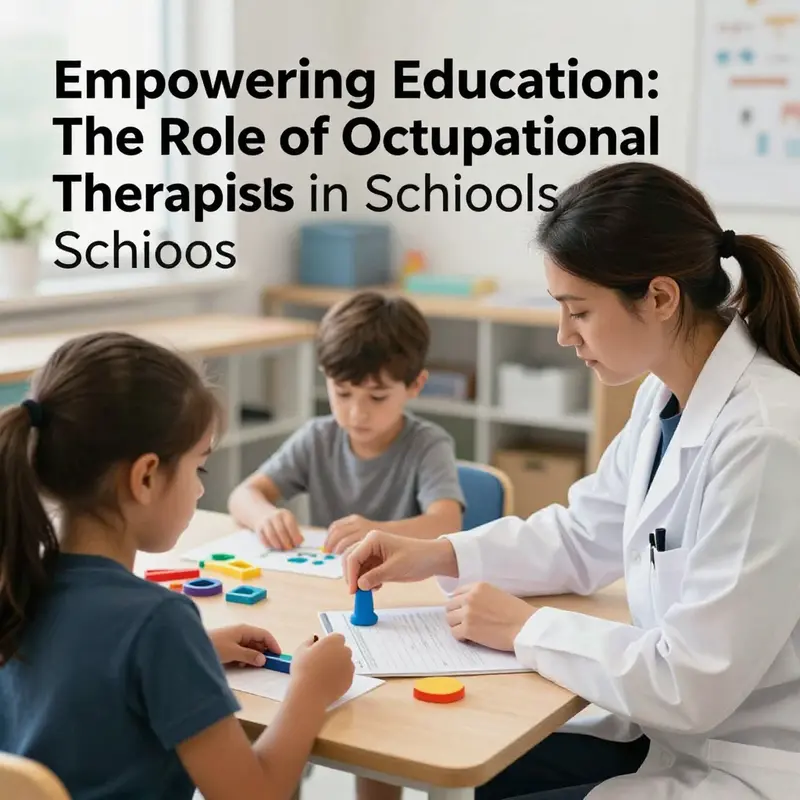
In many classrooms, the steady rhythm of instruction and the chatter of peers create a shared stage where children learn not only from textbooks but from the social and physical environment surrounding them. School-based occupational therapy sits at the intersection of these worlds, not as a separate add-on but as a set of flexible practices woven into daily routines. Occupational therapists (OTs) in schools act as both guides and architects, translating clinical insight into classroom-ready strategies that help students participate more fully in learning, manage the sensory demands of the school day, and develop the independent skills they need for long-term success. Their work is not about teaching in isolation but about shaping the context in which learning happens—the desks, the transitions, the way materials are handled, the way teachers give instructions, and the moments a student negotiates with peers. When executed thoughtfully, these interventions support not only academic achievement but also the social, emotional, and practical competencies that students carry beyond the school walls.
The interventions that OTs bring to schools are highly individualized, reflecting the diverse needs of learners. Some students arrive with clear diagnoses that affect fine motor control, handwriting fluency, or visual-motor integration; others encounter more subtle regulatory or attentional challenges that surface during times of fatigue, change, or high cognitive load. In either case, the focal point remains consistent: reduce barriers to participation by aligning tasks with what the student can do right now, then scaffolding toward greater independence over time. This means looking at the whole child—how sensory processing shapes attention, how executive functioning influences planning and organization, and how self-regulation can be supported within the structure of a typical school day. The result is not merely improved task performance; it is a transformation in how a student experiences school, turning challenges into a sense of competence and belonging.
A core principle guiding school-based OT practice is fidelity to evidence-based methods adapted to the school context. This means starting with research-informed approaches and then refining them to fit a specific classroom, a particular teacher’s style, and a student’s unique environment. For example, sensory-based strategies are frequently deployed to help students regulate during overstimulating moments or to support those who show under-responsiveness to sensory input. OTs might guide a student through self-regulation routines that are integrated into a calm-down corner or embedded into a transition between activities, so the nervous system has a predictable path from activation to calm. In many cases, this work is as much about configuring space as it is about activities. Seating arrangements, lighting, acoustics, and the placement of materials all play a role in whether a child can attend to instruction, participate in group work, or engage with a difficult task.
To illustrate, consider the use of adaptive tools and equipment that can transform the ease with which a student interacts with classroom demands. A weighted pencil or a compact fidget device can provide proprioceptive feedback that helps a child stabilize attention during writing or problem-solving tasks. A visual schedule can reduce anxiety for students who benefit from predictability, while a simple check-in board can help a child track goals throughout the day. These tools are not “one-size-fits-all” provisions; they are chosen and calibrated based on observation, data, and ongoing collaboration with teachers and families. The emphasis is on function—does the tool help the student participate more fully in class? Does it reduce the need for episodic help from adults while building skills that endure when the OT is not present?
Crucially, school-based OT practice is collaborative practice. OTs work alongside teachers, speech-language pathologists, school psychologists, nurses, families, and the students themselves. This collaboration is not a courtesy toward care coordination; it is the engine that makes skills transferable across settings and routines. Consistency across environments is essential for generalization. When a student learns a strategy in the OT room, the same principle should be reinforced in the classroom, the cafeteria, the gym, and at home. This alignment requires regular communication, joint planning, and a shared language about goals and progress. For teachers, this partnership is a resource that can velocity-accelerate learning by providing practical strategies, not just theoretical recommendations. For families, it offers clarity about what to practice at home and how to support the school-day routine in ways that mirror school expectations.
Embedded within daily routines, occupational therapy often focuses on three broad areas: access to the curriculum, engagement in classroom activities, and the development of practical life skills that support independence. Access begins with the environment. In many classrooms, a few adjustments can make a significant difference: reducing visual clutter on desks, creating quiet zones where students can decompress during periods of overstimulation, or arranging seating to minimize distractions for a child who has difficulty filtering competing stimuli. These environmental changes are not about lowering standards but about ensuring the student has a fair opportunity to participate in the full range of learning activities. When a student can approach a task with a regulated nervous system and a clear path to the steps required, he or she is better positioned to attend to instructions, use instructional materials effectively, and contribute to classroom tasks alongside peers.
Engagement in classroom activities is supported through strategies that promote both skill development and the intentional use of strategies. This often includes teaching compensatory techniques that help students manage time, organize materials, and plan ahead. For some learners, this might involve breaking complex tasks into smaller steps with visible prompts and checklists, while for others, it could mean teaching self-monitoring strategies that foster awareness of when attention starts to waver and what to do about it. A key element here is the integration of social and communication skills within academic tasks. OTs may incorporate guided peer interactions, role-play, or cooperative learning activities designed to improve turn-taking, perspective-taking, and the interpretation of social cues. In ASD and related profiles, this social skills training is often woven into academic contexts so that peers and teachers experience naturalistic opportunities for growth rather than isolated therapy sessions.
The development of life skills—self-care tasks like dressing for school, feeding, and personal organization—often dovetails with academic goals. These components may seem peripheral in a traditional classroom, but they are integral to a student’s capacity to participate fully and with confidence. A student who can button a coat, pack a backpack, manage a water bottle, or organize a notebook is better prepared to engage in learning without constant dependence on adults. OTs may teach adaptive strategies, provide practice opportunities during transitions, and help families reinforce routines at home that mirror school expectations. The ultimate aim is not only to address the mechanics of dressing or feeding but to cultivate autonomy, responsibility, and pride in one’s own growing competence.
The work of embedding therapy into the fabric of the school day often involves creating a shared ecology of supports. This ecology includes not only physical spaces but also the language of instruction, the pacing of activities, and the predictable cues that help students anticipate what comes next. A teacher might use a consistent cue for transitions—“five more minutes,” a countdown, or a color-coded timer—and the OT helps ensure that this cue aligns with a student’s processing needs. The sensory environment is tuned to a spectrum of needs: some students thrive with a steady ambient rhythm and a modest level of noise, while others require more quiet to maintain focus. By adjusting lighting, reducing visual overload, or offering alternative seating options, OTs remove barriers without reducing the complexity or rigor of the curriculum. In this way, the classroom becomes a more equitable space where students with diverse profiles can demonstrate their understanding and contribute meaningfully to group work.
Theologies of practice and room for flexibility are essential. OTs frequently adopt a “go-to” repertoire of strategies that can be customized for different contexts. Sensory regulation routines, for instance, are often routed through a student’s day in a way that corresponds with typical school activities: arrival, circle time, independent work, group activities, lunch, and recess. The aim is not to create a separate therapeutic regime but to anchor regulation within the flow of instruction, so students gain tools to self-regulate when a project becomes frustrating or when the noise level rises during a science experiment. Similarly, the concept of executive functioning emerges in practical terms: planning ahead for a long writing assignment, organizing materials for a hands-on lab, or sequencing steps for a multi-step art project. These tasks, which are routinely part of the school day, become opportunities to build cognitive strategies that transfer to future academic endeavors and everyday life.
To maintain effectiveness, school-based OT practice relies on systematic data collection and ongoing assessment. OTs gather information about participation, task performance, and independence, then translate these observations into progress toward concrete goals. This data-informed approach supports teachers and families by showing how changes in the environment, materials, or routines correspond to improvements in engagement and learning outcomes. It also helps identify when an adjustment is needed, ensuring that interventions remain dynamic rather than static. The emphasis on data does not erode the relational nature of OT work; rather, it grounds relationships in observable progress and shared accountability. Families who see tangible gains feel empowered to reinforce strategies at home, which in turn strengthens the child’s sense of coherence and self-efficacy.
The field’s commitment to inclusivity and equity is evident in many approaches. Universal design for learning, culturally responsive practices, and flexible pathways to participation are not buzzwords but core commitments. OTs recognize that students come from varied cultural backgrounds, family structures, and linguistic contexts, and they adapt goals and methods accordingly. This might involve collaborating with bilingual staff to ensure instructions are accessible, designing materials with multiple modalities (visual, auditory, kinesthetic) to serve different learners, or choosing activities that connect with a student’s cultural experiences. The focus remains on removing barriers and creating opportunities for all students to demonstrate knowledge and grow skills, not on fitting students into one standard mold.
A practical question often arises: how do OTs balance clinical expertise with the realities of a classroom’s day-to-day constraints? The answer lies in a philosophy of integration. OTs do not remove themselves from classroom instruction; they engage with it, modeling strategies, co-teaching, and providing just-in-time supports that are efficient and sustainable. When a teacher asks, “How can we help this student stay engaged during a long reading block?” the OT response is rarely a single prescription. Instead, it is a menu of options—modified seating, sensory supports, chunking tasks, built-in movement breaks, or a micro-tasking approach—that the team can implement based on the student’s needs and the classroom’s rhythm. The goal is to empower teachers to apply evidence-informed ideas with confidence, while preserving the time and energy needed to deliver instruction across a diverse student body.
Within this collaborative, context-driven framework, the practical details matter. Visual supports—such as schedules, step-by-step checklists, and graphic organizers—are often used to pair cognitive demands with predictable routines. For some students, the presence of a predictable routine is as important as the actual academic content; for others, the routine frees cognitive resources for problem solving and creative thinking. OTs also help design seating that supports posture, balance, and attention, mindful not to stigmatize or single out a student. A well-placed chair, a stable desk surface, or a simple wedge cushion can reduce fatigue and improve handwriting fluency, enabling a student to participate more fully in writing tasks and collaborative projects.
The narrative of school-based OT is not one of patchwork fixes but of intentional, durable changes that ripple through a student’s day. A therapy plan does not exist in isolation; it becomes part of a shared blueprint that guides how instruction is delivered, how feedback is provided, and how progress is celebrated. When done well, this work also strengthens the student–teacher relationship. The teacher, seeing reliable strategies and predictable routines, can lean into instruction with a sense of shared purpose. The student, in turn, experiences a growing sense of competence, trust, and belonging in the classroom community. This is the heart of school-based occupational therapy: turning clinical knowledge into practical, compassionate action that expands what is possible for every learner.
For readers who want to explore the theoretical underpinnings and practical guidelines behind these approaches, the field’s established resources offer a robust foundation. AOTA’s School-Based Practice materials provide comprehensive guidance on roles, standards of care, and evidence-based intervention strategies. The emphasis on collaboration, environment, and routine aligns with the day-to-day realities of schools, where therapists, teachers, families, and administrators work together to create inclusive learning environments. If you would like a concise overview of the role and its core functions in schools, you can explore the detailed discussion available at the blog post that examines the role of an occupational therapist in schools, which synthesizes many of these practical implications into accessible guidance: the role of an occupational therapist in schools.
Beyond the specifics of individual interventions, the long arc of school-based OT practice is shaped by ongoing professional learning and reflective practice. Therapists stay current with emerging research, refine assessment methods, and adapt strategies to new classroom technologies and evolving curricula. They recognize that evidence-based practice is not static but a living conversation between research, clinical experience, and the school context. This conversation includes systematic reviews, case studies, and practitioner-relevant guidelines that translate to the busy environment of a school day. It also invites families into the process, inviting them to participate in goal-setting, share insights about how their child responds to different supports at home, and observe progress across settings. In this collaborative ecosystem, the student remains the central focus, and every decision is judged by its potential to increase participation, independence, and joy in learning.
In closing, it is helpful to imagine school-based OT as a discipline that respects the complexity of learning while preserving the simplicity of everyday tasks. It recognizes that big strides in literacy, numeracy, and science are often built on the quiet, steady gains in handwriting fluency, self-regulation, and the ability to manage one’s materials and time. It honors the social dimensions of schooling by fostering peer interactions and adaptive communication, ensuring that students experience school as an inviting, capable place rather than a collection of isolated challenges. And it commits to equity by offering flexible strategies that meet students where they are, then support them on the path toward greater independence. The ultimate test of these efforts is not only whether a student completes an assignment but whether they feel confident enough to contribute, collaborate, and pursue the next task with curiosity. When school-based occupational therapy is embodied in the routines, spaces, and relationships of the classroom, it becomes a catalyst for participation that endures as part of a student’s lifelong learning journey.
External resource for further guidance: https://www.aota.org/Practice/Settings/Schools
Foundations in Motion: How School-Based Occupational Therapy Shapes Learning, Behavior, and Inclusive Classrooms
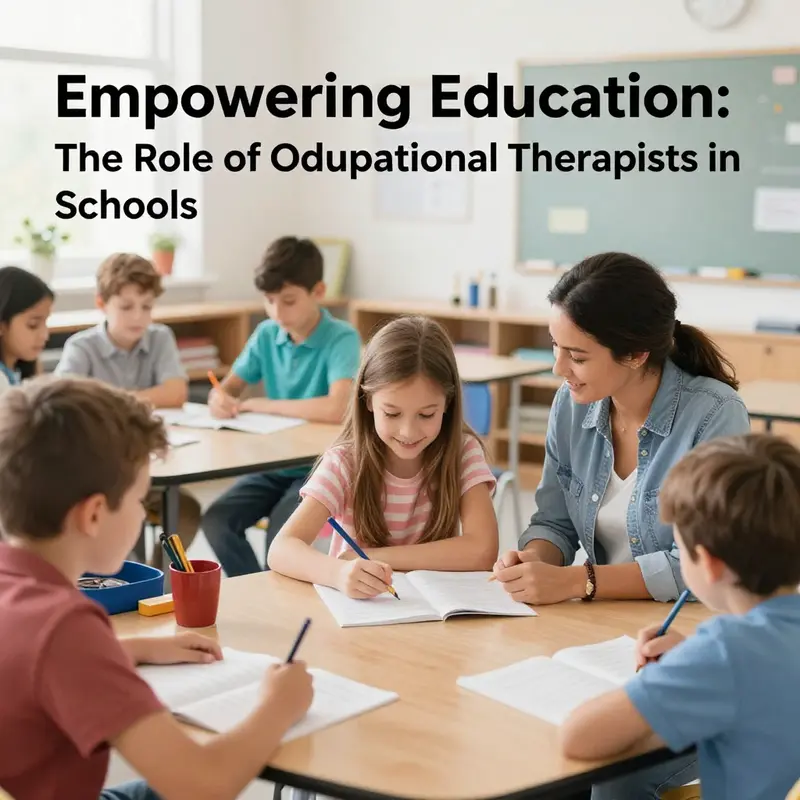
In classrooms across the country, occupational therapists bring a steady, practical form of expertise that quietly underpins every student’s ability to participate in learning. They do not simply treat isolated skills in isolation; they help children move through the school day with the attention, dexterity, and resilience that academic tasks demand. This work begins with the recognition that participation is as important as achievement. A student who cannot hold a pencil or regulate sensory input, who struggles to shift attention from one task to another, or who becomes overwhelmed in a busy corridor will find it hard to access instruction, collaborate with peers, or benefit fully from feedback. OT in schools responds to these real-world barriers with purposeful, evidence-informed strategies that fit into the daily rhythm of the classroom. Their interventions are designed not to replace instruction but to enable it—to scaffold the student’s capacity to engage, learn, and grow alongside peers.\n\nThe foundation of school-based occupational therapy rests on addressing core learning skills through a lens that sees the whole child. Fine motor coordination, sensory processing, attention regulation, and executive functioning are not merely clinical concerns; they are practical gates to participation. When a child has difficulty with handwriting, cutting with scissors, or manipulating classroom materials, academic participation falters. OT practitioners assess these functional demands in the school context and design supports that are feasible within a typical school day. They may propose adaptive strategies for handwriting, propose modifications to the way materials are presented at the desk, or introduce simple movement and sensory regulation routines that can be woven into transitions and independent work time. The result is not a single, modular intervention but a continuum of supports that adapt to changing needs as the child progresses through grades and curriculum demands. In this sense, occupational therapy becomes a steady partner in the school’s larger mission to enable every learner to reach their potential.\n\nThe impact of these foundations extends beyond the mechanics of classroom tasks. The scope of occupational therapy in schools recognizes that learning is deeply social and emotionally layered. Interventions address social participation, communication, and emotional self-regulation, all of which influence how a student engages with instruction and peers. A student with autism, for example, may benefit from strategies that support sensory processing in a crowded cafeteria or during a group project. A student with ADHD may gain from executive functioning supports that help organize materials, sustain attention during reading time, and manage time during independent tasks. These measures, though they may seem practical and routine, have wide-ranging consequences: they reduce barriers to participation, increase opportunities for meaningful interaction, and foster a classroom climate where students feel capable and connected. In short, the right supports translate to better access to the curriculum, improved confidence, and more sustained engagement with learning activities.\n\nEmpirical findings from school settings consistently show that when occupational therapy is integrated into the educational framework, classrooms experience more frequent and meaningful engagement. There is also a notable decrease in behavioral incidents when students can regulate sensory input, manage transitions, and participate in tasks that once felt insurmountable. Importantly, the benefits are not limited to students with obvious needs. Even for students without a diagnosed disability, OT strategies—such as movement breaks, adapted seating, and structured routines—contribute to smoother classrooms that accommodate diverse learning styles and paces. The research increasingly highlights how early, proactive involvement yields long-term gains in academic performance, participation in class activities, and social-emotional outcomes. When teachers and therapists align on goals and share a language for progress, students experience consistency across home and school settings, which amplifies the effect of therapeutic strategies.\n\nA crucial element in realizing these gains is inter-professional collaboration. Occupational therapists work side by side with teachers, school psychologists, speech-language pathologists, nurses, administrators, and families. This collaborative model ensures that strategies are not confined to a therapy session but embedded into daily routines. When OT goals are discussed with teachers during planning meetings, they translate into classroom practices—adjustments to seating, modifications to task demands, or the pacing of activities. This alignment is essential because it creates a shared understanding of what success looks like for a given student and ensures consistent expectations across environments. Collaboration also extends to parents and caregivers, whose insights about a child’s day-to-day functioning at home inform the choice of goals and the selection of strategies. Parental involvement is particularly critical because it reinforces therapeutic gains beyond the school day, helping to maintain progress and prevent regression during weekends and holidays. The synergy among school staff, families, and health professionals creates a cohesive ecosystem that supports sustained skill development and independence for students.\n\nThere is a natural and necessary emphasis on empowering teachers with practical tools. Occupational therapists do not replace instructional strategies; they equip teachers with an array of accessible techniques that can be implemented with minimal disruption to routines. For example, they might advise on seating arrangements that reduce discomfort and distraction, or on the use of simple handouts and task organizers to help students manage materials. They may suggest sensory-friendly cues for transitions, such as a consistent routine cue or a calming touchstone that signals the shift from independent work to group discussion. They also provide guidelines for gradually increasing task demands in a way that gradually builds competence, a concept aligned with how students learn most effectively. By translating therapeutic concepts into classroom-friendly practices, OTs help teachers feel confident guiding students through challenges rather than feeling overwhelmed by them. This practical approach is essential because it supports teachers’ workload while preserving the student’s opportunity to participate in meaningful learning tasks.\n\nThe day-to-day realities of school life shape how occupational therapy services are delivered. Some students may receive direct therapy in a dedicated space, while others benefit from integrated or consultative services within the classroom. The latter approach emphasizes capacity-building for teachers and school staff, with therapists modeling approaches and co-planning lessons that incorporate therapeutic strategies into the curriculum. The aim is to minimize the sense of segregation between “therapy” and “class,” fostering an inclusive culture where all students learn through thoughtful, deliberate adaptations. When done well, integrated services reduce stigma and promote a sense of belonging. The therapist’s role then becomes a facilitator of inclusive practices that help every child access instruction, participate with peers, and practice new skills in authentic contexts. Achieving this requires thoughtful scheduling, clear referral pathways, and a shared commitment to outcomes.\n\nAssessment and progress monitoring are central to the effectiveness of school-based OT. Therapists gather data that reflect true classroom functioning rather than isolated performance in a clinical setting. They consider how a student manages materials at desk tasks, how they respond to a sudden change in routine, and how they collaborate with peers during a group activity. This data informs decisions about who benefits from direct services, what kind of supports are most effective, and when it is appropriate to taper or intensify intervention. It also helps communicate value to stakeholders—parents, teachers, and administrators—by translating the work into observable classroom outcomes such as increased on-task time, improved quality of work, and a higher rate of successful task completion. The evidence base for school-based OT continues to evolve, with guidelines and best practices emerging from professional organizations and research syntheses. AOTA provides extensive resources that underscore the standards of care, a framework for service delivery, and ongoing professional development to sustain high-quality practice in schools.\n\nIn practice, a reciprocal feedback loop anchors successful OT in schools. Therapists observe progress in the classroom, teachers notice changes in student participation, and families report improvements at home that reinforce new skills. This loop makes it possible to adjust goals as students grow and to align interventions with evolving curriculum demands. It also invites ongoing reflection about equity and access. Inclusive education requires that interventions be culturally responsive and accessible to students from diverse backgrounds and with a wide range of abilities. Occupational therapists address this by collaborating with families to understand cultural expectations around learning and participation, and by ensuring that strategies respect each student’s strengths and preferences. The result is a more humane, responsive educational environment where the focus is not only on “getting through the day” but on nurturing each child’s capacity to contribute meaningfully to the classroom and the school community.\n\nTechnology and environmental adaptations play a growing role in school-based OT. Therapists leverage assistive devices, pacing tools, and ergonomic supports to reduce barriers to participation. They also guide teachers in how to redesign spaces to promote safe exploration, error-friendly practice, and movement-based learning opportunities. The goal is to create classrooms that are adaptable, where students can regulate arousal, sustain engagement, and demonstrate mastery of tasks with increasing independence. As schools adopt Universal Design for Learning and other inclusive frameworks, OT practitioners help translate these principles into concrete classroom practices. They support teachers in planning for variability—recognizing that students learn at different paces and in different ways—and in crafting assignments that allow multiple pathways to demonstrate understanding. The adaptability that OT brings aligns well with broader educational aims to raise achievement while honoring each student’s unique profile.\n\nDespite the clear benefits, school-based occupational therapy faces real-world challenges. Time constraints, large caseloads, and limited funding can limit the reach of services. Where resources are scarce, therapists prioritize collaborative planning, shared-goal development, and scalable interventions that can be embedded into daily routines. Even in resource-limited settings, small changes have large effects: consistent routines, predictable feedback, and clear expectations can transform the learning environment. Building a culture of shared responsibility for participation—where teachers, therapists, and families view themselves as partners in progress—helps sustain change beyond the tenure of a single school year. Professional development plays a critical role here, equipping staff with knowledge about sensory processing, attention regulation, and executive functioning in practical, classroom-ready formats. When schools invest in cross-disciplinary training, they empower educators to apply therapeutic principles across diverse contexts, from the cafeteria to the gym to the library.\n\nAs this body of work grows, the perspective on occupational therapy in schools becomes more integrated with broader educational priorities. The emphasis is not merely on reducing barriers but on enabling students to engage in meaningful, authentic learning experiences. This means supporting participation in social and extracurricular activities, which are essential for well-rounded development and long-term success. A student who learns to negotiate a social cue, manage a sensory overload, or regulate frustration in a group project carries these skills into future schooling and, ultimately, into adult life. In this sense, school-based OT is a lifelong investment in independence. It aligns with contemporary educational philosophies that advocate for inclusive, student-centered learning environments where differences are recognized as strengths and where every learner has an opportunity to thrive.\n\nFor readers seeking further evidence and guidelines, the American Occupational Therapy Association’s School-Based Practice resources offer extensive information on best practices, standards of care, and ongoing research. These guidelines reinforce the central message of this chapter: when occupational therapy is thoughtfully integrated into schools, it changes not only how students learn but how they experience school itself. The implication for educators, families, and policymakers is clear. Invest in collaborative, evidence-informed OT services, nurture a shared language around participation, and support teachers with practical tools that translate therapy principles into everyday classroom success. In doing so, schools cultivate not only academic outcomes but a culture of inclusion, resilience, and lifelong learning. For evidence-based guidelines and ongoing research, see the broader resources provided by AOTA and related professional bodies.\n\nInternal resource: the role of an occupational therapist in schools provides a detailed overview of how therapists connect with classroom practice and student needs. You can explore it here: https://coffee-beans.coffee/blog/the-role-of-an-occupational-therapist-in-schools/\n\nExternal resource: For in-depth guidelines and standards, refer to the American Occupational Therapy Association’s School-Based Practice page: https://www.aota.org/Practice/Settings/Schools
Co-Designing Learning: Everyday Collaboration of Occupational Therapists and Educators in School Classrooms

In schools, learning unfolds through daily tasks, routines, and interactions. Occupational therapists (OTs) and educators co-design classroom activities so they are accessible, meaningful, and aligned with curriculum goals. By observing tasks, adapting materials, and shaping the sensory environment, OTs help students participate with confidence while teachers ensure instruction remains rigorous. This collaboration turns therapy-informed strategies into everyday teaching tools, benefiting all learners, not just those with identified needs.
The Metro North study in the Western Cape illustrates how a curriculum of support in mainstream classrooms can work in practice. OTs and teachers co-plan and co-implement activities that connect to core subjects, allowing meaningful progress for every student. When collaboration is intentional, time for joint planning, shared language, and clear goals becomes a catalyst for inclusive learning. Challenges exist, including scheduling, training, and role clarity, but with institutional support these barriers can be overcome. The result is a learning environment where participation, independence, and curiosity are nurtured, and where inclusive practices become part of everyday teaching rather than separate interventions.
Final thoughts
Occupational therapists play a crucial role in fostering an inclusive and thriving educational environment for students facing varied challenges. Their expertise not only enhances participation but also significantly contributes to academic success and improved behavioral health, ultimately promoting independence in learning. By working collaboratively with educators and tailoring interventions to meet individual needs, they pave the way for enriched educational experiences that empower students to excel. Recognizing and supporting the role of occupational therapists in schools can transform the educational landscape, allowing every child to access the tools they need to succeed.