
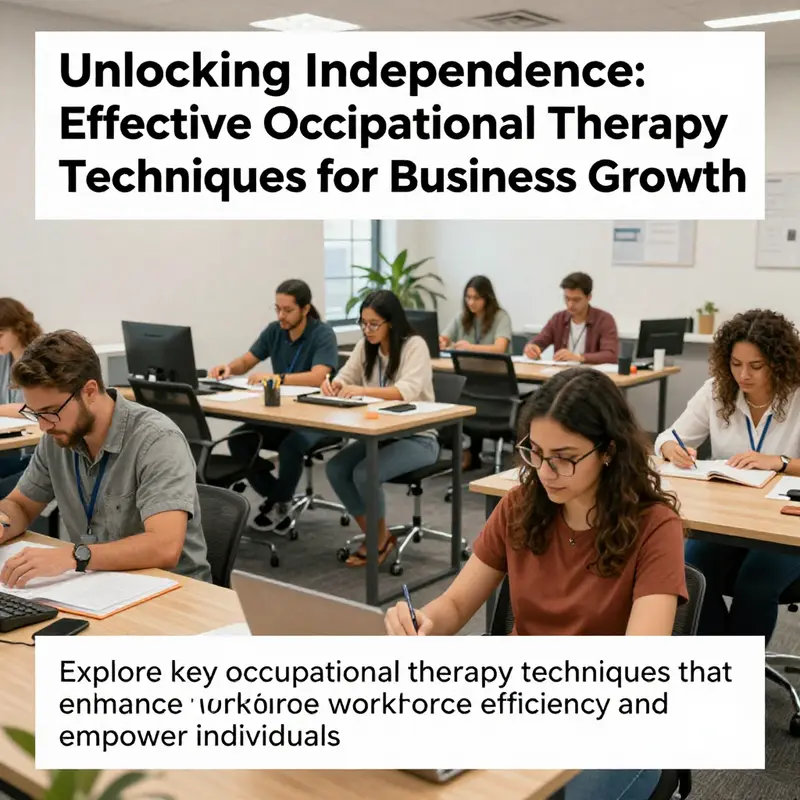
Occupational therapy (OT) goes beyond traditional healthcare, providing diverse techniques designed to meet the unique needs of individuals facing physical, mental, or developmental challenges. For business owners, understanding these techniques can be pivotal in fostering a healthier, more productive workforce. Each chapter delves into specific aspects of occupational therapy, focusing on how techniques like Activities of Daily Living (ADL) Training, Instrumental Activities of Daily Living (IADL) Training, Therapeutic Exercise, Cognitive Rehabilitation, and Adaptive Equipment can enhance employee well-being and business outcomes. By integrating these practices, leaders can cultivate an environment that promotes growth, independence, and employee satisfaction.
Building Everyday Autonomy: The Subtle Craft of ADL Training in Occupational Therapy
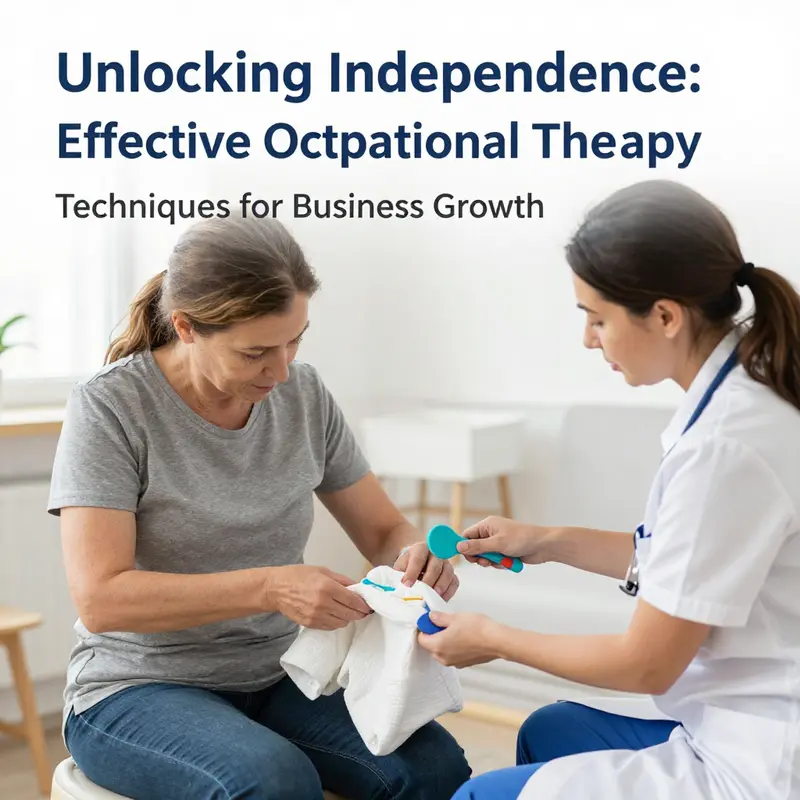
ADL training forms the backbone of occupational therapy’s mission to restore independence not just in tasks but in the daily sense of participating in life as the person envisions it. It is about enabling meaningful engagement in self-care and community living by guiding, adapting, and refining tasks so that independence becomes achievable despite illness, injury, or developmental differences. The distinction between basic activities of daily living (BADLs) and instrumental activities of daily living (IADLs) matters, yet the work is a single, continuous thread: shaping routines that honor a person’s goals, surroundings, and cultural context while fostering safety and dignity.
In practice, the journey begins with a thorough assessment. The therapist observes how someone currently performs basic dressing, bathing, grooming, toileting, feeding themselves, and mobility, noting safety risks, fatigue patterns, and pain. Attention then shifts to more complex responsibilities like budgeting, shopping, or navigating transportation. This evaluation looks beyond the body to include the living space, available supports, and the person’s aspirations. The resulting plan blends restoration with practical adaptations, aiming to reduce avoidance and build confidence so that daily life feels controllable rather than overwhelming.
A central technique is task analysis. The therapist breaks a familiar activity into its smallest steps, identifying where trouble arises. Take meal preparation: gathering ingredients, washing hands, measuring portions, turning on the stove, monitoring heat, plating, and eating. Each micro-step reveals targets for intervention, whether it is improving sequencing, lowering cognitive load, or adjusting the environment. By naming every step in clear terms, therapists help the person see a path forward and not a single, insurmountable task. This granular approach also makes it easier to choose the most effective intervention, whether a repatterned sequence, a new cue, or a different tool altogether. For many clients, the simple act of outlining a plan reduces anxiety and elevates motivation, setting the stage for steady progress.
Adaptation and environmental modification are equally critical. Adaptive equipment ranges from long-handled reachers to built-up utensils, shower chairs to grab bars, as well as reminders and organizational systems that support routine management. The goal is not to replace capacity but to enable it safely, letting the person practice with devices and gradually assume more responsibility. Training includes hands-on practice with the equipment and guided problem solving for barriers that emerge during daily routines. A kitchen might become a more forgiving space with lowered countertops, clearly labeled containers, and familiar utensils arranged to support one-handed use. In this way, the home becomes a stage for autonomy rather than a setting that underscores limitation. The sense of control that comes from mastering a modified environment often extends beyond a single task, seeding confidence for future challenges.
When physical constraints persist, compensatory strategies fill the gap. For instance, using non-slip plates and edge guards, paced task performance, or one-handed dressing approaches can transform a task once deemed impossible into an achievable sequence. These strategies are not shortcuts; they are deliberate responses grounded in real limitations, designed to preserve dignity and sustain participation. The therapist coaches the person to select options that feel natural, then reinforces them through repetition until new routines become automatic. The patient learns to switch strategies as fatigue or a busy day alters the ability to perform certain actions, which is a practical form of resilience in daily life.
ADL training also engages the body through therapeutic exercise. Strength, endurance, and range of motion support ongoing activity. A program might blend shoulder strengthening, grip work, and core stability with practical tasks like loading a washer, folding laundry, or pushing a cart in a store. The emphasis remains on meaningful activity, so exercises become purposeful rather than abstract. Over time, improved stamina and control translate into longer, safer engagement in self-care and IADL tasks, which in turn nurtures a broader sense of capability. The therapy thus intertwines fitness and function, reinforcing how physical health underpins everyday independence.
Cognitive challenges often accompany physical recovery. For someone recovering from a brain injury or stroke, cognitive re-training becomes essential. Therapists teach planning, problem solving, attention management, and memory strategies within the crucible of real tasks. They may simulate a shopping trip or a medication schedule, gradually increasing complexity. The aim is to equip the person with mental tools to anticipate difficulties, slow down when needed, and adapt plans on the fly. This cognitive dimension integrates with motor practice so daily routines become coherent, resilient, and flexible. When cognitive demands are reduced or anticipated, performance becomes more reliable, and the sense of control grows stronger.
An important dimension of ADL training is the integration of sensory and psychosocial elements. Sensory processing differences can influence how a person experiences touch, temperature, or proprioception while performing tasks, especially for children or individuals with neurological conditions. Therapists stay attuned to mood, confidence, and motivation, weaving social engagement into routines. When a person feels supported and safe, learning new ways to complete tasks becomes more sustainable. The work also respects cultural values and personal preferences, recognizing that the meaning of independence varies across families and communities. The goal is to build routines that feel natural and respectful rather than prescriptive, ensuring each person can pursue what truly matters to them.
The domain of ADLs extends beyond personal care to IADLs, those more complex responsibilities that anchor independent living in the community. Managing finances, cooking, using transportation, coordinating medications, and navigating technology all fall into this category. A practical plan might start with basic budgeting, then progress to meal planning and grocery lists, followed by safer medication management through organizers and reminders. Therapists encourage practicing these tasks in real environments, perhaps with caregiver feedback or community resources, to ensure skills transfer from clinic to real life. The emphasis is on reproducibility and reliability, with gradual scaffolding that adapts to changing schedules, housing, or family responsibilities.
Family involvement and interprofessional collaboration shape successful outcomes. Therapists partner with families to identify what matters most to the person, integrate it into daily practice, and troubleshoot barriers as they arise. They also collaborate with caregivers, physicians, social workers, and educators to align home, clinic, and school or workplace supports. The shared goal is to create a seamless network that reduces friction and promotes steady progress. In this sense, ADL training becomes a bridge rather than a set of isolated drills, connecting the person to a broader system of participation. When collaboration is robust, the person receives consistent cues, feedback, and opportunities to practice across settings, which stabilizes gains and supports long-term independence.
Within this integrated framework, a wide array of resources and strategies is mobilized. The emphasis is on starting where the person currently stands and then building upward. It is about pacing practice to match energy levels, gradually increasing task complexity, and adjusting as new challenges emerge. Those who develop independence in ADLs also cultivate self-efficacy, a confidence that sustains long-term engagement in life roles. The approach reflects a core principle of occupational therapy: activity is not merely something to be completed but a path to meaningful participation, identity, and purpose. To place ADL training within the broader spectrum, consider how these strategies align with the general techniques used in occupational therapy and how they can be tailored to individual lives. See the broader discussion of strategies in the linked resource on techniques used in occupational therapy. (techniques used in occupational therapy)
For readers seeking a concise guide to these methods, a broader panorama of techniques used in occupational therapy outlines the general strategies and their evidence base. This framing helps place ADL training within the wider toolkit while preserving the specific, patient-centered focus that makes ADL work distinctive. The link above points to a resource that elaborates on these methods and their applications across contexts, reinforcing the idea that ADL training is one integrated thread within a dynamic field. The aim is not to prescribe a single path but to offer a repertoire that can be adapted to each person’s story, goals, and environment.
Ultimately, ADL training embodies the aspiration to empower everyday life. It does not merely repair capacity but rebuilds the daily structure around a person’s strengths, goals, and routines. Every dressing moment, meal, or medication check can become a source of confidence rather than a reminder of limitation. The therapist’s role is to guide, illuminate options, and celebrate incremental gains that create momentum toward participation in school, work, home, and community. In that sense, ADL training becomes a living practice, adapting to the person, the setting, and the evolving meaning of independence.
External resource: The scientific perspective on ADLs provides a foundational understanding of how these tasks interlock with health outcomes and daily functioning. For readers who want a deeper dive, the overview of Activities of Daily Living on ScienceDirect offers well-curated frameworks and evidence that undergird everyday practice. External resource: https://www.sciencedirect.com/topics/medicine-and-dentistry/activities-of-daily-living
IADL Training as a Keystone of Independence in Occupational Therapy

Independence in everyday life hinges on more than the ability to complete isolated tasks; it depends on a person’s capacity to integrate skills into routine, meaningful roles, and safe participation in the community. IADL training sits at the center of occupational therapy by focusing on instrumental activities that enable people to live independently and with dignity. The aims are practical and person-centered: reduce cognitive load, support safety, and build confidence through repeated, real-world practice. IADL tasks include managing health, handling finances, preparing meals, using transportation, maintaining the home, and navigating technology. Mastery in these areas creates leverage for participation in work, caregiving, volunteering, or social activities, which in turn reinforces identity and belonging.
Assessment and planning involve a collaborative process. An occupational therapist conducts a person-centered evaluation that looks at cognitive processes such as memory and executive function, sensory and motor capabilities, daily routines, home environment, and social supports. The goal is to identify what matters to the person, the contexts in which they live, and the environmental barriers that limit participation. The resulting plan aligns with personal values and practical constraints and often adopts a staged approach that gradually increases complexity as competence grows.
In practice, IADL training blends task-specific practice with cognitive support and environmental adaptation. Therapists teach strategies to reduce errors and increase safety, such as breaking tasks into steps, using checklists, and scheduling reminders. They may use task analysis to map steps from to-do to done, then rehearse and adapt until the sequence becomes automatic. Simultaneously, memory aids, environmental cues, and automated systems support ongoing performance. Domains such as health management include organizing medications, scheduling appointments, understanding interactions, and recognizing warning signs. Financial management may involve budgeting, bill-paying routines, and safe use of online banking with safeguards. Cooking and shopping teach planning, safe knife skills, food safety, and nutrition. Transportation training considers route planning, safety, and the appropriate use of transit apps or navigation tools. Household management covers cleaning, laundry, and home safety through adaptive strategies. Technology use is increasingly integral, so therapists support device literacy, data security, and the use of reminders and calendars.
Environmental and contextual factors shape how IADL skills transfer to everyday life. Home modifications, assistive devices, and user-friendly interfaces reduce barriers and support independence. Routines and predictable sequences lower cognitive load and decrease anxiety, while goal-oriented practice nurtures motivation and self-efficacy. The therapist also considers cultural values, living arrangements, and the availability of social supports to tailor interventions.
Outcomes arise not only from improved task performance and safety but from enhanced confidence, reduced caregiver burden, and greater participation in valued life roles. The evidence base shows that IADL training can yield meaningful gains in independence and quality of life, especially when combined with health management education and environmental modifications. Collaboration with families and caregivers is essential, providing them with strategies to sustain routines and support autonomy without micromanagement. In sum, IADL training in occupational therapy equips people to live fuller lives on their own terms.
Moving Toward Independence: How Therapeutic Exercise Anchors Occupational Therapy Techniques in Everyday Life
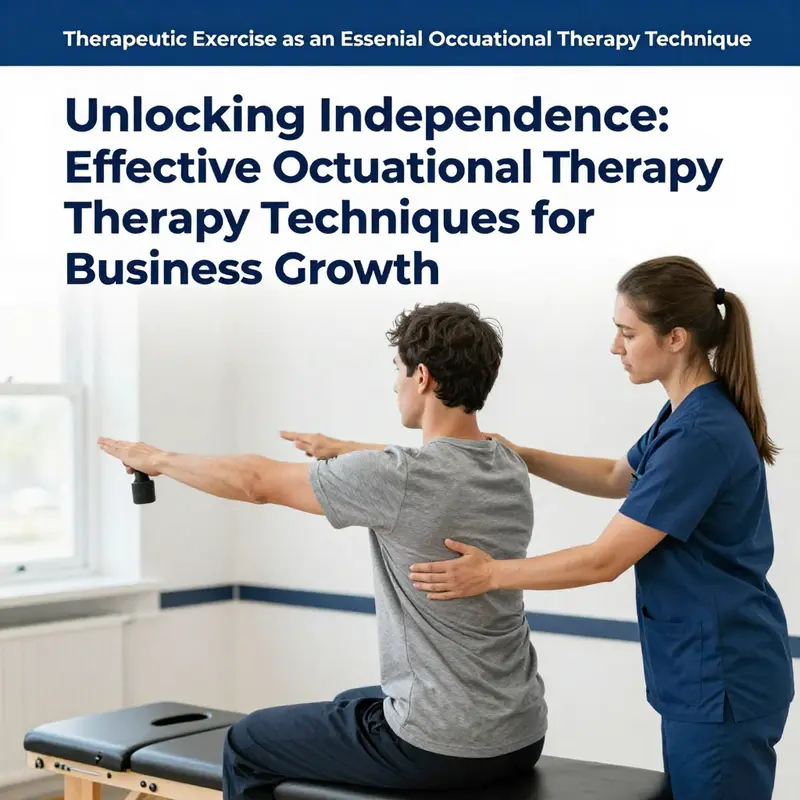
Therapeutic exercise is central to occupational therapy because it connects physical recovery to the meaningful tasks of daily living. Rather than treating movement as an isolated goal, OT frames exercises as purposeful, task-specific activities that mirror real-world demands—reaching for a cup, buttoning a shirt, or preparing a simple meal. Clinicians begin with thorough assessment of movement, endurance, balance, and the environmental context, then set SMART goals and design progressive, individualized practice that respects safety and promotes transfer. Interventions draw on biomechanics, motor learning, and neurorehabilitation to shape repetition, variation, and feedback so gains in the clinic translate to improved performance at home, work, and in the community. Adaptive strategies and assistive devices are integrated when needed to reduce strain and support participation, while modifications to tasks and environments scaffold success. Importantly, therapeutic exercise in OT attends to psychosocial factors: mastering purposeful tasks rebuilds confidence, reduces anxiety about limitations, and fosters engagement with family and community. Case examples, such as staged upper-extremity practice after stroke or graded endurance work for chronic musculoskeletal conditions, illustrate how exercises are embedded within meaningful routines and incrementally progressed to increase independence. Ultimately, the value of therapeutic exercise in occupational therapy lies in its role as a mechanism for restoring participation and dignity—translating movement into functional ability and enabling people to reclaim the activities that matter most to them.
Rewiring Everyday Life: Cognitive Rehabilitation in Occupational Therapy

Cognitive rehabilitation within occupational therapy is a disciplined, patient-centered pursuit that seeks to restore or compensate for thinking and processing challenges so individuals can re-engage with the activities that define their lives. When memory falters, attention wavers, or problem-solving feels suddenly exhausting, people may still perform meaningful tasks; the question is how to tailor therapy so those tasks become reliable, navigable, and rewarding once again. OT’s cognitive rehabilitation does not rely on a single script but builds a flexible, person-centered map that connects cognitive work with real-world function. The aim is not merely to test cognitive skills in isolation but to translate those skills into actions that support independence in everyday life. In this sense, cognition is not a distant laboratory concept but a lived, practiced set of abilities that can be supported, scaffolded, and extended through purposeful activity and environmental design.
The field distinguishes two broad pathways within cognitive rehabilitation: restorative or remedial approaches, and compensatory or adaptive approaches. Restorative methods strive to improve underlying cognitive functions themselves—attention, memory, processing speed, executive control—through repeated, task-specific practice and strategy development. Practitioners may guide a client through attention drills that simulate familiar daily demands or memory exercises embedded in authentic tasks, such as following a recipe while recalling steps, or chunking a shopping list while navigating a busy store. These efforts are often anchored in dynamic, task-based practice, with careful attention to metacognition: helping clients notice what strategies work, when they fail, and how to adjust efforts in real time. The underlying principle is repetition with meaningful context, so gains in controlled environments transfer, at least partially, to the client’s home, workplace, or community.
Yet cognitive change rarely occurs in a vacuum, and the most durable improvements often emerge when restorative work is paired with compensatory tools and environmental supports. Compensatory or adaptive strategies teach people to manage deficits by altering the task demands or the surroundings rather than forcing cognition to perform beyond its current capacity. A calendar becomes a memory aid, a checklists system becomes a reliable workflow, and a structured routine reduces the cognitive load that can trigger confusion or fatigue. In practice, therapists blend these approaches, selecting the right balance of restoration and compensation to meet the person where they are and propel them toward who they want to become. When a client with traumatic brain injury returns to a familiar kitchen, for example, therapists may teach memory strategies for following a recipe while simultaneously installing adaptive devices and reorganizing the workspace to minimize distraction. The result is not a single intervention but a connected suite of supports that makes purposeful activity possible again. A key feature of this integration is accessibility: clients practice in real environments as much as possible, so the skills they develop are tested by the same sensory inputs, rhythms, and social interactions they will encounter outside therapy hours.
Within this framework, several models guide clinicians as they tailor cognitive rehabilitation to each person’s profile. The Dynamic Interactional Model of Cognitive Retraining emphasizes active client participation and task-specific practice. It asks therapists to analyze how a person approaches a task, the strategies they employ, and how those strategies might be generalized across similar activities. The model also foregrounds awareness—helping clients recognize their errors and adjust strategies accordingly—which in turn supports the transfer of learning to new contexts. In practice, a therapist may observe how a client plans, initiates, and monitors a task, then adjust the difficulty or introduce a new strategy to promote adaptive problem solving. This approach aligns with the fundamental OT belief that functional performance arises from the ongoing interplay between person, task, and environment.
In contrast, the Cognitive Disabilities Model, first articulated as a lens for functional performance, shifts focus from isolated cognitive scores to everyday tasks. Here the emphasis is on matching activity demands to the person’s cognitive level, providing supports that are just beyond the client’s current capacity to stretch ability while maintaining safety and independence. This model has evolved into several iterations, including Cognitive Disability Reconsidered, which continues to prioritize functional outcomes but also accounts for changing contexts, goals, and caregiver involvement. The Functional Environmental Approach complements these perspectives by explicitly weaving environmental modifications with cognitive training. It recognizes that a well-tuned environment can reduce cognitive load, enable more accurate task performance, and free cognitive resources for flexible problem solving. In combination, these models offer a blueprint for therapy that respects the person’s goals while acknowledging the realities of cognitive aging, injury, or illness.
There is evidence that these models can yield meaningful gains, though the path is rarely linear. A case series published in an international journal illuminated how a 36-year-old man recovering from a traumatic brain injury achieved notable improvements after eight weeks of therapy grounded in the dynamic interactional model. The report highlighted enhanced self-monitoring, improved task initiation, and better problem-solving during real-world activities. In older adults living with Alzheimer’s disease, the cognitive disability framework demonstrated moderate to slight improvements when applied to daily tasks, underlining that even progressive conditions can respond to carefully tailored approaches that emphasize function over abstract measurement. These stories, while not definitive of every situation, reinforce the practical truth that cognitive rehabilitation in OT flourishes at the intersection of theory, environment, and daily life.
Interdisciplinary collaboration further strengthens cognitive rehabilitation. Occupational therapists bring an intimate focus on how cognition manifests in daily performance, observing clients in natural settings and tracking the subtle shifts that occur as routines unfold. Neuropsychologists contribute complementary expertise through standardized testing, refined cognitive profiles, and an understanding of the neural systems underpinning memory, attention, and executive function. The dialogue between these disciplines enriches assessment and planning, ensuring that therapeutic goals are both scientifically grounded and personally meaningful. This collaboration is not about replacing one perspective with another but about integrating testing with observation so that the plan supports the client in authentic contexts.
The practical work of cognitive rehabilitation unfolds through a careful sequence of assessment, goal-setting, and intervention that remains deeply grounded in the person’s everyday life. Evaluation begins with an in-depth interview exploring current daily routines, stressors, and academic or vocational demands, followed by structured observation of functional tasks in familiar settings. The therapist maps cognitive strengths and weaknesses to everyday activities, noting where attention may falter, where memory lapses interrupt sequences, or where problem-solving stalls amid competing demands. From there, goals are crafted in collaboration with the client and their support network, focusing on concrete activities that matter—managing medications, preparing meals, navigating public transit, or coordinating caregiving tasks. The questions guiding therapy are not only “Can you perform this task now?” but “What would make this task easier next week, and how would we know it’s working?” This emphasis on practical outcomes situates cognitive rehabilitation within the broader occupational therapy aim: enabling people to participate meaningfully in life roles such as student, worker, caregiver, or family member.
When planning interventions, therapists consider the entire ecosystem that shapes cognition. They ask how a client’s environment might support or hinder cognitive performance: Is there enough lighting to reduce visual strain? Are routine cues visible and accessible? Is there a predictable schedule that lowers the cognitive load during transitions? Are family members or coworkers prepared to provide reminders or support strategies when needed? The Functional Environmental Approach directs attention to these questions, guiding modifications such as reorganizing workspaces, creating predictable routines, or installing simple prompts that support memory and sequencing. The goal is not to erase cognitive difficulty but to reduce its impact through thoughtful design and purposeful activity. In this light, self-management becomes as important as remediation. Clients learn to select strategies, monitor outcomes, and adjust practices in response to changing conditions, whether they are returning to a desk job after brain injury or adapting to the cognitive shifts that accompany aging.
The chapter’s conversations about cognitive rehabilitation would be incomplete without acknowledging the power of meaningful, motivating tasks. OT’s emphasis on daily life means clients practice cognitive skills in contexts that reflect what they value most—whether that is managing finances with confidence, following a recipe to feed a family, or coordinating care for a loved one. The work is not simply about accuracy on a test; it is about building a dependable, flexible approach that enables sustained participation in communities, workplaces, and households. For clinicians, this means weaving in resources such as adaptive calendars, structured checklists, stepwise problem-solving guides, and, when appropriate, technology-assisted supports. The evidence base supports a nuanced approach: some individuals benefit most from restoration-oriented practice in combination with real-world application, while others rely more heavily on environmental adaptations and compensatory strategies. The art lies in tailoring that mix to each person’s cognitive profile, life context, and personal goals.
For readers seeking further conceptual grounding, the American Occupational Therapy Association’s articulation of cognitive rehabilitation offers a detailed lens on how these concepts translate into practice. It also points toward a broader evidence base that links cognitive training with functional outcomes across multiple domains. In addition, practitioners may explore related resources discussing how cognitive activities for adults can be integrated into routine OT care, and how such activities can be adapted for different populations and settings. For those who want to see a concrete example of how these ideas unfold in practice, consider reviewing content on cognitive activities for adults in occupational therapy, which provides practical ideas that can be customized to individual contexts. cognitive-activities-for-adults-occupational-therapy.
As clinicians continue to refine cognitive rehabilitation, the emphasis remains on translations—from laboratory concepts to living rooms, from test scores to everyday task performance. The most enduring gains come from integrating restorative practice with pragmatic supports that fit the person’s environment, culture, and goals. In this synthesis, cognitive rehabilitation within OT becomes a dynamic partnership: clients contribute their experiences and aspirations, therapists illuminate practical pathways, and environments are shaped to welcome heightened independence. The resulting practice helps people not only recover or compensate for cognitive challenges but also reclaim a sense of competence, purpose, and participation.
External resources for deeper exploration of cognitive rehabilitation in OT can offer additional perspectives on evidence-based practices, while reminding readers that each journey is unique. For a broad overview of how cognitive rehabilitation fits into occupational therapy’s approach to mental health, aging, and neurological recovery, consult established professional resources and scholarly summaries that discuss strategies, measurement, and outcomes. https://www.aota.org/About-Occupational-Therapy/What-Is-OT/Cognitive-Rehabilitation
Tools in Action: The Transformative Role of Adaptive Equipment and Assistive Technology in Occupational Therapy
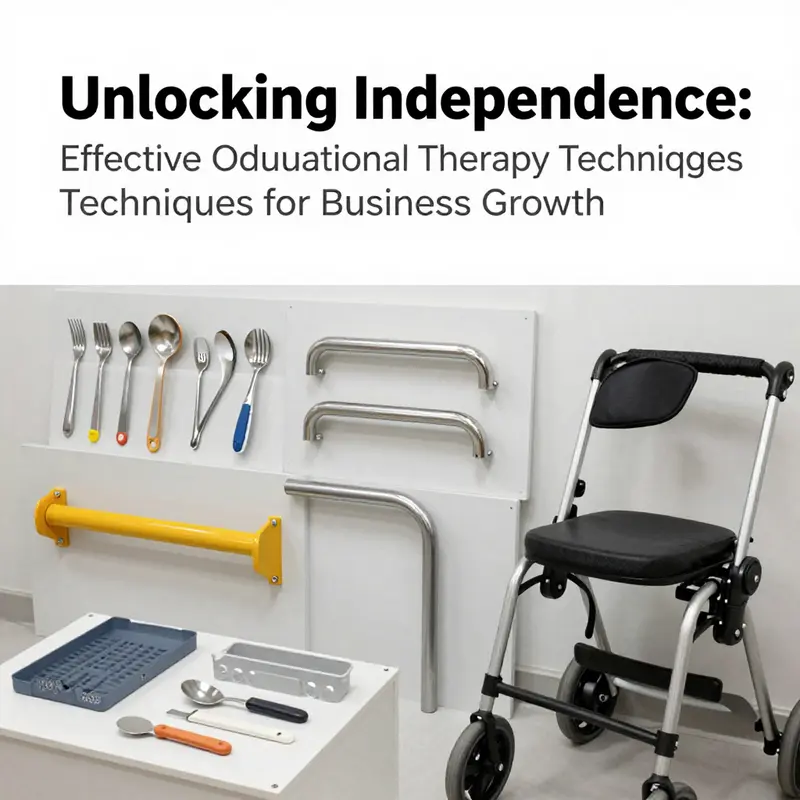
Adaptive equipment and assistive technology sit at the heart of modern occupational therapy, acting as bridges between intention and action. They are not add-ons to therapy but essential elements that illuminate a client’s path toward meaningful participation in daily life. When therapists weave these tools into a holistic plan, they create possibilities for home, school, work, and community that extend far beyond the clinic walls. The aim is to restore a sense of agency, safety, and purpose by enabling people to perform activities that matter to them, from dressing and budgeting to managing medications and maintaining social ties. This integrated approach aligns with a broader understanding of occupational therapy techniques, where every intervention is chosen not only for its immediate effect but for how it supports long‑term goals and supports a person’s evolving role in family and society. In practice, adaptive equipment and assistive technology span a spectrum from simple, low‑tech aids to sophisticated, high‑tech systems. They are selected through careful assessment, collaborative goal setting, and ongoing evaluation of outcomes. The tools support skill development, compensate for limitations, or enhance processing, perception, and mood regulation so that participation becomes more reliable and less fatiguing. The process remains person‑centered, culturally informed, and sensitive to safety and dignity, ensuring that devices augment rather than constrain the person’s choices and preferences.
A central component of this spectrum is sensory integration tools. For individuals with sensory processing differences, such as those observed in autism spectrum conditions or other neurodevelopmental profiles, these tools can help regulate inputs, reduce overwhelm, and promote self‑regulation. The core idea is not to mask difficulty but to provide environments and objects that support adaptive responses. In the therapy room, clinicians might introduce weighted items to offer calming proprioceptive input, or tactile resources that help a client notice and modulate different textures. Textured boards, vibration elements, and variety in material feel can foster body awareness and intentional control of arousal states. Sensory bins and manipulatives offer a playful yet purposeful way to practice coordination and attention while the therapist observes how different inputs shape behavior and engagement. Yet such tools are not universal cures; they require professional guidance to tailor input to the individual’s nervous system, preferences, and daily demands. The same tool may be comforting to one person and overstimulating to another, so customization, monitoring, and a flexible plan are essential. Space considerations, noise levels, and the potential for distraction all influence how and when sensory tools are used, which is why these interventions are typically embedded within a larger routine that gradually builds tolerance, resilience, and adaptive strategies.
Beyond sensory tools, adaptive equipment for functional goals plays a decisive role in supporting independence. Therapy balls, balance supports, and movement‑based equipment are used to improve core stability, postural control, and motor planning. Such equipment is not merely for the sake of exercise; it provides the physical foundation that underwrites many activities of daily living. For a client relearning dressing, cooking, or grooming, unstable or poorly controlled posture can derail progress and erode confidence. By engaging in structured activities on a therapy ball or along a balance pathway, individuals can cultivate postural alignment and trunk control in a way that translates to steadier hand movements, more precise reach, and safer transitions from sitting to standing. In school and community settings, modular setups with stepping stones, low ramps, or light proprioceptive challenges can be integrated into daily routines or adapted as a client’s endurance evolves. These tools support not just motor skills but the cognitive planning that accompanies them. Rehearsing a sequence of steps—pulling up a zipper, buttoning a shirt, flipping a page in a textbook—becomes a practice in sequencing and self‑monitoring, with success reinforcing a sense of competence and autonomy.
Assistive technology expands the horizon even further by addressing control, communication, and environmental interaction. Devices and software can empower people to manage calendars and reminders, navigate spaces, or communicate needs with clarity and speed. In aging populations, for example, electronic reminders and simplified interfaces support adherence to treatment regimens, participation in social activities, and the maintenance of routines that preserve independence. The principle remains consistent: technology should reduce cognitive and physical effort required for daily tasks, not complicate the person’s life with unnecessary complexity. Importantly, the integration of technology is never isolated from the person’s goals or social context. A tablet‑based communication interface, for instance, can enable a client with limited verbal ability to participate in conversations with family, friends, and healthcare providers. Text‑to‑speech options and user‑friendly menus can transform unclear needs into clear collaboration. Such technologies can also facilitate access to educational materials at school or support a person returning to work by enabling more reliable task initiation and data recording.
For occupational therapists, the thoughtful use of assistive technology extends to cognitive supports as well. Structured digital platforms that help with attention, problem solving, or memory strategies can be embedded into meaningful tasks. A client learning to prepare a meal might use a step‑by‑step digital checklist, while another returning to the workplace could benefit from tools that simplify task prioritization and error monitoring. The therapeutic value lies not just in the device but in the process: collaboratively selecting tools, training the client and caregivers, and adjusting settings as needs shift. In this sense, assistive technology becomes a partner in the therapy journey, offering venues for practice, feedback, and incremental independence that align with a person’s personal goals and cultural context.
The successful deployment of these tools rests on several critical considerations. Safety is paramount; devices must be sturdy, appropriate for the user’s environment, and compatible with other activities the client enjoys. If a tool is too complex, it may create frustration or disengagement, undermining therapeutic gains. Space and noise are not trivial concerns, especially with sensory equipment that can be large or produce unexpected sounds. Customization is essential because no two individuals approach tasks in the same way. A good plan balances the demand placed on a client with the supports provided by adaptive devices, ensuring progress without overwhelming the user. The cost and maintenance of devices also matter. Clinicians often weigh the benefits against the time required for training, the likelihood of sustained use, and the feasibility of family or caregiver involvement. In many cases, adaptive equipment is designed to be modular, allowing therapists to scale or downgrade supports as the client’s skills improve or as living circumstances change.
Interprofessional collaboration anchors the use of adaptive equipment in a broader ecosystem of care. Occupational therapists collaborate with engineers, educators, physicians, and family members to tailor equipment to real‑world settings. A home assessment may reveal environmental modifications that complement devices, such as adjustable furniture, safer kitchen layouts, or consolidated storage that reduces clutter and cognitive load. In schools, therapists work with teachers to align equipment with classroom activities, ensuring that supports promote participation without singling the student out. In workplaces, job coaches and employers may be involved in graded task training and the integration of assistive technologies that support performance while preserving safety. This collaborative approach reinforces a single thread running through occupational therapy techniques: meaningful participation emerges from the right blend of skill development, environmental design, and assistive supports that honor the client’s preferences, strengths, and cultural values.
For practitioners, a practical entry point to these ideas is accessible through consolidated resources that describe tools and equipment used in everyday OT practice. A compact reference like the collection of materials on tools and equipment for occupational therapists can guide therapists in selecting appropriate items, planning implementation, and communicating with clients and families about expected outcomes. Tools and equipment for occupational therapists provides a practical overview of categories, considerations, and workflows, helping to anchor decisions in real clinical scenarios. This kind of resource highlights the responsive, iterative nature of occupational therapy: assessment, trial, modification, and reassessment as a client’s life and environment evolve. It is through this dynamic process that adaptive equipment and assistive technology truly become agents of empowerment, expanding a person’s capacity to engage with work, education, caregiving, and community life with confidence.
As this chapter progresses, the thread remains clear. Adaptive equipment and assistive technology do not replace human skill or the therapeutic alliance; they amplify capacity and support the cultivation of independence in the face of physical, cognitive, or sensory challenges. They enable therapists to scaffold practice, enrich daily routines, and cultivate resilience. By integrating these tools with environmental modifications, psychosocial support, and activity‑based rehabilitation, occupational therapy techniques can transform the everyday into a platform for growth, participation, and dignity. The resulting narrative honors individual goals while acknowledging the practical realities of home and work life, offering a pathway toward fuller, more satisfying engagement in daily roles. External research further supports the importance of psychological and social factors in participation and therapeutic benefits for older adults, underlining the broader value of well‑designed adaptive supports in gerontic occupational therapy.
Final thoughts
Understanding and implementing occupational therapy techniques can lead to significant improvements in employee independence and productivity. Business owners who prioritize these practices not only foster a healthier workspace but also enhance job satisfaction and retention. Leveraging ADL and IADL training, engaging in therapeutic exercises, focusing on cognitive rehabilitation, and utilizing adaptive equipment highlights the commitment to employee well-being. This holistic approach is essential in nurturing a supportive environment that encourages personal and professional growth, ultimately driving business success.